Portraits of Activists/Leaders
This category showcases activists/leaders, each with a unique life journey. While some lost their lives early advocating for what they believed in, their stories remain alive.
To explore the Collection
Select a portrait from the gallery below to view the full painting and explore the story of each activist/leader (The images of paintings and profiles are licensed under Creative Commons Attribution 4.0 (CC BY 4.0), allowing free download and use with acknowledgement).
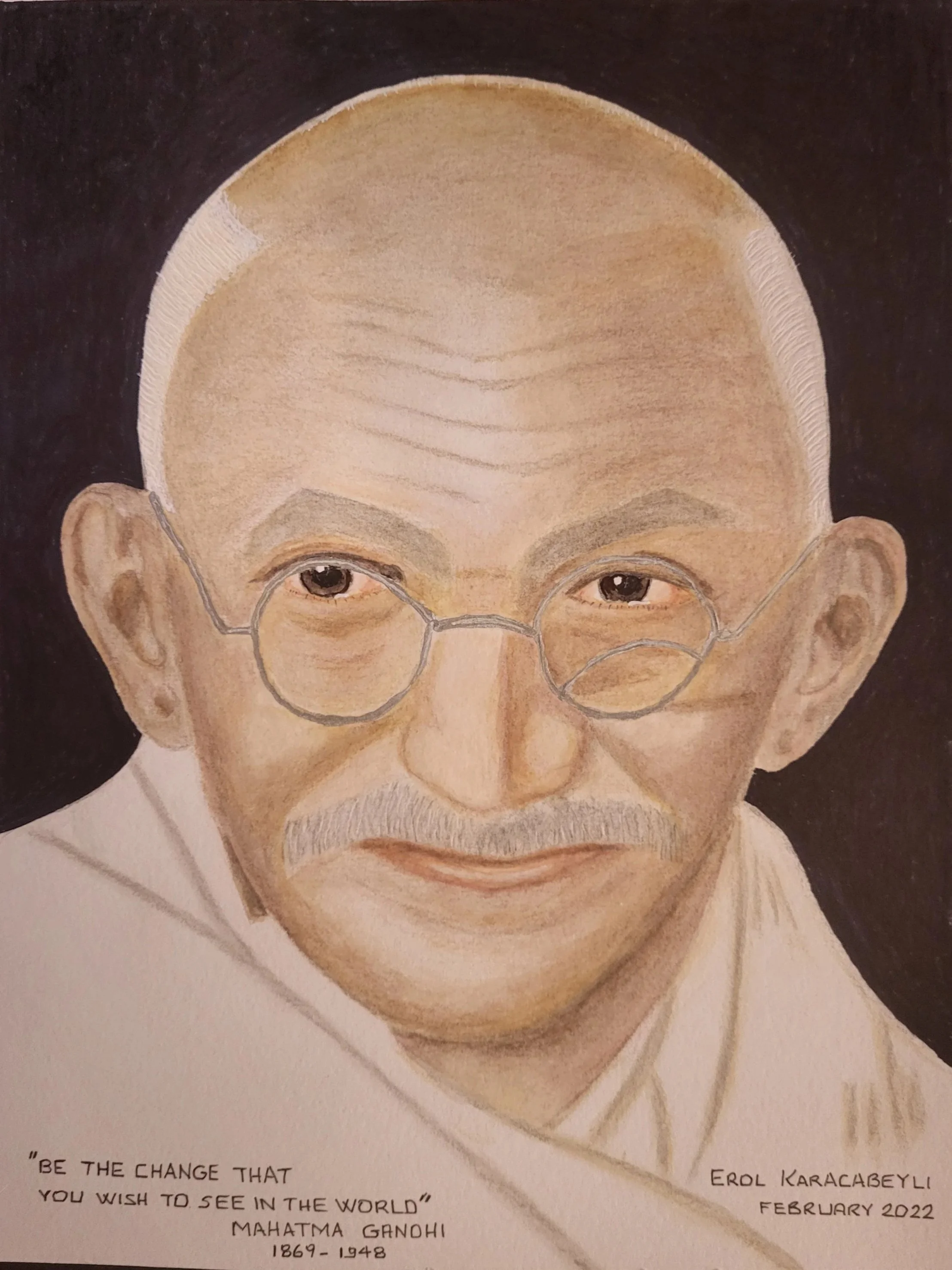
Gandhi
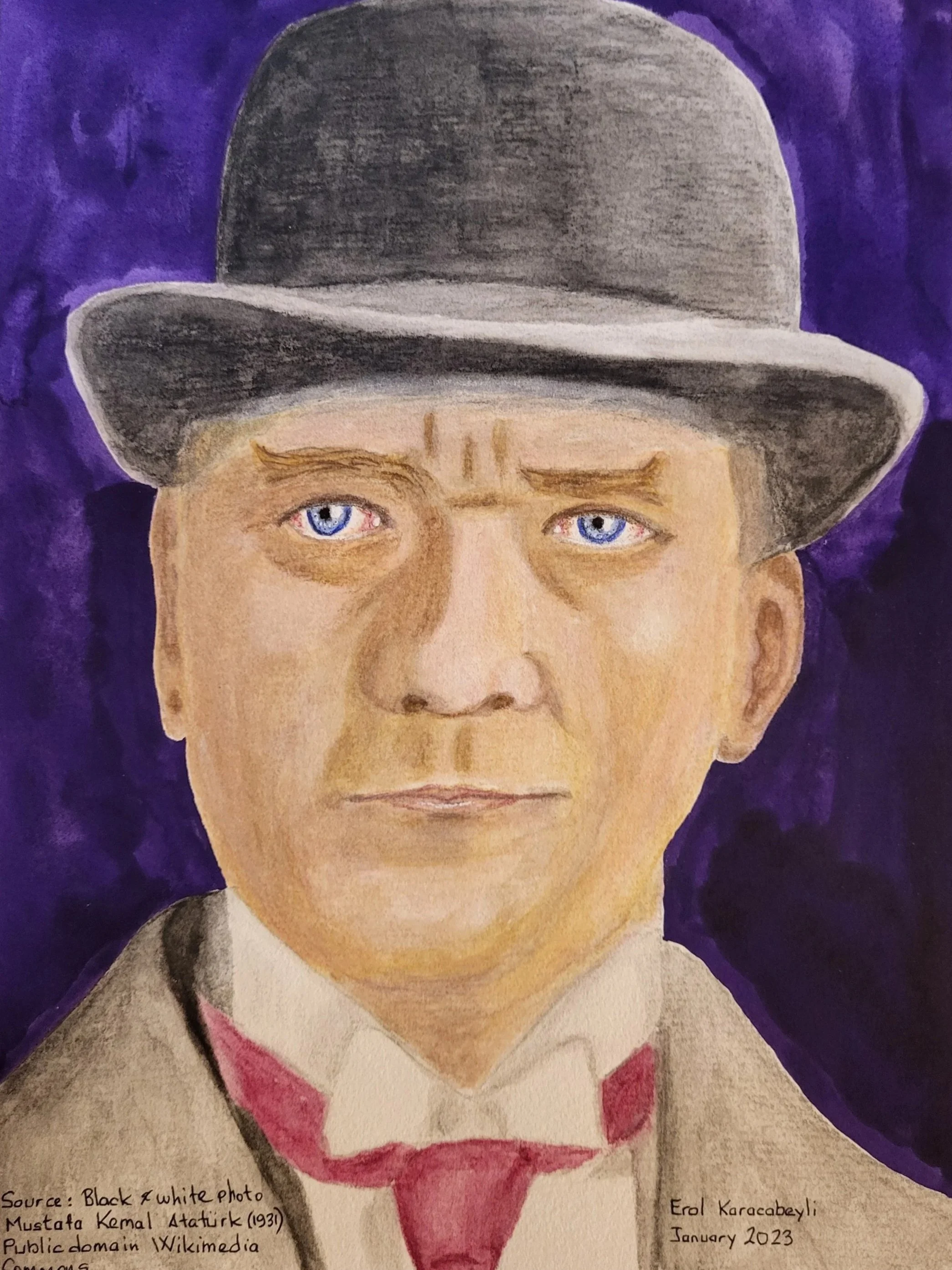
Atatürk
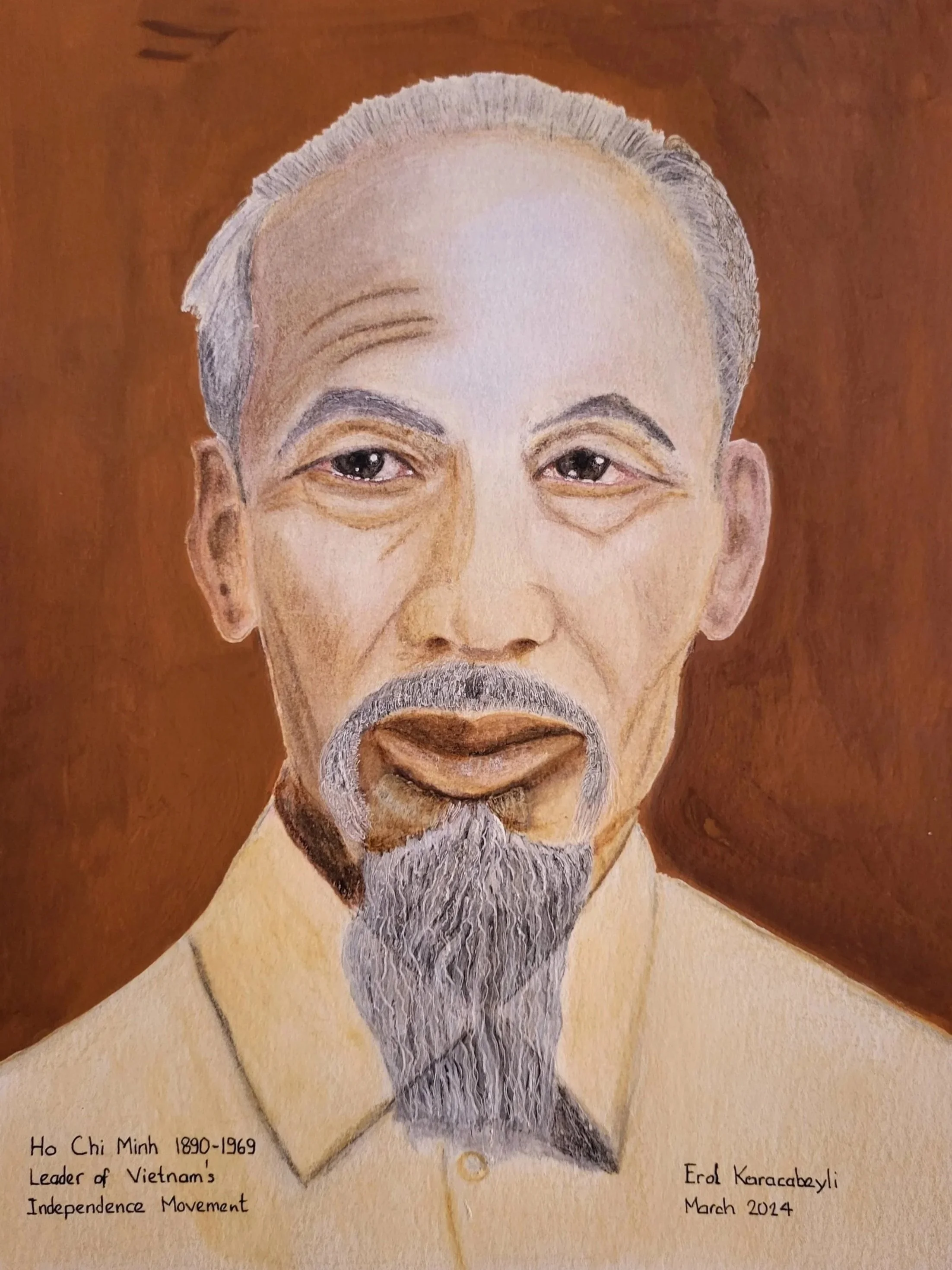
Ho Chi Minh
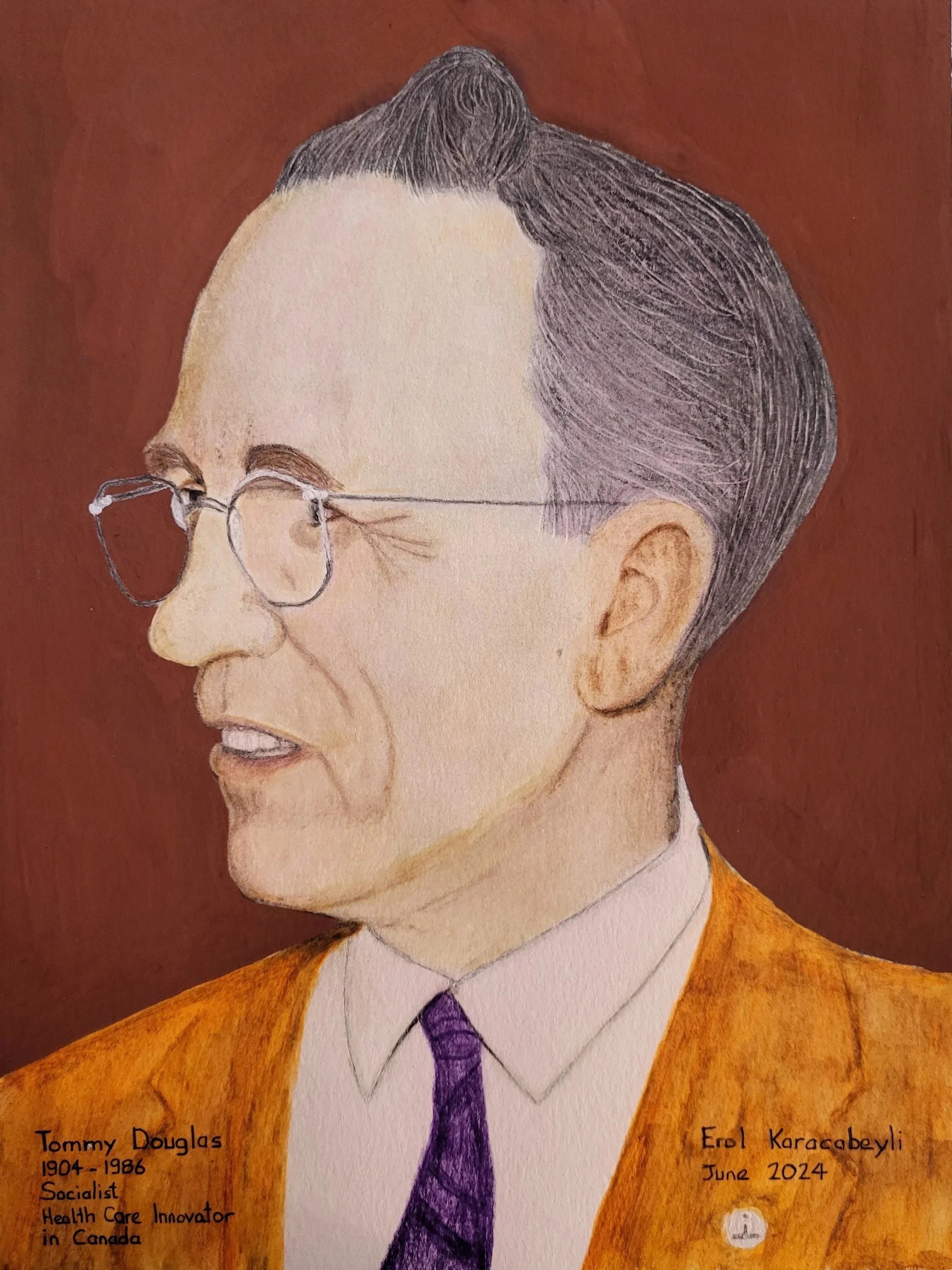
Tommy Douglas
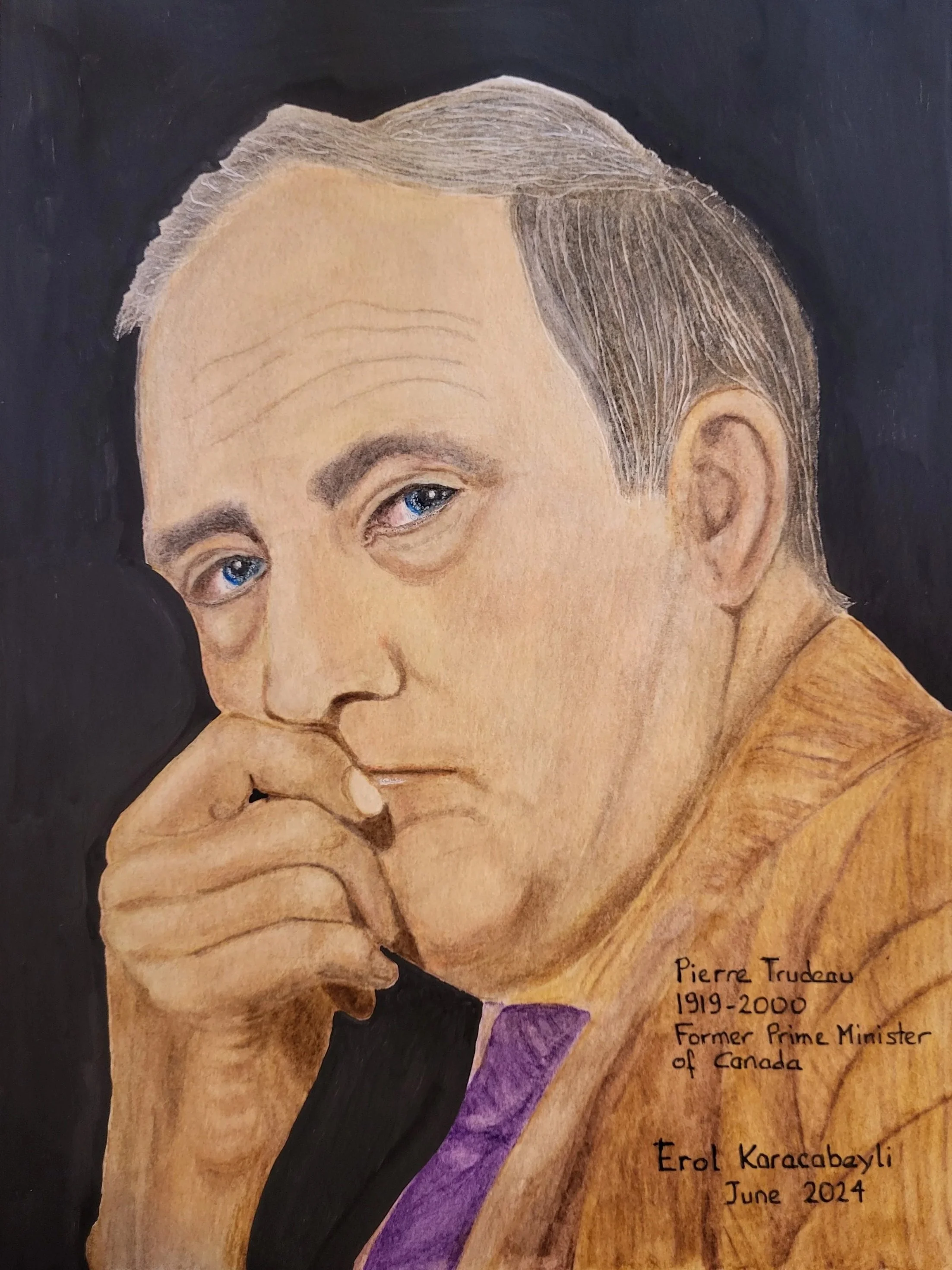
Pierre Trudeau
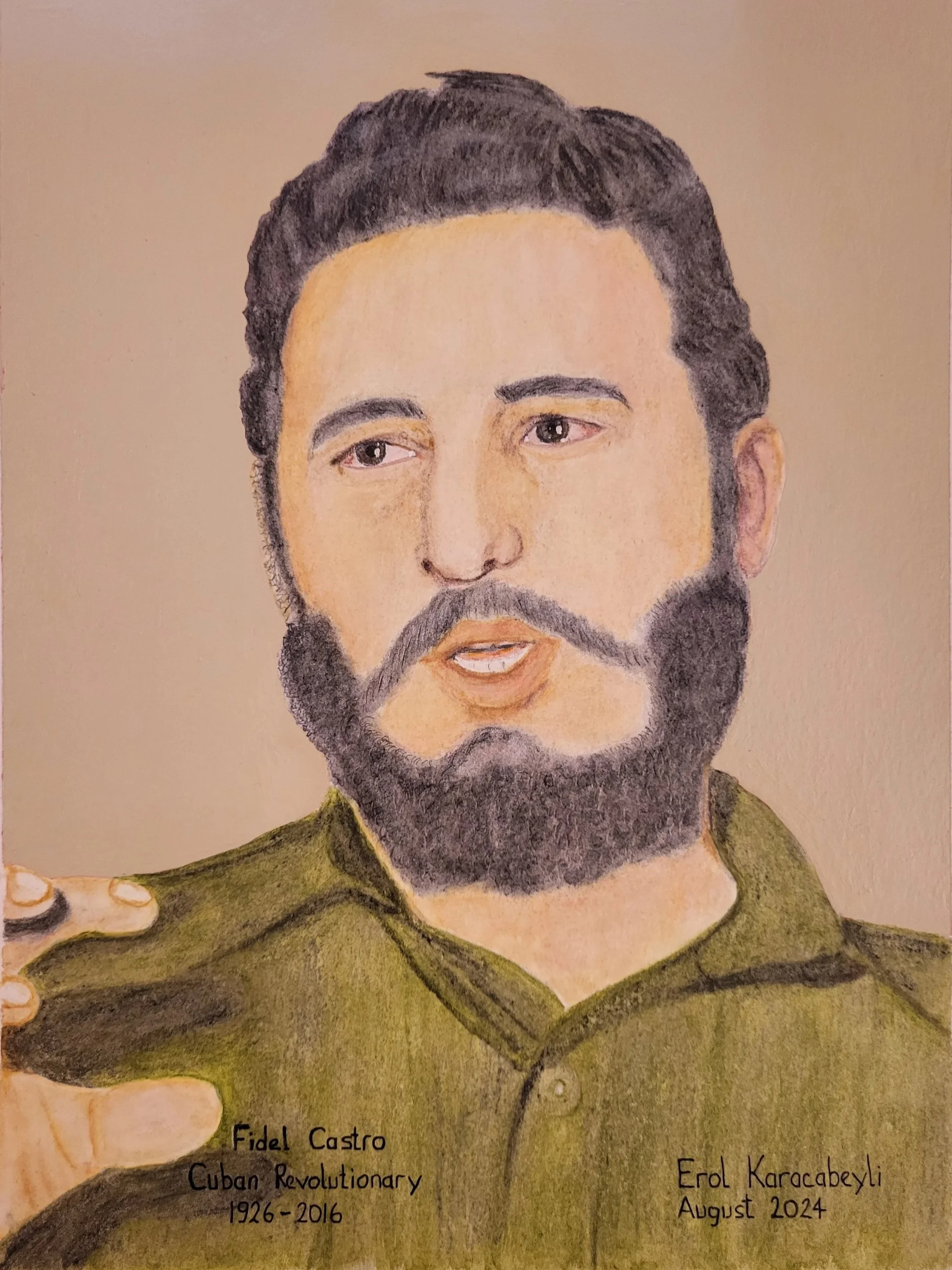
Fidel Castro
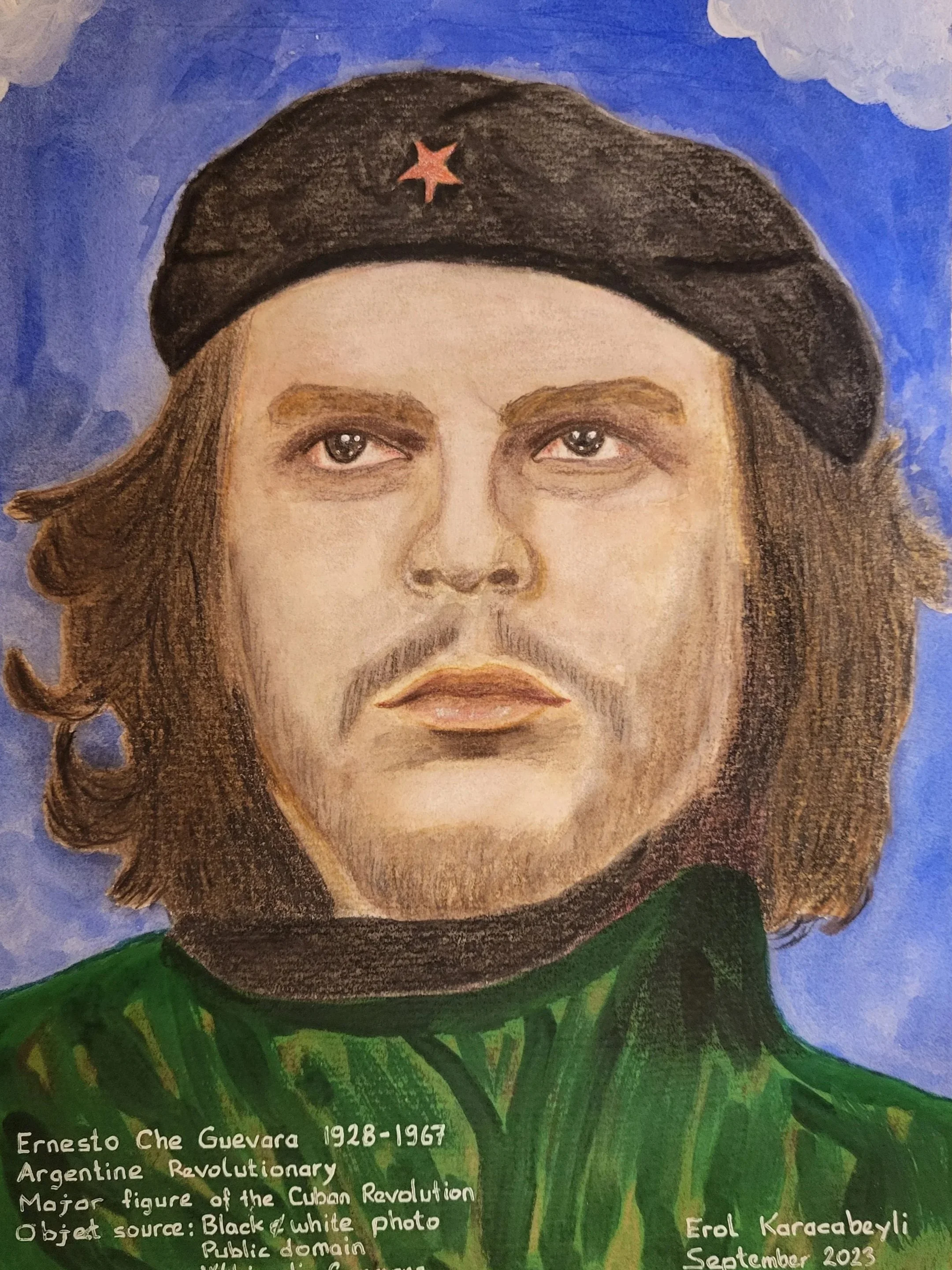
Che Guevara
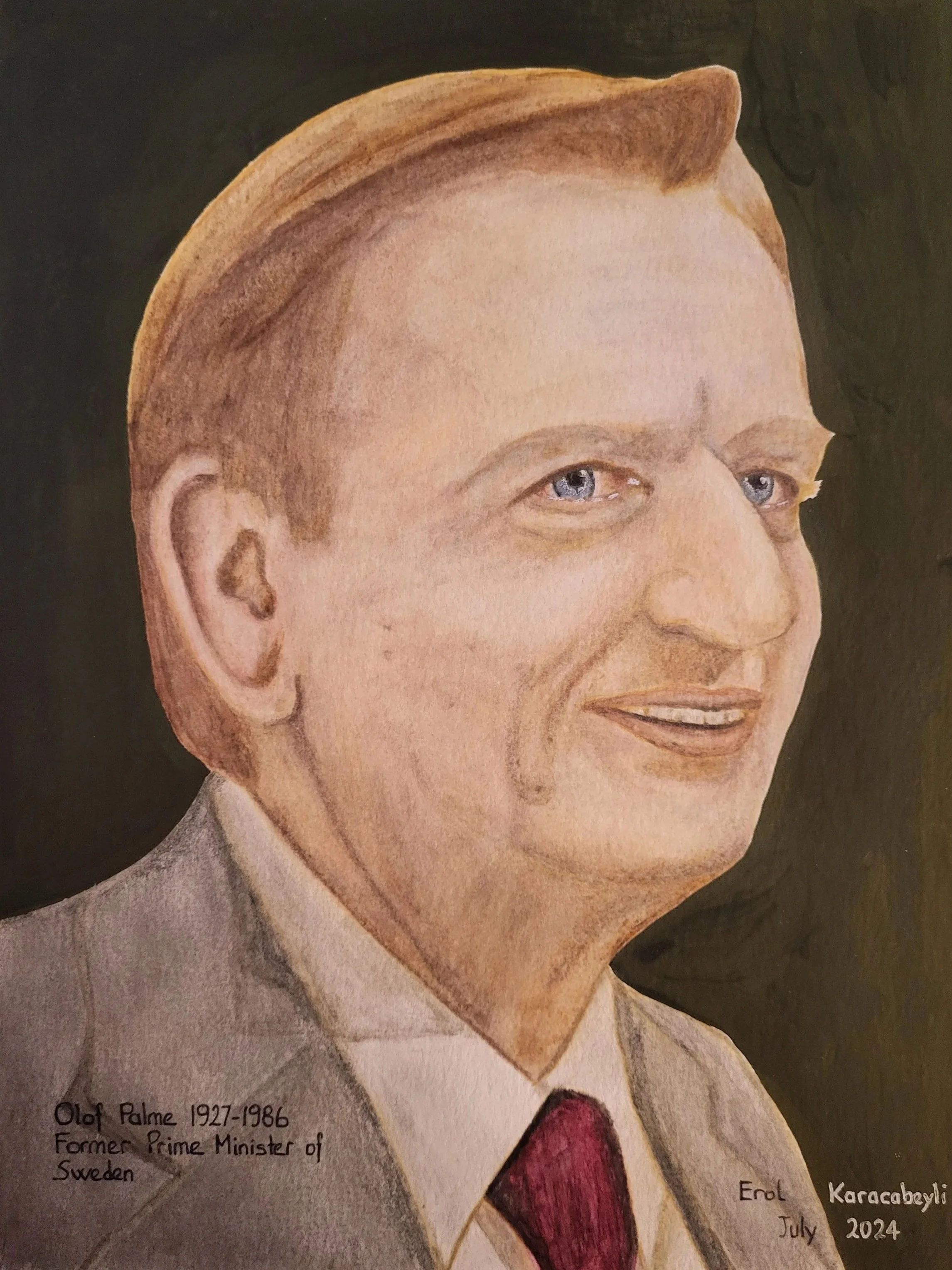
Olof Palme
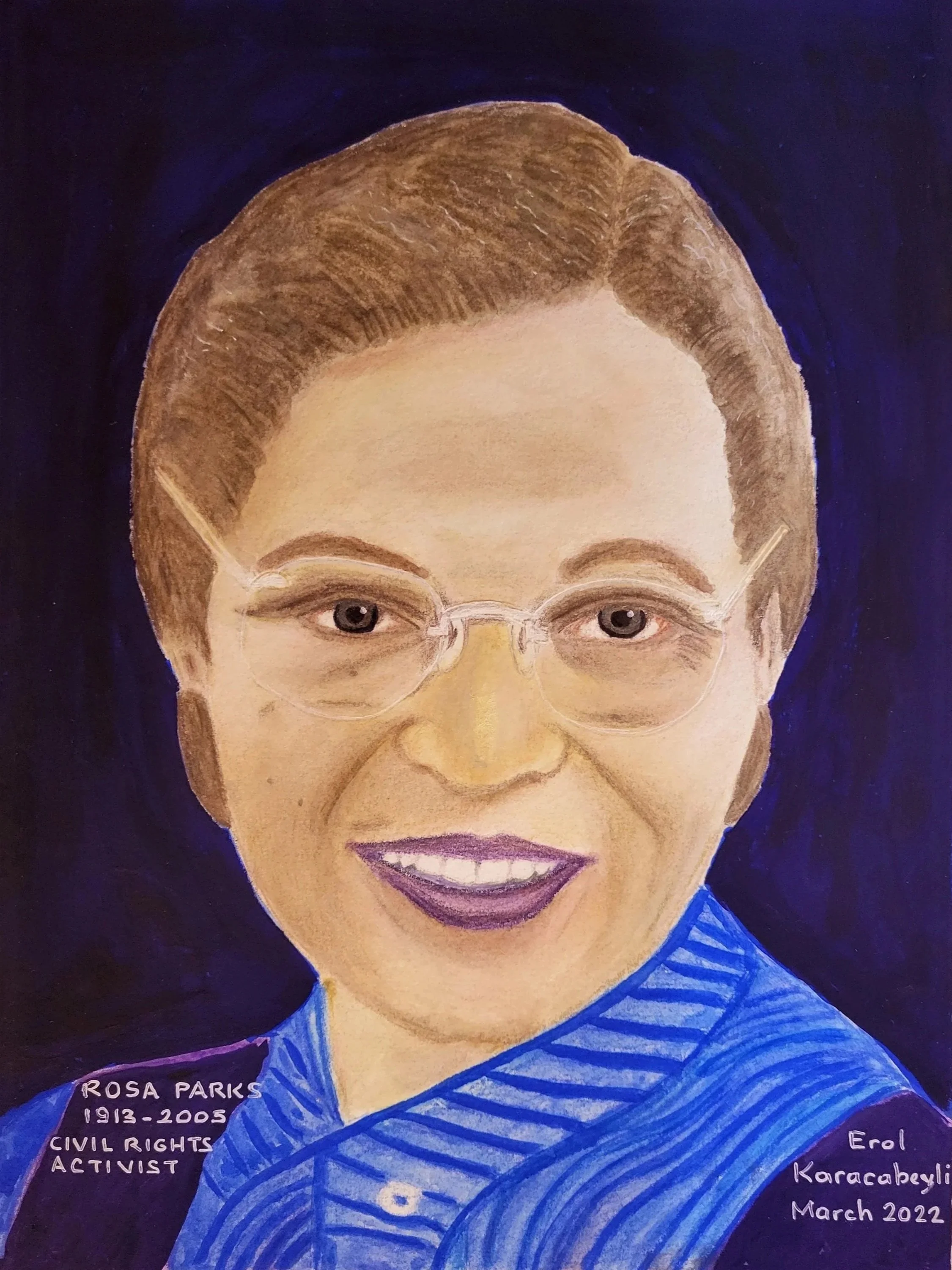
Rosa Parks
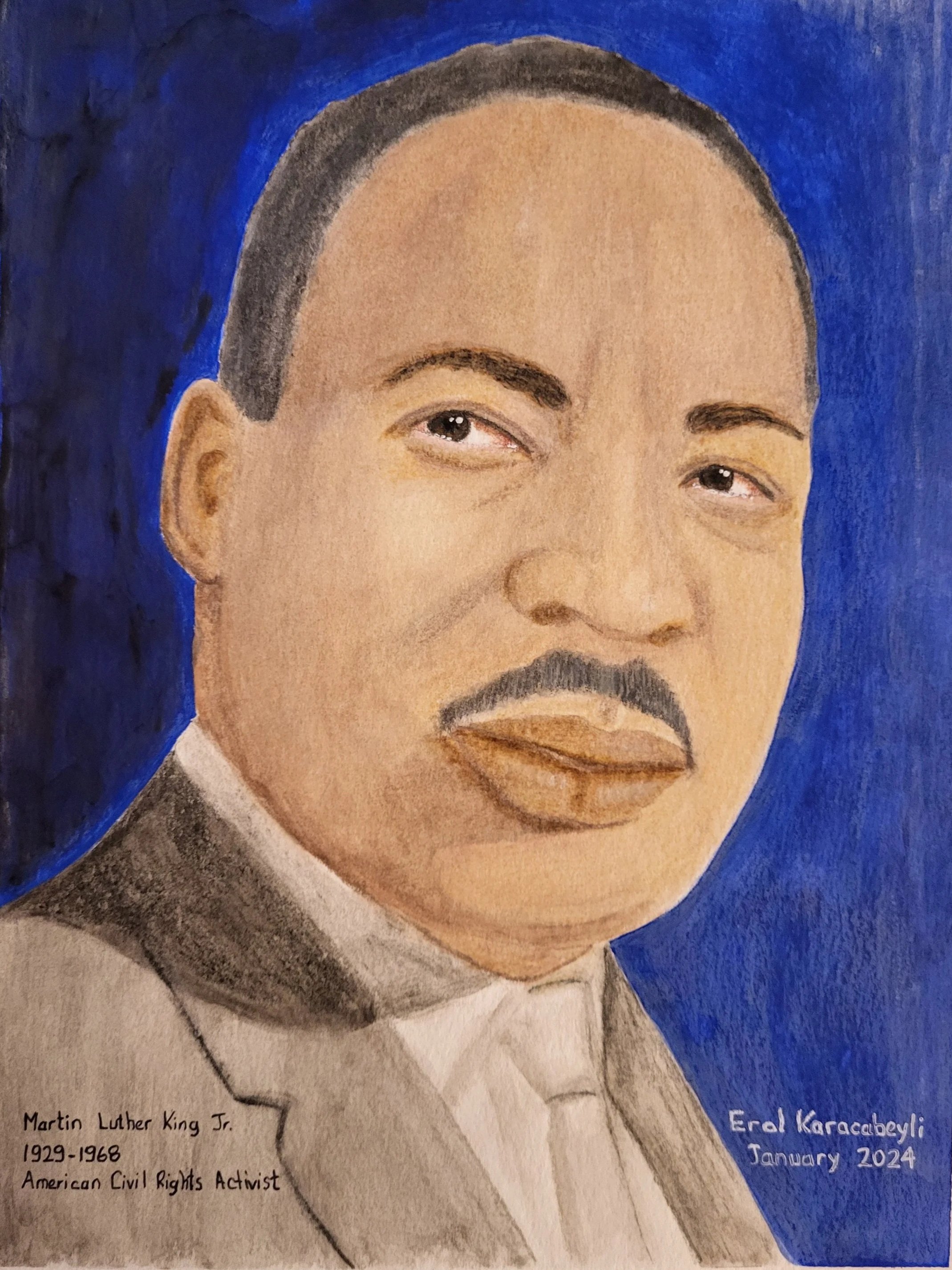
Martin Luther King Jr.
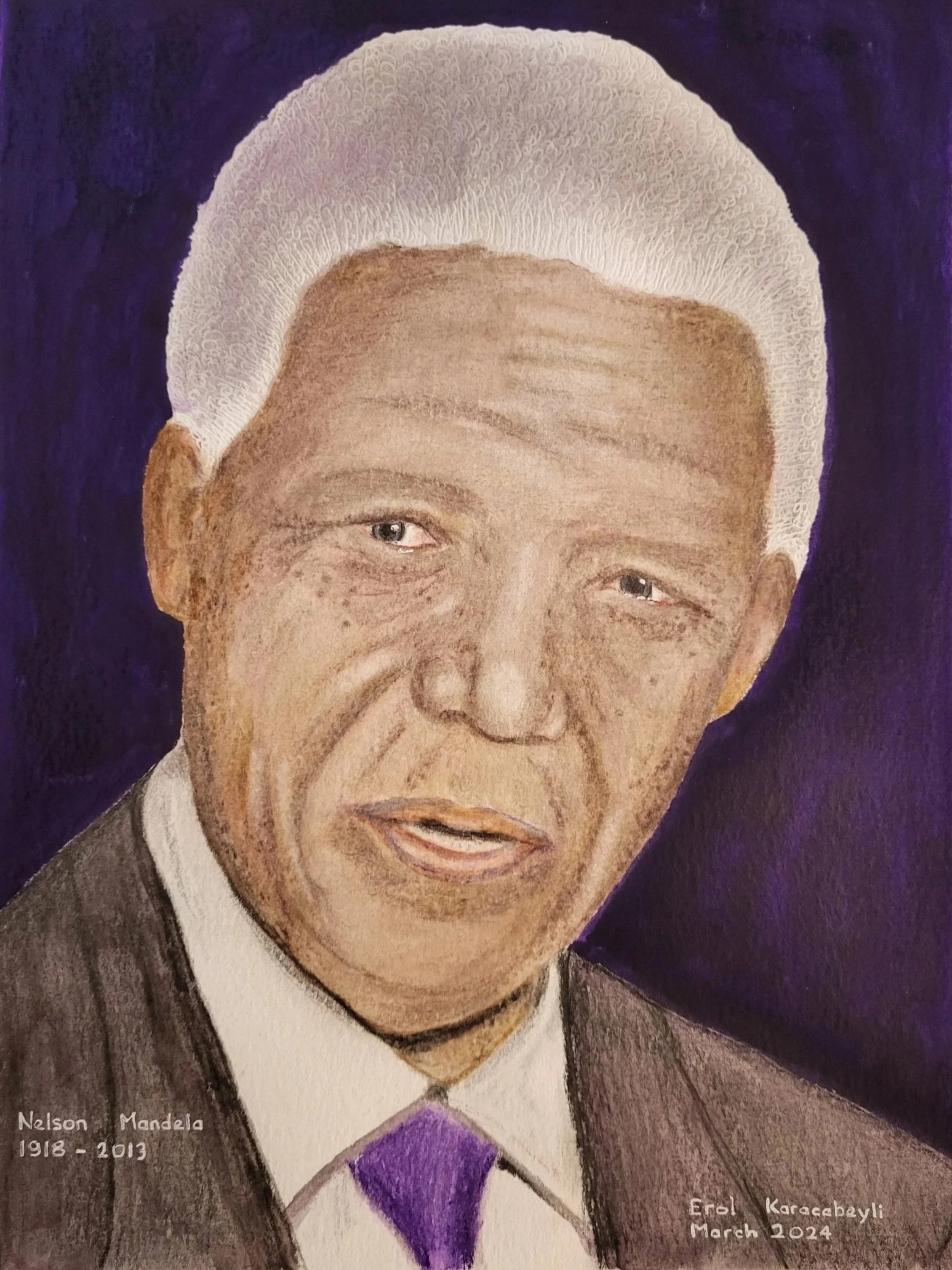
Nelson Mandela
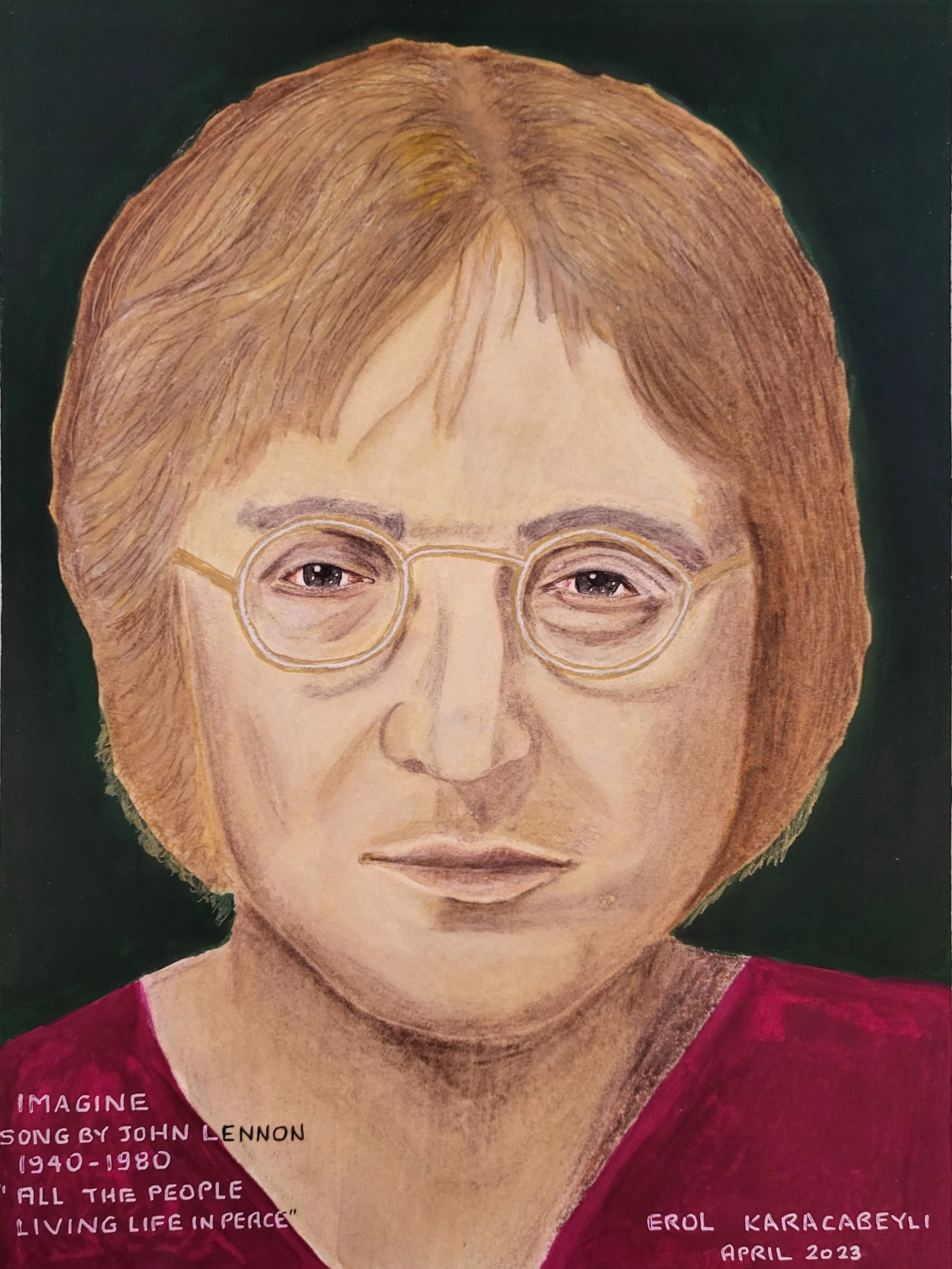
John Lennon
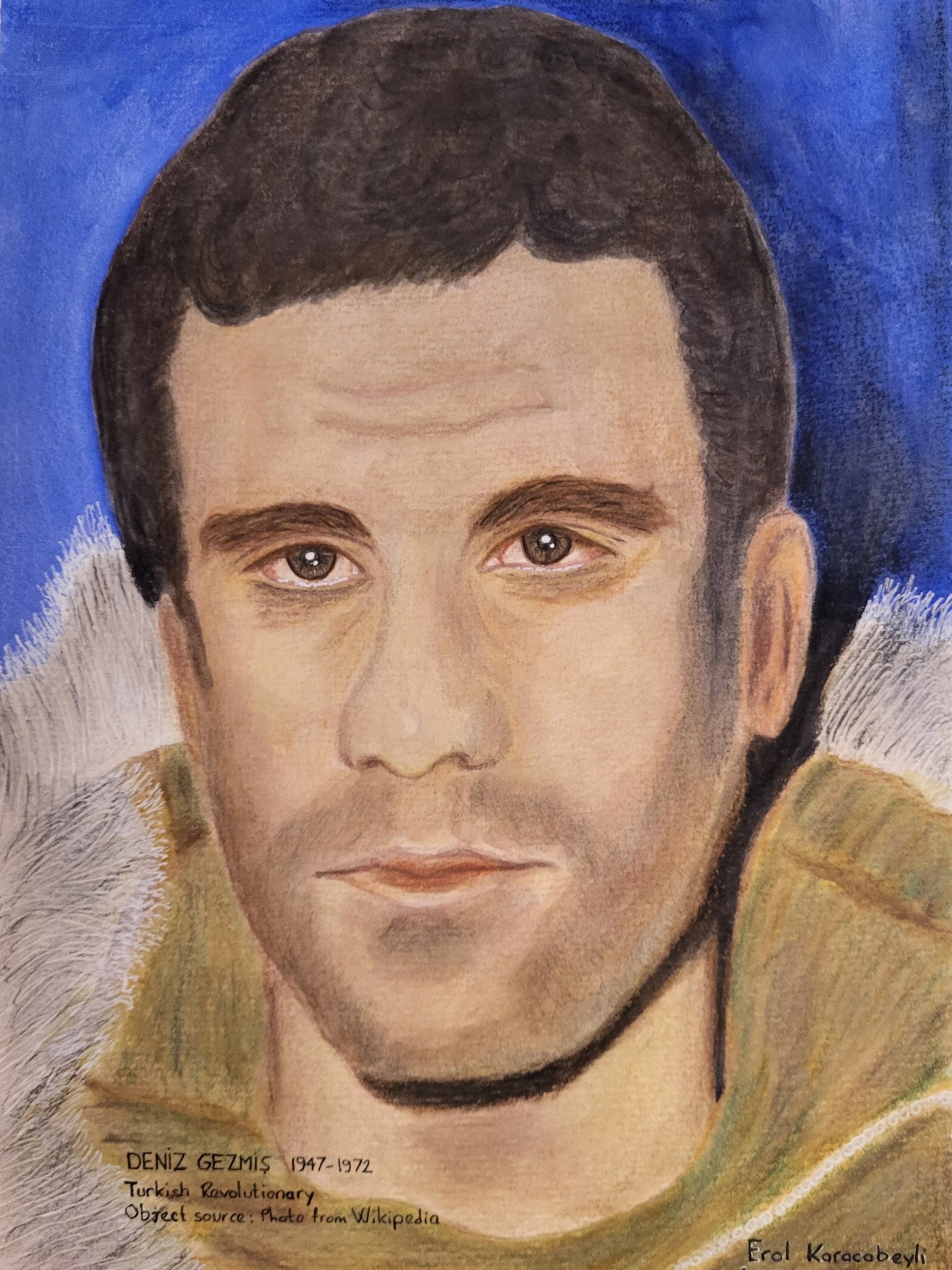
Deniz Gezmis
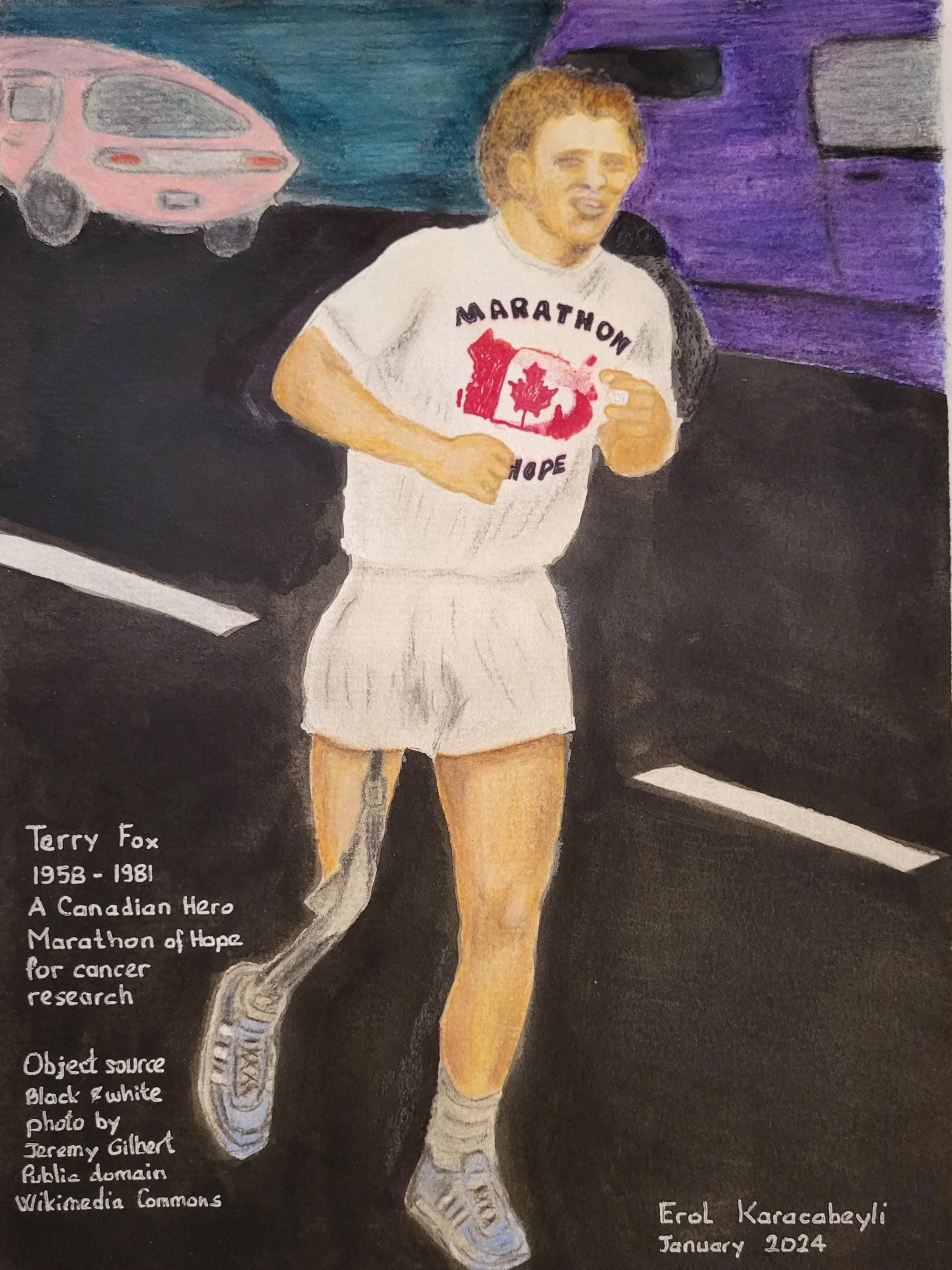
Terry Fox
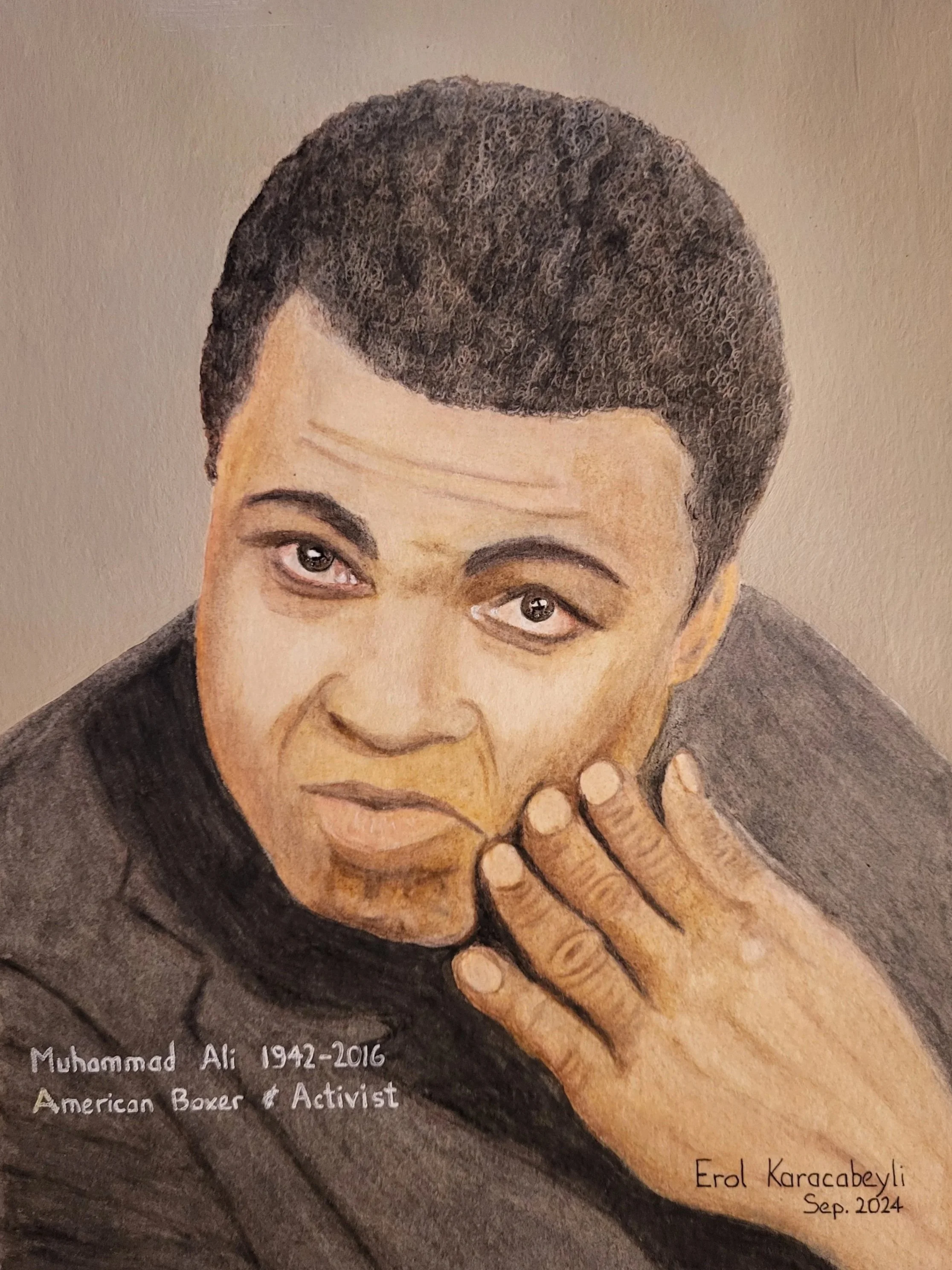
Muhammad Ali
Portrait of Mahatma Gandhi
Essence: The leader who used nonviolence to win India’s freedom and inspired peace movements across the world.
Mohandas Karamchand Gandhi, popularly known as Mahatma Gandhi, was a visionary leader who led India’s struggle for independence from British rule. He believed in truth, nonviolence, and simple living. His life and principles have influenced generations around the globe.
Türkçe — Öz: Hindistan’ın özgürlüğünü kazanmak için şiddetsizliği kullanan ve dünya çapında barış hareketlerine ilham veren lider.
Mohandas Karamchand Gandhi, halk arasında Mahatma Gandhi olarak bilinir, Hindistan’ın İngiliz sömürge yönetimine karşı bağımsızlık mücadelesine öncülük eden ileri görüşlü bir liderdi. O, gerçeğe, şiddetsizliğe ve sade bir yaşam tarzına inanıyordu. Hayatı ve ilkeleri, dünya çapında nesiller boyunca insanları etkilemiştir.
Profile
Mahatma Gandhi was born in 1869, in Porbandar, a small town in Gujarat, India. He studied law in England and later worked in South Africa, where he first developed his ideas of nonviolent resistance while fighting discrimination against Indians.
When he returned to India in 1915, Gandhi became a key figure in the Indian freedom movement. He introduced the idea of Satyagraha, meaning “truth-force,” which involved peaceful protests, civil disobedience, and non-cooperation with British authorities. Movements like the Salt March and Quit India became symbols of resistance and unity under his leadership.
Gandhi lived a simple life, wore hand-spun clothes, and promoted self-reliance. He believed in religious harmony and worked to uplift the poor and the marginalized, especially those he called "Harijans" (people of God).
Even after India gained independence in 1947, Gandhi continued to work for peace, especially between Hindus and Muslims. Tragically, he was assassinated on January 30, 1948, by a man who opposed his views. However, his legacy of peace, justice, and nonviolence lives on, inspiring civil rights movements led by leaders like Martin Luther King Jr. and Nelson Mandela.
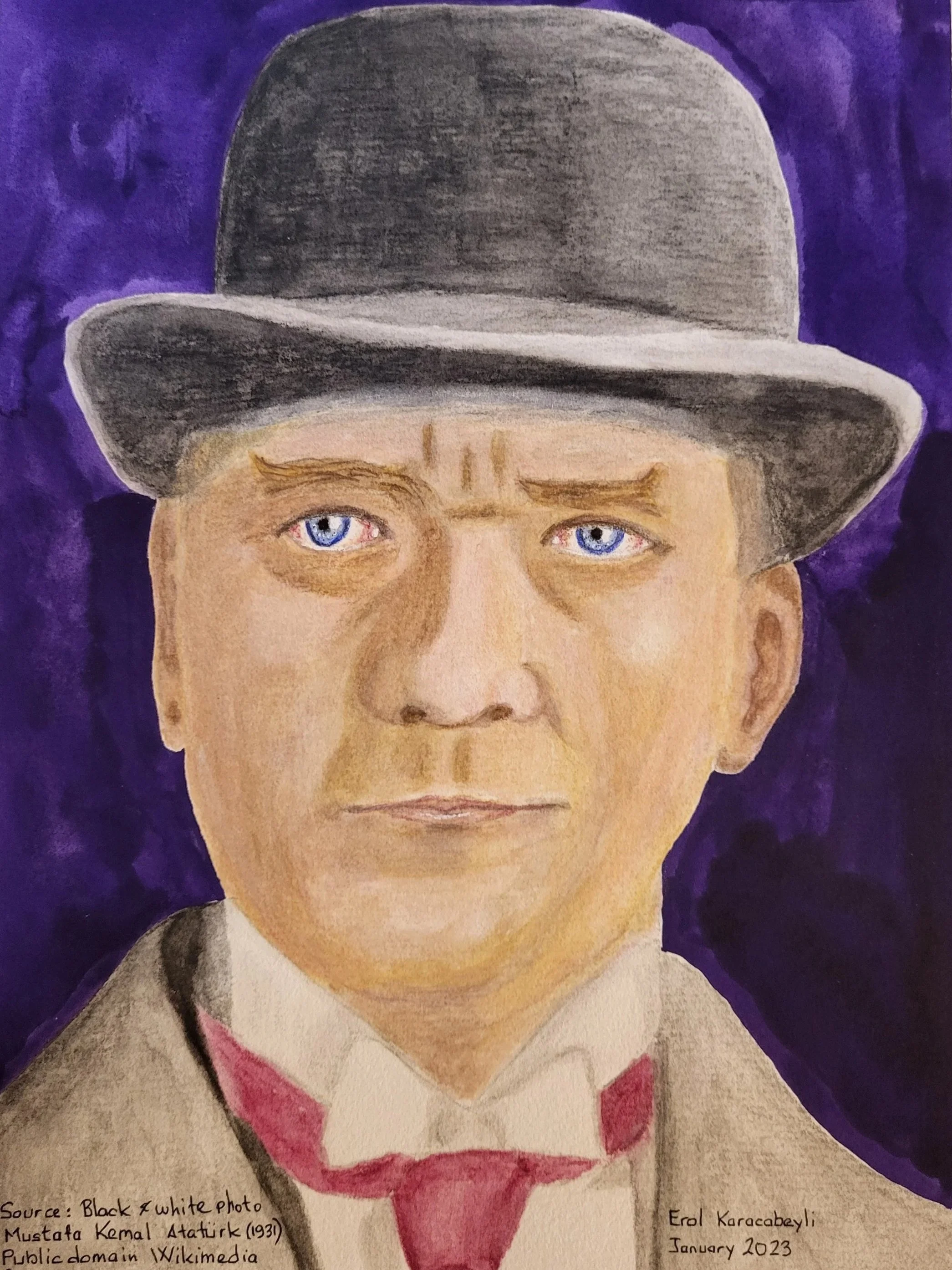
Portrait of Mustafa Kemal Atatürk
Essence: The visionary founder of modern Türkiye who led the country to independence and transformed it into a secular, progressive republic.
Mustafa Kemal Atatürk was a military hero and reformist leader who founded the Republic of Türkiye in 1923 after leading the Turkish War of Independence. He introduced sweeping reforms in education, law, and culture, aiming to modernize and secularize the country. His legacy continues to shape Turkish identity and national pride.
Türkçe — Öz: Ülkeyi bağımsızlığa taşıyan ve modern Türkiye’yi laik, ilerici bir cumhuriyet olarak inşa eden vizyoner lider.
Mustafa Kemal Atatürk, Türk Kurtuluş Savaşı’nı yönettikten sonra 1923’te Türkiye Cumhuriyeti’ni kuran askerî bir kahraman ve reformcu bir liderdi. Eğitimi, hukuku ve kültürü kapsayan köklü reformlar gerçekleştirerek ülkeyi modernleştirmeyi ve laikleştirmeyi hedefledi. Onun mirası, Türk kimliğini ve ulusal gururu şekillendirmeye devam etmektedir.
Profile
Mustafa Kemal Atatürk was born in 1881 in Salonica (now Thessaloniki, Greece), which was then part of the Ottoman Empire. He studied at military schools and quickly rose through the ranks of the army, earning national recognition during World War I, particularly at the Battle of Gallipoli. His leadership and strategic skills made him a respected figure throughout the collapsing empire.
After the defeat of the Ottoman Empire in World War I and the harsh terms of the Treaty of Sèvres, Atatürk organized the Turkish National Movement. He led the Turkish War of Independence (1919–1922) against occupying Allied forces and internal opposition. During this struggle, the movement received crucial foreign support, most notably from Soviet Russia, which provided military supplies, financial aid, and diplomatic backing. This assistance, along with support from sympathetic elements in the Muslim world, played a significant role in sustaining the nationalist resistance.
In 1923, Atatürk declared the foundation of the Republic of Türkiye, abolishing the centuries-old Ottoman Sultanate. As the first President of Türkiye, Atatürk introduced bold and lasting reforms to reshape the nation. These included replacing Islamic law with a secular civil code, adopting the Latin alphabet, promoting education and women's rights, and encouraging Western-style dress and social norms. His vision was to build a modern, independent, and secular nation-state.
Atatürk passed away on November 10, 1938, but remains one of the most respected leaders in Turkish history. He is honored as the founding father of modern Türkiye “Atatürk” and his principles, known as Kemalism, continue to influence Turkish politics and society. His famous motto, "Peace at home, peace in the world," reflects his commitment to both national unity and international harmony.
Portrait of Ho Chi Minh
Essence: The revolutionary leader who led Vietnam’s fight for independence, becoming a global symbol of anti-colonial defiance, socialist resolve, and international solidarity.
From a poor Vietnamese village to the world stage, Ho Chi Minh became a defining figure of 20th-century revolutionary movements. A tireless anti-colonialist and founder of modern Vietnam, he fused nationalism and Marxism to challenge global empires. With quiet humility and unshakable will, he inspired not only a nation but also liberation movements across Asia, Africa, and beyond.
Türkçe — Öz: Vietnam’ın bağımsızlık mücadelesine önderlik eden, sömürgeciliğe karşı direnişin, sosyalist kararlılığın ve küresel dayanışmanın kalıcı bir simgesi haline gelen devrimci lider.
Yoksul bir Vietnam köyünden dünya sahnesine uzanan Ho Chi Minh, 20. yüzyılın devrimci hareketlerini şekillendiren en önemli figürlerinden biri oldu. Yorulmak bilmeyen bir sömürgecilik karşıtı ve modern Vietnam’ın kurucusu olarak, ulusçuluğu ve Marksizmi birleştirerek küresel imparatorluklara meydan okudu. Sessiz alçak gönüllülüğü ve sarsılmaz iradesiyle yalnızca bir ulusa değil, Asya, Afrika ve ötesindeki özgürlük hareketlerine de ilham verdi.
Profile
Born in 1890 in French-ruled Vietnam, Ho Chi Minh spent years abroad absorbing socialist and anti-colonial ideas in France, the United States, and the Soviet Union. Returning home in the 1940s, he founded the Viet Minh, a nationalist-communist front that led resistance against both Japanese occupation during World War II and later French re-colonization.
After Japan’s surrender in 1945, the Viet Minh launched the August Revolution, seizing power in Hanoi. On September 2, 1945, Ho declared Vietnamese independence and became the first Prime Minister and later President of the Democratic Republic of Vietnam. However, France soon returned to reclaim its colony, sparking the First Indochina War. Ho’s forces received military and economic support from the Soviet Union and the newly communist People’s Republic of China, which provided weapons, training, and advisors. This aid proved decisive in the 1954 Battle of Dien Bien Phu, where French forces were defeated, leading to their withdrawal after the Geneva Accords, which temporarily divided Vietnam into North and South.
Following the French exit, the United States increased its support for South Vietnam, leading to the prolonged Vietnam War against Ho’s communist North. Soviet and Chinese assistance continued—despite growing tensions between the two powers—supplying weapons and logistical support. Ho remained the symbolic leader of North Vietnam until his death in 1969; the war concluded with the U.S. withdrawal in 1973 and Vietnam’s reunification in 1975 under communist rule.
Ho Chi Minh saw colonialism, capitalism, and racism as deeply interconnected. In his 1925 essay “The Black Race,” he condemned the brutal treatment of Black people by colonial powers and drew explicit parallels between the oppression of Africans, African Americans, and the Vietnamese. He criticized France’s hypocrisy—claiming to uphold liberty while enslaving and degrading non-white peoples—and called for global solidarity among the oppressed.
These ideas resonated decades later in movements like the U.S. Civil Rights Movement. In 1967, American boxer Muhammad Ali refused to be drafted into the Vietnam War, famously stating, “I ain’t got no quarrel with them Viet Cong”, and Dr. Martin Luther King Jr. who, in his "Beyond Vietnam" speech, aligned with Ho’s critique of imperialism, arguing that the war was an enemy of the poor.
Ho Chi Minh is revered in Vietnam as the “Father of the Nation.” The country’s largest city bears his name, Ho Chi Minh City (formerly Saigon). While critics point to the one-party system, press restrictions, and limited political pluralism in modern Vietnam, Ho’s personal image endures as that of a simple, principled leader who lived modestly and never sought wealth or power for himself.
Ironically, the U.S. is now one of Vietnam’s largest trading partners. Since relations were normalized in 1995, the U.S. influence on Vietnam became economic, educational, and strategic, not colonial or coercive. It’s built on mutual benefit and pragmatism, where both nations have moved beyond the trauma of war to pursue shared prosperity and regional stability. Vietnam values the U.S. as a partner in modernization and balance, but maintains its independence — echoing Ho Chi Minh’s old principle:
“Nothing is more precious than independence and freedom.”
Portrait of Tommy Douglas
Essence: A visionary social reformer who brought universal healthcare to Canada.
Few Canadians have left as deep an imprint on their nation as Tommy Douglas. A Baptist preacher turned politician, Douglas devoted his life to social justice, democracy, and human dignity. As the architect of Canada’s public healthcare system and a champion of workers’ rights, he transformed the moral expectations of government. Yet, like some other thinkers of his era, he also explored eugenic ideas in his youth—views he would later abandon as inconsistent with his belief in equality and compassion.
Türkçe — Öz: Kanada’ya evrensel sağlık hizmetini kazandıran, ileri görüşlü bir toplumsal reformcu.
Kendi ülkesine Tommy Douglas kadar derin bir iz bırakmış Kanadalı çok azdır. Bir Baptist vaizi olarak başladığı hayatında daha sonra siyasetçi olan Douglas, yaşamını sosyal adalet, demokrasi ve insan onuruna adadı. Kanada’nın kamu sağlık sistemi mimarı ve işçi haklarının savunucusu olarak, hükümetin ahlaki sorumluluklarına dair anlayışı kökten değiştirdi. Ancak, döneminin bazı düşünürleri gibi o da gençliğinde öjenik fikirleri araştırmıştı—sonrasında eşitlik ve merhamet inancıyla bağdaşmadığını fark ederek bu görüşleri bütünüyle reddetti.
Profile
Thomas Clement Douglas (1904–1986) was born in Scotland and emigrated to Canada with his family as a child. Growing up amid poverty and witnessing the struggles of ordinary Canadians during the Great Depression deeply shaped his worldview. Trained as a Baptist minister, Douglas’s sermons often blended faith with social criticism, arguing that Christian ethics demanded action against economic injustice.
In the 1930s, he joined the Co-operative Commonwealth Federation (CCF), a socialist democratic party that sought to reform capitalism rather than abolish it. Elected Premier of Saskatchewan in 1944, Douglas led North America’s first social-democratic government. His administration introduced a wave of progressive policies—public auto insurance, rural electrification, a bill of rights, and above all, universal healthcare, first launched provincially in 1962. The success of this system became the blueprint for Canada’s national Medicare program, earning Douglas recognition as “The Greatest Canadian” in a 2004 CBC poll.
However, Douglas’s intellectual journey was not without contradictions. As a graduate student in the 1930s, he wrote a master’s thesis on eugenics, reflecting a belief among some Western academics and reformers that selective breeding or sterilization could reduce poverty and disease. In later life, Douglas rejected these ideas. His mature politics—centered on universal rights, social equality, and compassion—stood in direct opposition to the exclusionary logic of eugenics.
After stepping down as Premier, Douglas became the first leader of the New Democratic Party (NDP) in 1961, merging socialist principles with parliamentary democracy. He continued to advocate for peace, civil liberties, and workers’ rights throughout his career. Though he never held federal power, his ideas reshaped the Canadian welfare state and remain embedded in its national identity.
Douglas’ legacy endures—in every Canadian hospital, clinic, and public policy rooted in the belief that healthcare is a right, not a privilege. His life reminds us that even great reformers are shaped by their times, and that progress often comes through reflection, revision, and moral growth.
Portrait of Pierre Trudeau
Essence: A bold and intellectual Canadian Prime Minister whose leadership reshaped the nation’s identity, secured constitutional independence from Britain, and pursued an independent foreign policy that often defied convention.
Pierre Elliott Trudeau was a charismatic and often controversial leader whose government transformed the country politically and culturally. He championed national unity, entrenched individual rights in the Constitution, asserted Canada’s independence on the world stage, and helped shape a nation that was bilingual, multicultural, and proudly self-reliant.
Türkçe — Öz: Kanada’nın kimliğini yeniden şekillendiren, ülkesinin Britanya’dan anayasal bağımsızlığını güvence altına alan ve geleneklere meydan okuyan bağımsız bir dış politika izleyen cesur ve entelektüel bir Kanada Başbakanı.
Pierre Elliott Trudeau, Kanada’nın 15. Başbakanı olarak, ülkesini siyasi ve kültürel açıdan dönüştüren, karizmatik ve sık sık tartışmalara yol açan bir liderdi. Ulusal birliği savundu, bireysel hakları Anayasada güvence altına aldı, Kanada’nın dünya sahnesindeki bağımsızlığını vurguladı ve iki dilli, çok kültürlü, bağımsızlığıyla gurur duyan bir Kanada vizyonu oluşturdu.
Profile
Trudeau (1919-2000) came to power in 1968 promising a “just society,” and his leadership delivered lasting change. His government introduced official bilingualism and multiculturalism, helping Canadians view diversity as a national strength. Confronting deep divisions over Quebec’s sovereignty movement, Trudeau worked tirelessly to keep the country together. His greatest legacy came in 1982, when his government achieved Canada’s constitutional independence from Britain and introduced the Canadian Charter of Rights and Freedoms, guaranteeing fundamental rights for all citizens.
Internationally, Trudeau was known for his independent foreign policy. He sought to keep Canada neutral between the Cold War superpowers, building ties with the Soviet Union, China, and Cuba — choices that sometimes put him at odds with Western allies. His warm friendship with Cuban leader Fidel Castro stood out; the two men shared mutual respect, and Castro later served as a pallbearer at Trudeau’s funeral in 2000.
Pierre Trudeau’s ideas and style polarized Canadians — some admired his intellect and courage, while others criticized his boldness and centralizing vision. Yet his influence endures: he helped shape a Canada that is independent, diverse, and confident on the world stage.
Portrait of Fidel Castro
Essence: The revolutionary leader who transformed Cuba into a socialist state, standing defiantly against U.S. influence and becoming one of the most influential—and controversial—figures of the 20th century.
Fidel Castro’s rise from guerrilla fighter to long-time leader of Cuba made him a symbol of both revolutionary hope and authoritarian control, depending on one’s perspective. As the architect of the Cuban Revolution, he reshaped the political landscape of Latin America and became a global figure in Cold War politics. His charisma, resilience, and defiance of Western power earned admiration in the Global South and suspicion in the West.
Türkçe — Öz: Küba’yı sosyalist bir devlete dönüştüren, ABD etkisine karşı kararlılıkla direnen ve 20. yüzyılın en etkili —ve en tartışmalı— liderlerinden biri haline gelen devrimci önder.
Fidel Castro’nun bir gerilla savaşçısından Küba’nın uzun süreli liderliğine uzanan yükselişi, onu bakış açısına göre ya devrimci umudun ya da otoriter yönetimin bir sembolü haline getirdi. Küba Devrimi’nin mimarı olarak, Latin Amerika’nın siyasi manzarasını yeniden şekillendirdi ve Soğuk Savaş döneminde küresel bir figür haline geldi. Karizması, direnci ve Batı’ya karşı gösterdiği meydan okuma, Küresel Güney’de hayranlık uyandırırken Batı’da şüpheyle karşılandı.
Profile
Born in Cuba, Fidel Castro (1926–2016) was trained as a lawyer before turning to a revolutionary. In the 1950s, he led an armed uprising against the dictatorship of Fulgencio Batista, culminating in the successful Cuban Revolution of 1959.
After seizing power, Castro installed a Marxist-Leninist government, nationalized industries, and aligned Cuba with the Soviet Union, triggering decades of tension with the United States. His closest revolutionary ally, Che Guevara, helped lead the revolution and held key government roles before departing to pursue international insurgencies.
Beyond Cuba, Castro championed anti-imperialist and Third World solidarity movements, supporting revolutionary causes in Africa, Latin America, and Asia. He sent Cuban doctors, teachers, and soldiers abroad—most notably to Angola and Ethiopia—and became a hero to many in the non-aligned and developing world.
Castro deeply admired Ho Chi Minh and supported the Vietnamese struggle against U.S. forces. He also maintained a relationship with Swedish Prime Minister Olof Palme, based on shared interests in global justice—though Palme criticized Cuba’s human rights record. Perhaps most unexpectedly, Castro developed a personal friendship with Canadian Prime Minister Pierre Trudeau, who visited Havana in 1976; Castro later attended Trudeau’s funeral in 2000 as a pallbearer.
Fidel Castro ruled Cuba for nearly five decades, surviving numerous assassination attempts, a U.S. trade embargo, the Bay of Pigs invasion, and the collapse of the Soviet Union. His supporters praise him for achieving universal healthcare, education, and for resisting imperialism. His critics condemn him for suppressing dissent, curbing civil liberties, and establishing a one-party authoritarian state.
Portrait of Che Guevara
Essence: A revolutionary who fought to liberate the oppressed, becoming a global symbol of resistance against imperialism and injustice.
Ernesto “Che” Guevara was more than a guerrilla fighter—he was a doctor, writer, traveler, and political thinker whose legacy transcended Latin America. As a central figure in the Cuban Revolution, his name and image have come to symbolize rebellion against imperialism and the struggle for a fairer world.
Türkçe — Öz: Ezilenleri özgürleştirmek için savaşan bir devrimci ikon; emperyalizme ve adaletsizliğe karşı direnişin küresel sembolü haline geldi.
Ernesto “Che” Guevara, sadece bir gerilla savaşçısı değil; aynı zamanda bir doktor, yazar, gezgin ve siyasi düşünürdü. Mirası, Latin Amerika’nın çok ötesine uzanır. Küba Devrimi’nin merkezinde yer alan bir figür olarak, adı ve imajı isyanın, idealizmin ve daha adil bir dünya mücadelesinin simgesi haline gelmiştir.
Profile
Born in 1928 in Argentina, Guevara studied medicine but found his true calling during a motorcycle journey across South America. Witnessing poverty, inequality, and U.S. corporate influence firsthand, he concluded that only armed resistance could bring meaningful change to the lives of oppressed peoples. This turning point transformed him from a doctor into a revolutionary.
Che joined Fidel Castro’s revolutionary movement in the 1950s to overthrow the U.S.-backed Batista regime in Cuba. He became a key commander and strategist, leading guerrilla units and helping secure victory in 1959. After the revolution, he held major government posts, promoting agrarian reform, literacy, and anti-capitalist policies. Guevara believed that true socialism required both economic change and the creation of a “new man”—a selfless, disciplined revolutionary.
Che saw revolution as a global duty, not just a national cause. He left Cuba to support insurgencies in Congo and later Bolivia, where he hoped to ignite a broader Latin American uprising. In 1967, he was captured and executed by CIA-backed Bolivian forces. His death turned him into a martyr, and his iconic image—bearded, beret-clad, eyes fixed on the horizon—became a timeless emblem of defiance.
While admired by many as a champion of the poor, Che remains a polarizing figure due to his support for armed struggle and his role in post-revolutionary Cuba’s harsh policies. Still, for generations of activists worldwide, he represents the undying fight for dignity, freedom, and justice in the face of oppression.
Portrait of Olof Palme
Essence: A fearless voice of moral conviction — championed peace, equality, and independence in a world divided by power.
Olof Palme was Sweden’s visionary Prime Minister and one of the most outspoken and influential political figures of the 20th century. Known for his eloquence and moral clarity, he stood apart from the Cold War’s rigid alignments, promoting a path of non-alignment, social justice, and solidarity with oppressed peoples. Palme’s leadership extended Sweden’s global influence far beyond its size, rooted in humanitarian ideals and a deep belief in democracy and international cooperation.
Türkçe Öz: Güç tarafından bölünmüş bir dünyada barışın, eşitliğin ve bağımsızlığın korkusuz ve ahlaki bir savunucusu.
Olof Palme, İsveç’in vizyoner Başbakanı ve 20. yüzyılın açık sözlü ve en etkili siyasetçilerinden biriydi. Hitabet yeteneği ve ahlaki netliğiyle tanınan Palme, Soğuk Savaş’ın katı kutuplaşmalarının dışında durarak, bağlantısızlık, sosyal adalet ve ezilen halklarla dayanışma yolunu savundu. Onun liderliği, insancıl ideallere ve demokrasi ile uluslararası işbirliğine duyduğu derin inanç sayesinde, İsveç’in küresel etkisini ülkesinin büyüklüğünün çok ötesine taşıdı.
Profile
Olof Palme’s (1927–1986) political career reflected a rare blend of courage, compassion, and intellectual independence. Leading Sweden’s Social Democratic Party, he rejected the notion that small nations must follow what superpowers dictate, instead crafting a policy of active neutrality — non-alignment combined with strong advocacy for human rights and global equality. His foreign policy was marked by outspoken criticism of both American and Soviet foreign policies, condemning the United States for its bombings in Vietnam in 1972 and denouncing the Soviet Union’s repression and imperial ambitions. This principled stance often strained Sweden’s relations with major powers but earned Palme enduring respect as a leader of conscience.
Palme believed the world’s newly independent nations deserved genuine freedom, not economic or political domination in new forms. He lent Sweden’s voice and resources to numerous liberation movements across Africa, Asia, and Latin America, offering economic and moral support to the developing world. His visit to post-revolutionary Cuba made him the first Western head of government to do so, symbolizing his solidarity with nations seeking self-determination — though he did not hesitate to criticize Cuba’s human rights record.
A fierce opponent of authoritarianism in all of its forms, Palme spoke against dictators such as Francisco Franco in Spain, Augusto Pinochet in Chile, and the apartheid regimes of John Vorster and P. W. Botha in South Africa, which he denounced as a “particularly gruesome system.” His moral outspokenness embodied a rare consistency — condemning oppression regardless of its ideological source.
Olof Palme’s assassination on a Stockholm street in 1986 shocked the world and left a profound void in global progressive politics. To many, his death symbolized the silencing of a voice that had dared to speak the truth — a leader whose vision of solidarity, justice, and peace continues to inspire movements for a more equitable world.
Portrait of Rosa Parks
Essence: One among many courageous individuals whose refusal to accept injustice became a powerful symbol of change.
Often called “the mother of the civil rights movement,” Rosa Parks is best known for her quiet act of defiance on December 1, 1955, when she refused to give up her seat to a white passenger on a Montgomery, Alabama, bus. Her action ignited the Montgomery Bus Boycott and became a catalyst for the broader struggle for racial equality in the United States.
Türkçe — Öz: Adaletsizliği kabul etmeyi reddeden cesur bireylerden biri — değişim için güçlü bir simge haline geldi.
“Sivil haklar hareketinin annesi” olarak anılan Rosa Parks, 1 Aralık 1955’te Alabama’nın Montgomery kentinde bir otobüste beyaz bir yolcuya yer vermeyi reddederek tarihe geçen direnişini gerçekleştirdi. Bu eylem, Amerika Birleşik Devletleri’nde ırksal eşitlik için yürütülen mücadelenin fitilini ateşledi.
Profile
Rosa Louise McCauley Parks (1913–2005) was born in Tuskegee, Alabama, and grew up amid the harsh realities of Jim Crow segregation. She worked as a seamstress and, for years, quietly supported local activism through the National Association for the Advancement of Colored People (NAACP).
On that December evening in 1955, Parks’ refusal to surrender her seat led to her arrest and sparked a citywide boycott by thousands of Black residents of Montgomery. The protest lasted 381 days and drew national attention to segregation and civil-rights issues. Martin Luther King Jr., then a young pastor, emerged as a central leader of this movement. Together, grassroots activists, church organizations, and emerging national figures transformed a local act of resistance into a movement for justice.
Parks’ legacy is best understood in connection with other figures — such as Martin Luther King Jr., who championed nonviolent resistance, and Muhammad Ali, the boxer-turned-activist whose bold stances against racial injustice and the Vietnam War reflected the same struggle for dignity and rights.
Rosa Parks’ significance extends far beyond that moment in Montgomery. Her steadfast refusal to accept injustice — grounded in both personal conviction and collective struggle — reminds us that meaningful change often begins with ordinary individuals choosing what is right. When such acts of courage unite many, they can reshape the course of history.
Portrait of Martin Luther King Jr.
Essence: A dreamer who changed the world with the power of peaceful resistance.
Martin Luther King Jr. was more than a civil rights leader—he was a moral compass for humanity. Guided by love, courage, and conviction, he inspired millions to confront injustice not with hatred, but with hope. His words and deeds redefined what it means to fight for equality in a divided world.
Türkçe — Öz: Barışçıl direnişin gücüyle dünyayı değiştiren bir hayalperest.
Martin Luther King Jr., yalnızca bir sivil haklar lideri değil — insanlık için bir vicdan pusulasıydı. Sevgi, cesaret ve inançla, King, milyonlarca insana, adaletsizlikle nefrete değil, umuda sarılarak yüzleşmeyi öğretti. Sözleri ve eylemleri, bölünmüş bir dünyada eşitlik için mücadele etmenin anlamını yeniden tanımladı.
Profile
Born in Atlanta, Georgia, Martin Luther King Jr. (1929 – 1968) emerged as the spiritual and strategic heart of the American civil rights movement. Deeply influenced by Mahatma Gandhi’s philosophy of nonviolent resistance, King transformed that principle into a distinctly American movement— the unshakable belief that love could overcome hate. His leadership (then as a young pastor) during the Montgomery Bus Boycott—sparked by Rosa Parks’ quiet act of defiance in 1955—catapulted him into national prominence and ignited a decade of transformative activism.
King’s eloquence and moral authority turned marches, sit-ins, and protests into acts of spiritual resistance. From the steps of the Lincoln Memorial, where he delivered his immortal “I Have a Dream” speech, to the bridges of Selma, he reminded America of its unfulfilled promise of liberty and justice for all. Like Muhammad Ali, who risked fame and freedom to stand for principle, King too faced persecution—arrests, threats, and ultimately, martyrdom—for his refusal to yield to hate.
Even in his final years, King’s vision expanded beyond racial equality. He spoke out against poverty, war, and economic injustice, envisioning a “Beloved Community” where human dignity transcended race and class. His voice, silenced by an assassination in 1968, continues to echo through movements for peace, justice, and human rights around the globe.
King’s legacy endures not only in monuments and holidays, but in every act of conscience that challenges oppression through compassion. He remains a bridge between the courage of Rosa Parks, the wisdom of Gandhi, and the conviction of Ali—a reminder that true power lies not in force, but in the strength of one’s convictions and the depth of one’s love for humanity.
Portrait of Nelson Mandela
Essence: A symbol of courage, forgiveness, and unwavering commitment to justice and human equality.
Nelson Mandela, South Africa’s first Black president and one of the most revered figures of the 20th century, dedicated his life to ending apartheid and building a nation founded on reconciliation rather than revenge. His journey from prisoner to president inspired people across the world, proving that compassion and conviction can triumph over oppression.
Türkçe — Öz: Cesaretin, affediciliğin ve adalet ile insan eşitliğine sarsılmaz bağlılığın sembolü.
Güney Afrika’nın ilk siyahi devlet başkanı ve 20. yüzyılın en saygı duyulan figürlerinden biri olan Nelson Mandela, hayatını apartheid rejimini sona erdirmeye ve intikam yerine uzlaşma temeline dayanan bir ulus inşa etmeye adadı. Mahkûmluktan cumhurbaşkanlığına uzanan yolculuğu, tüm dünyadaki insanlara ilham verdi ve merhamet ile kararlılığın baskı karşısında zafer kazanabileceğini kanıtladı.
Profile
Nelson Rolihlahla Mandela (1918–2013) grew up under the harsh realities of racial segregation. Educated at Fort Hare University and later at the University of the Witwatersrand, he became involved in the African National Congress (ANC), where he rose to prominence as a passionate advocate for equality. In the 1940s and 1950s, Mandela helped organize peaceful protests and civil disobedience campaigns against discriminatory laws. However, after repeated crackdowns by the apartheid regime, he came to believe that peaceful resistance alone was insufficient and helped form the ANC’s military wing, Umkhonto we Sizwe (“Spear of the Nation”).
Mandela’s 27 years in prison—mostly on Robben Island—transformed him from a fiery activist into a patient, wise, and deeply principled leader. His years behind bars tested his resolve but strengthened his belief in forgiveness as a tool for national healing. When he was released in 1990, he emerged not with bitterness, but with a vision of unity. Four years later, in 1994, he became South Africa’s first democratically elected president, leading the nation toward reconciliation and inclusivity.
Mandela’s philosophy of nonviolence and reconciliation was profoundly influenced by Mahatma Gandhi, whose principles of satyagraha (truth-force) and peaceful resistance left a lasting mark on his thinking.
Throughout his journey, Mandela drew strength and support from fellow activists such as Walter Sisulu, his mentor and lifelong friend, whose wisdom and loyalty sustained him through decades of struggle and imprisonment. He also found moral alignment with Archbishop Desmond Tutu, whose leadership in the Truth and Reconciliation Commission embodied the nation’s healing spirit. While Mandela worked to rebuild South Africa’s political foundations, Tutu gave voice to its conscience, ensuring that forgiveness and truth walked hand in hand.
Among Mandela’s contemporaries, Robert Mangaliso Sobukwe stands out as a formidable leader and intellectual force. As the founder of the Pan Africanist Congress (PAC), Sobukwe championed a vision of African unity and self-determination that challenged both apartheid and colonial mindsets. His moral clarity, eloquence, and unyielding principles made him one of the most respected figures of his generation. Though Mandela and Sobukwe followed different political paths—Mandela within the ANC and Sobukwe within the PAC—their shared commitment to justice and human dignity placed them on parallel tracks of the same liberation struggle. Sobukwe’s courage, particularly during his years of solitary confinement under the infamous “Sobukwe Clause,” reflected the same quiet strength and moral discipline that Mandela embodied.
During Mandela’s long imprisonment, a new generation of activists emerged. Among them was Steve Biko, whose Black Consciousness Movement reignited pride, self-awareness, and resistance among young South Africans. Though Mandela and Biko never met, Mandela later acknowledged Biko’s profound influence on the spirit of liberation, describing him as a torchbearer who kept alive the flame of dignity and defiance during the darkest years of oppression.
Mandela’s political partnership with F.W. de Klerk, the last white president of apartheid South Africa, marked a historic turning point. Despite their contrasting pasts, both men demonstrated the courage to negotiate peace and dismantle the apartheid system, earning them the joint Nobel Peace Prize in 1993. Their cooperation symbolized the power of dialogue and compromise in healing a divided nation.
Portrait of John Lennon
Essence: The dreamer who gave peace a melody and the world a vision of unity through his words and music.
John Lennon was an English singer, songwriter, and peace activist best known as a founding member of The Beatles. Beyond his revolutionary contribution to music, Lennon became a global symbol of love, rebellion, and peace, channeling his art into messages that transcended generations. His partnership with Yoko Ono not only reshaped his creative journey but also became a powerful symbol of artistic and spiritual unity.
Türkçe — Öz: Barışa bir melodi, dünyaya ise sözleri ve müziğiyle bir birlik vizyonu kazandıran hayalperest.
John Lennon, The Beatles’ın kurucu üyelerinden biri olarak tanınan İngiliz bir şarkıcı, söz yazarı ve barış aktivisti idi. Müziğe yaptığı devrim niteliğindeki katkının ötesinde, Lennon sanatını kuşakları aşan mesajlara dönüştürerek sevginin, başkaldırının ve barışın evrensel bir simgesi haline geldi. Yoko Ono ile olan ortaklığı ise sadece yaratıcı yolculuğunu yeniden şekillendirmekle kalmadı, aynı zamanda sanatsal ve ruhsal bir birliğin güçlü bir sembolüne dönüştü.
Profile
Born in Liverpool, John Lennon (1940-1980) rose from a turbulent childhood to co-found The Beatles, whose music transformed the cultural and emotional landscape of the 1960s. His songwriting partnership with Paul McCartney remains one of the most influential in music history. Yet, after The Beatles disbanded, Lennon’s solo career revealed a deeper introspection—marked by vulnerability, activism, and an unrelenting quest for truth.
Yoko Ono, his wife and creative counterpart, profoundly shaped his artistic and political awakening. Together, they redefined the concept of protest through art, transforming personal love into a public statement of peace. Their famous “Bed-Ins for Peace” became both performance and protest, culminating in Lennon’s first solo anthem, “Give Peace a Chance.” Recorded in a hotel room in 1969, the song captured the spirit of a generation weary of war and yearning for change. Its chorus became a universal chant for nonviolence, echoing through rallies and demonstrations for decades to come.
The philosophy behind “Imagine”—perhaps Lennon’s most enduring masterpiece—embodies his belief in a world beyond borders, religions, and possessions. It invites humanity to dream collectively of peace not as an abstract ideal, but as an achievable reality born from compassion and equality. Lennon himself called it “virtually the Communist Manifesto,” but “sugarcoated” in melody; a peaceful revolution that begins in the mind. He later acknowledged that much of the song’s concept and spirit came from Ono’s book Grapefruit (1964), which encouraged readers to use imagination as a form of art.
Tragically, Lennon’s voice was silenced on December 8, 1980, when he was assassinated outside his New York City home by a disturbed fan. His death sent shockwaves through the world, marking the end of an era. Yet his words continue to resonate: “All we are saying is give peace a chance.” Through his songs, his activism, and his love, John Lennon remains not just a musician, but a timeless messenger of hope.
Portrait of Deniz Gezmiş
Essence: A revolutionary leader and symbol of idealism in Türkiye, whose execution at the age of 25 made him a martyr for the country’s leftist youth movements.
Deniz Gezmiş was a Turkish Marxist–Leninist revolutionary and co-founder of the People’s Liberation Army of Turkey (THKO). A passionate advocate for socialism and anti-imperialism, he became a leading figure in the student movements of the late 1960s. Executed by the state after a controversial military trial, he became a powerful symbol of resistance and sacrifice for generations to come.
Türkçe — Öz: Türkiye’de devrimci bir lider ve idealizmin bir simgesi olan, 25 yaşında idam edilmesiyle ülkenin sol gençlik hareketleri için bir ölümsüz haline gelen bir figür.
Deniz Gezmiş, Türkiye Halk Kurtuluş Ordusu’nun (THKO) kurucu ortaklarından olan Türk bir Marksist-Leninist devrimciydi. Sosyalizm ve anti-emperyalizm davasının tutkulu bir savunucusu olarak, 1960’ların sonlarındaki öğrenci hareketlerinin önde gelen isimlerinden biri haline geldi. Tartışmalı bir askeri yargılamanın ardından devlet tarafından idam edilmesi, onu gelecek kuşaklar için direnişin ve fedakârlığın güçlü bir sembolüne dönüştürdü.
Profile
Born in Ankara, Deniz Gezmiş (1947-1972) entered political activism while studying law at Istanbul University. Influenced by global student movements and figures like Fidel Castro, Che Guevara and Ho Chi Minh, he became deeply involved in leftist politics, opposing American military presence and capitalist structures in Türkiye. His leadership in protests and direct actions quickly made him a prominent and polarizing figure.
In 1970, he co-founded the People’s Liberation Army of Turkey (THKO) with a vision of launching a Marxist-Leninist revolution through armed struggle. The group engaged in symbolic and tactical operations — including bank robberies and kidnappings — aimed at challenging the state and funding their cause. This era coincided with a broader wave of unrest in Türkiye, prompting a military memorandum in 1971 that led to a harsh crackdown on dissent.
Gezmiş was captured, tried under martial law, and sentenced to death alongside his comrades Hüseyin İnan and Yusuf Aslan. Despite public protests and calls for clemency, they were executed on May 6, 1972. His last words, reportedly spoken on the gallows, have since become etched into Turkish political memory:
“Yaşasın tam bağımsız Türkiye! Yaşasın Marksizm-Leninizm! Yaşasın Türk ve Kürt halklarının kardeşliği! Kahrolsun emperyalizm! Yaşasın işçiler ve köylüler!”
“Long live fully independent Türkiye! Long live Marxism-Leninism! Long live the brotherhood of Turkish and Kurdish peoples! Down with imperialism! Long live the workers and peasants!”
Author Erdal Öz’s acclaimed book “Gülünün Solduğu Akşam” (The Night His Rose Faded) offers a poignant, intimate look into the lives, thoughts, and final days of Deniz Gezmiş and his comrades. Based on firsthand observations, the book remains one of the most deeply felt portrayals of their personalities, beliefs, and human vulnerabilities — far beyond their political identities.
Deniz Gezmiş’s legacy continues to divide public opinion. For many, he remains a symbol of idealism, courage, and unflinching resistance to injustice. For others, his embrace of armed struggle marked him as a radical out of step with democratic reform. Nonetheless, his image endures as a cultural icon of youthful rebellion.
In a significant historical development, Türkiye abolished the death penalty in 2004, aligning with European Union human rights standards. The last execution in the country occurred in October 1984, making Deniz Gezmiş and his comrades among the final political prisoners executed in Türkiye — a fate many now view as a tragic mistake.
Portrait of Terry Fox
Essence: The young man who turned loss into hope and ran into the hearts of a nation.
Terry Fox was a Canadian athlete, humanitarian, and cancer research activist whose courage continues to inspire millions. After losing his right leg to cancer at the age of 18, Terry set out on an extraordinary journey — not for fame, but for a cause far greater than himself. His dream was simple yet profound: to help find a cure for cancer.
Türkçe — Öz: Kaybı umuda dönüştüren ve bir ulusun kalbine koşan genç adam.
Terry Fox, cesaretiyle milyonlarca insana ilham vermeye devam eden Kanadalı bir atlet, insansever ve kanser araştırmaları aktivistiydi. Sağ bacağını 18 yaşında kanser nedeniyle kaybettikten sonra, Terry kendisi için değil, çok daha büyük bir amaç uğruna olağanüstü bir yolculuğa çıktı. Onun hayali basit ama derindi: kansere bir çare bulunmasına yardımcı olmak.
Profile
In 1980, Terry Fox (1958-1981) began what he called the Marathon of Hope — an ambitious attempt to run across Canada, from the Atlantic to the Pacific, on a prosthetic leg. Each step was a symbol of defiance against pain and limitation, and every mile brought his message of determination and compassion to people across the country.
Terry’s journey started in St. John’s, Newfoundland, and as he ran westward, Canadians began to follow his story with growing admiration. His courage and sincerity transcended sport; he became a symbol of what one person’s conviction could achieve. Struggling against exhaustion, wind, and rain, he ran an average of 42 kilometres a day — the distance of a full marathon — for 143 consecutive days.
After covering 5,373 kilometres, Terry was forced to stop near Thunder Bay, Ontario, when the cancer returned and spread to his lungs. At a tearful press conference, he announced the end of his run but not of his dream. Less than a year later, on June 28, 1981, Terry Fox passed away at the age of 22.
Though his life was heartbreakingly short, his impact endures. The annual Terry Fox Run, held around the world, has raised significant amount of funding for cancer research, continuing the mission he began. More than a national hero, Terry Fox remains a symbol of hope, resilience, and the belief that ordinary people can achieve extraordinary things when driven by compassion and courage.
Portrait of Muhammad Ali
Essence: The fearless boxer who fought for justice inside the ring and beyond it.
Muhammad Ali was an American professional boxer and social activist whose courage and charisma transcended sports. Known as much for his quick wit and poetic words as for his unmatched boxing skill, Ali became a symbol of resistance against injustice, a champion of civil rights, and a cultural icon of the 20th century.
Türkçe — Öz: Ringin içinde ve dışında adalet için savaşan korkusuz boksör.
Muhammad Ali, cesareti ve karizmasıyla sporu aşan Amerikalı bir profesyonel boksör ve sosyal aktivist idi. Rakipsiz boks yeteneği kadar hızlı zekâsı ve şiirsel sözleriyle de tanınan Ali, adaletsizliğe karşı direnişin sembolü, sivil hakların savunucusu ve 20. yüzyılın kültürel ikonu haline geldi.
Profile
Born Cassius Marcellus Clay Jr. in Louisville, Kentucky, Muhammad Ali (1942-2016) rose to fame in the 1960s for his unparalleled skill in the boxing ring. He won the heavyweight title in 1964 at just 22, defeating Sonny Liston, and soon after changed his name to Muhammad Ali upon converting to Islam. Throughout his career, he engaged in some of boxing’s most memorable bouts, including epic fights with Joe Frazier, George Foreman, and Ken Norton, showcasing not only his athletic brilliance but also his charisma and psychological strategy. The “Fight of the Century” against Frazier in 1971, the “Rumble in the Jungle” against Foreman in 1974, and the “Thrilla in Manila” against Frazier again in 1975 remain legendary chapters in sports history.
Ali’s impact went far beyond boxing. In 1967, he refused to be drafted into the U.S. military during the Vietnam War, citing his religious beliefs and ethical opposition to the conflict. As a result, he was convicted of draft evasion, stripped of his titles, and banned from boxing, effectively pausing his career at its peak. He remained free while appealing the case, and in 1971, the Supreme Court overturned his conviction, restoring his right to fight and reclaim his status. His principled stand made him a symbol for the counterculture of the 1960s and a hero to those opposing the war.
Simultaneously, Ali became a prominent figure in the civil rights movement, using his fame to speak out against racial injustice, segregation, and inequality. He was closely associated with Malcolm X, who mentored him during his early conversion to Islam and shaped his views on Black pride and social justice. He also shared a strong bond with Martin Luther King Jr., supporting his work and advocating for racial equality. Ali’s confidence, defiance, and unapologetic pride in his African American identity inspired generations, making him a voice for social justice far beyond the boxing world.
Even after regaining his heavyweight titles and cementing his legacy as one of the greatest boxers of all time, Ali’s life remained defined by courage and principle. He became a global ambassador for peace, humanitarian causes, and racial equality, demonstrating that true greatness lies not only in athletic achievement but also in moral conviction.
Muhammad Ali’s legacy endures: a champion in the ring, a fighter for justice, and a man who dared to stand for his beliefs when it mattered most.
Slideshow: Activists/Leaders
Mahatma Gandhi (1869-1948): the leader who used nonviolence to win India’s freedom and inspired peace movements across the world
Mustafa Kemal Ataturk (1881-1938): the visionary founder of modern Türkiye who led the country to independence and transformed it into a secular, progressive republic
Ho Chi Minh (1890-1969): the revolutionary leader who led Vietnam’s fight for independence, becoming a global symbol of anti-colonial defiance and socialist resolve
Tommy Douglas (1904–1986): the visionary social reformer who brought universal healthcare to Canada
Pierre Trudeau (1919-2000): Canadian PM who reshaped the nation’s identity, secured constitutional independence from Britain, and pursued an unconventional foreign policy
Fidel Castro (1926–2016): the revolutionary leader who transformed Cuba into a socialist state, standing against US influence; influential and controversial figure of his time
Che Guevara (1928-1967): a revolutionary who fought to liberate the oppressed, becoming a global symbol of resistance against imperialism and injustice
Olof Palme (1927–1986): a fearless voice of moral conviction — championed peace, equality, and independence in a world divided by power
Rosa Parks (1913–2005): one among many courageous individuals whose refusal to accept injustice became a powerful symbol of change
Martin Luther King Jr. (1929 – 1968): a dreamer who changed the world with the power of peaceful resistance
Nelson Mandela (1918–2013): a symbol of courage, forgiveness, and unwavering commitment to justice and human equality
John Lennon (1940-1980): the dreamer who gave peace a melody and the world a vision of unity through his words and music
Deniz Gezmiş (1947-1972): a revolutionary leader and symbol of idealism in Türkiye, whose execution at the age of 25 made him a martyr for the country’s leftist youth movements
Terry Fox (1958-1981): the young man who turned loss into hope and ran into the hearts of a nation
Muhammad Ali (1942-2016): the fearless boxer who fought for justice inside the ring and beyond it