This category showcases Scientists/Inventors. Each with a unique life journey and significant impact. If humans don’t ruin this beautiful planet, their quest will continue to understand the secrets behind the universe.
To explore the Collection
Select a portrait from the gallery below to view the full painting and explore the story of each Scientist/Inventor (The images of paintings and profiles are licensed under Creative Commons Attribution 4.0 (CC BY 4.0), allowing free download and use with acknowledgement).
Portraits of scientists/inventors
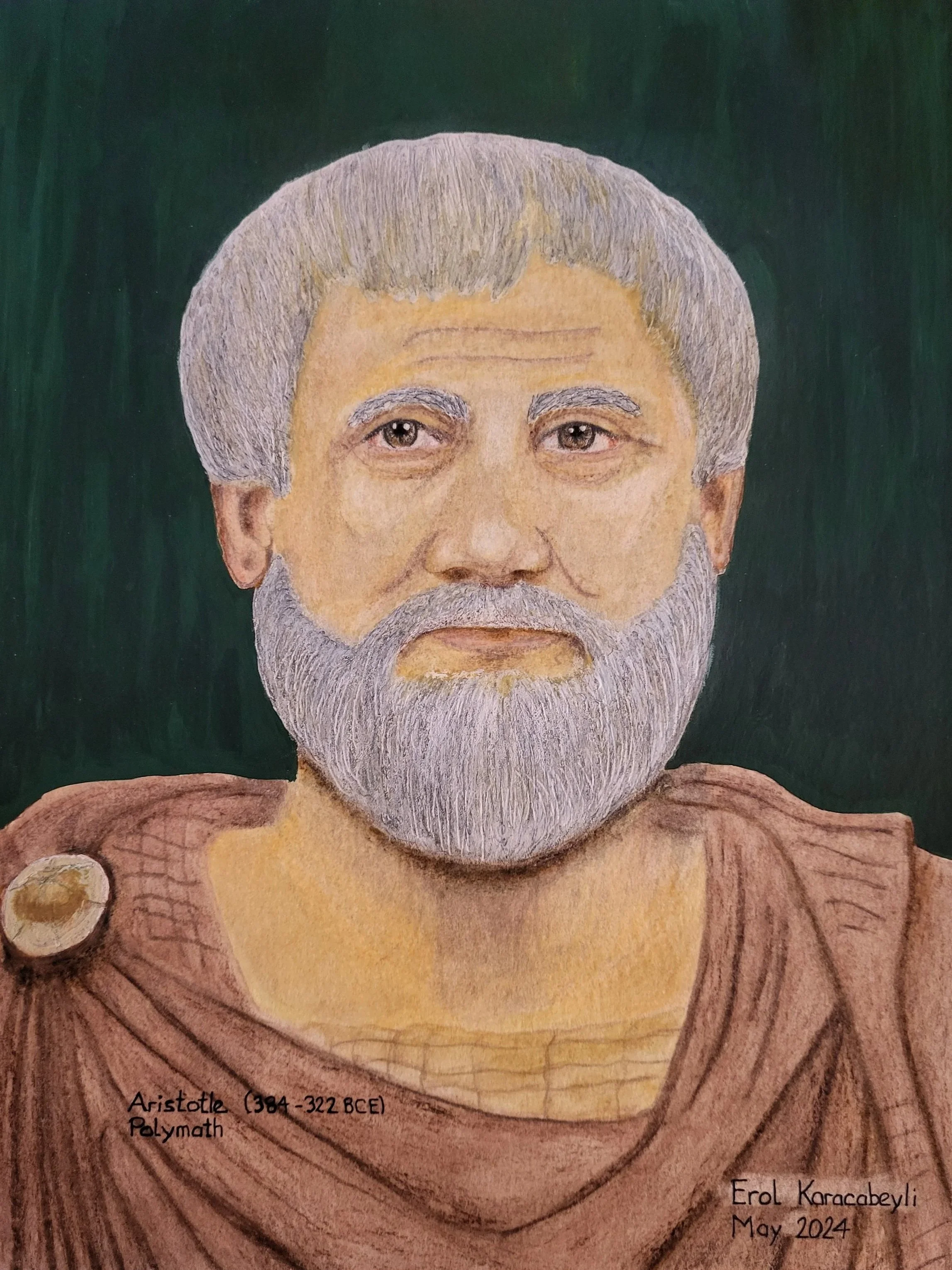
Aristotle
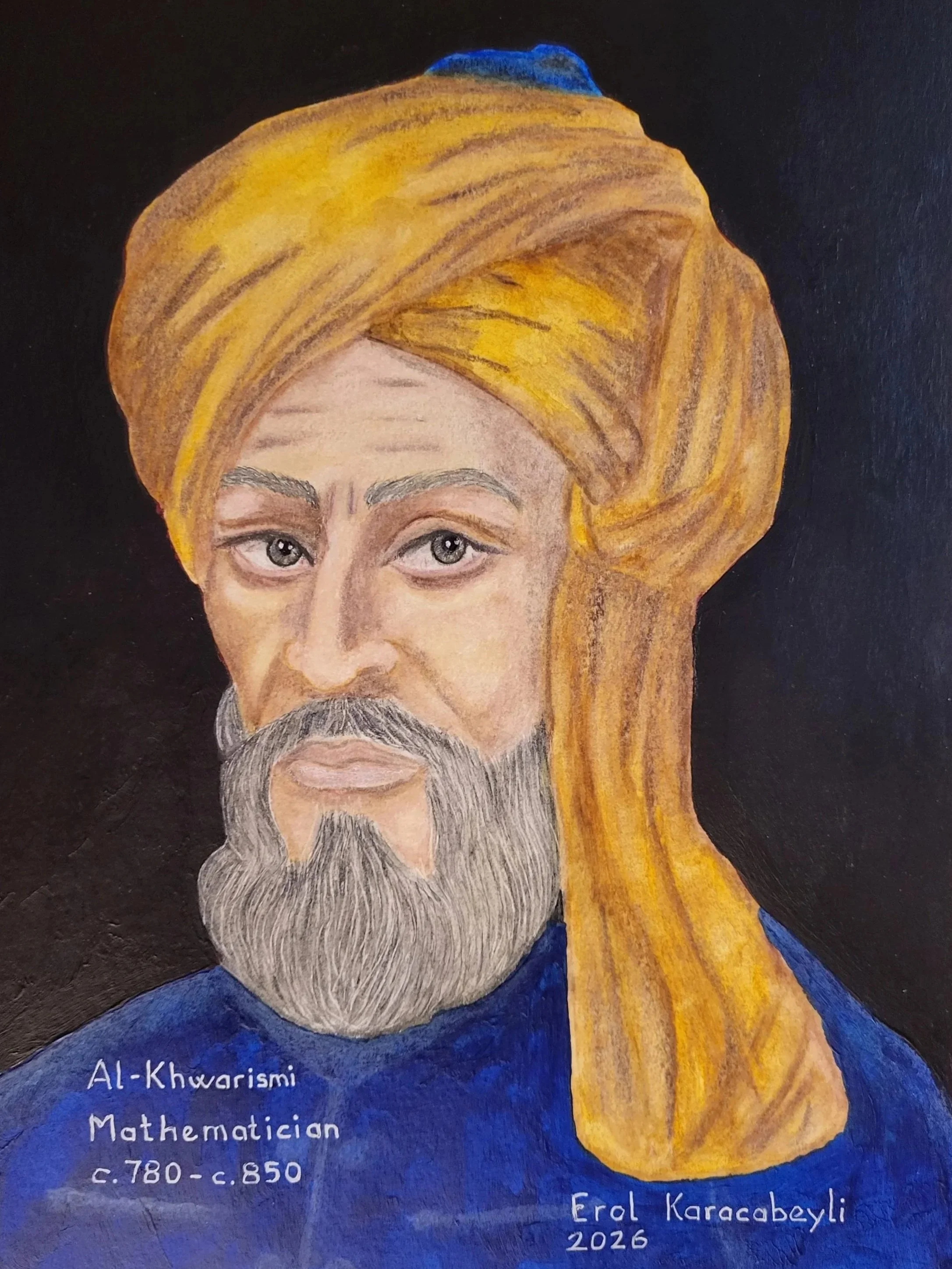
Al-Khwarizmi
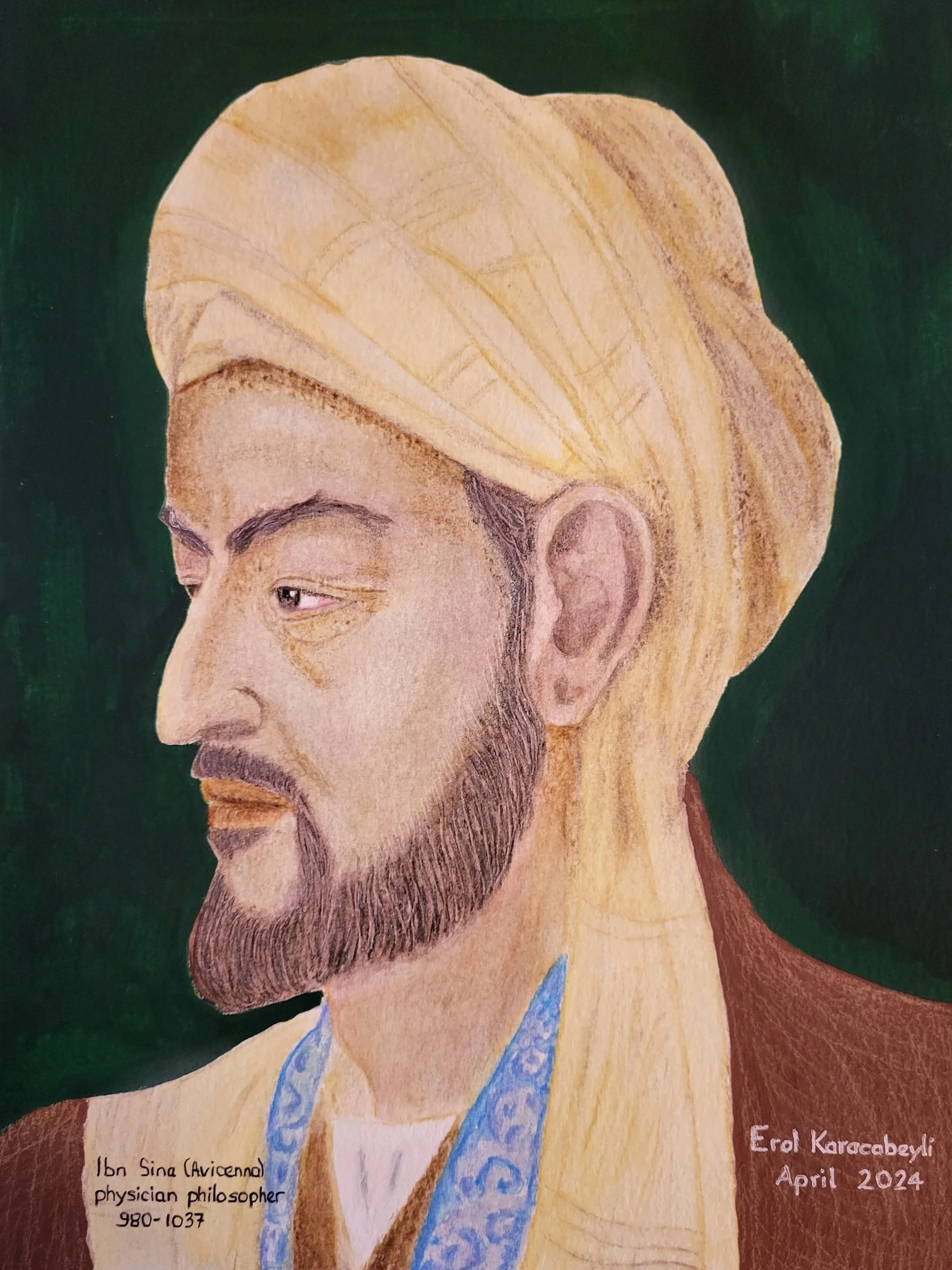
Ibn Sina
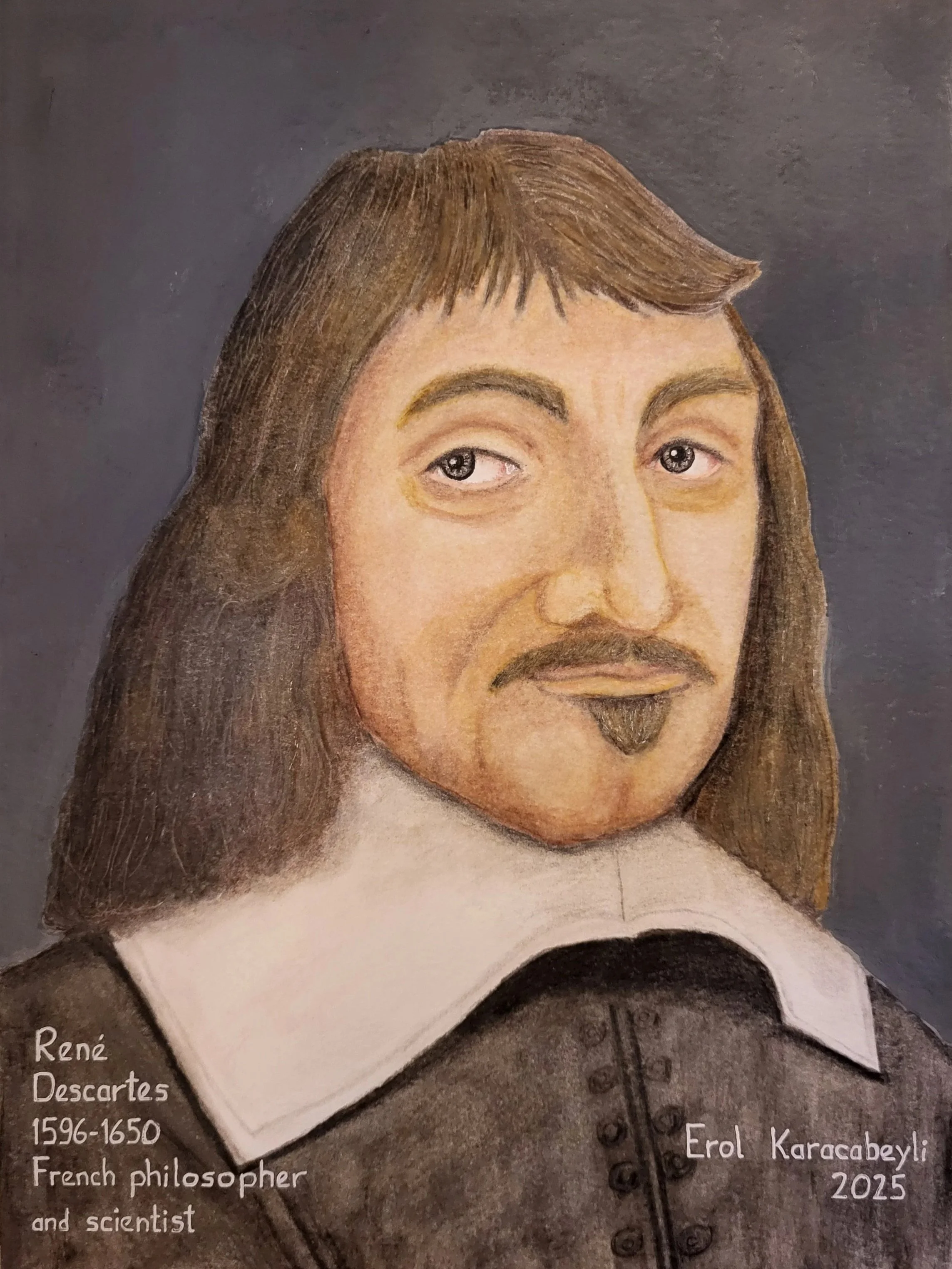
René Descartes
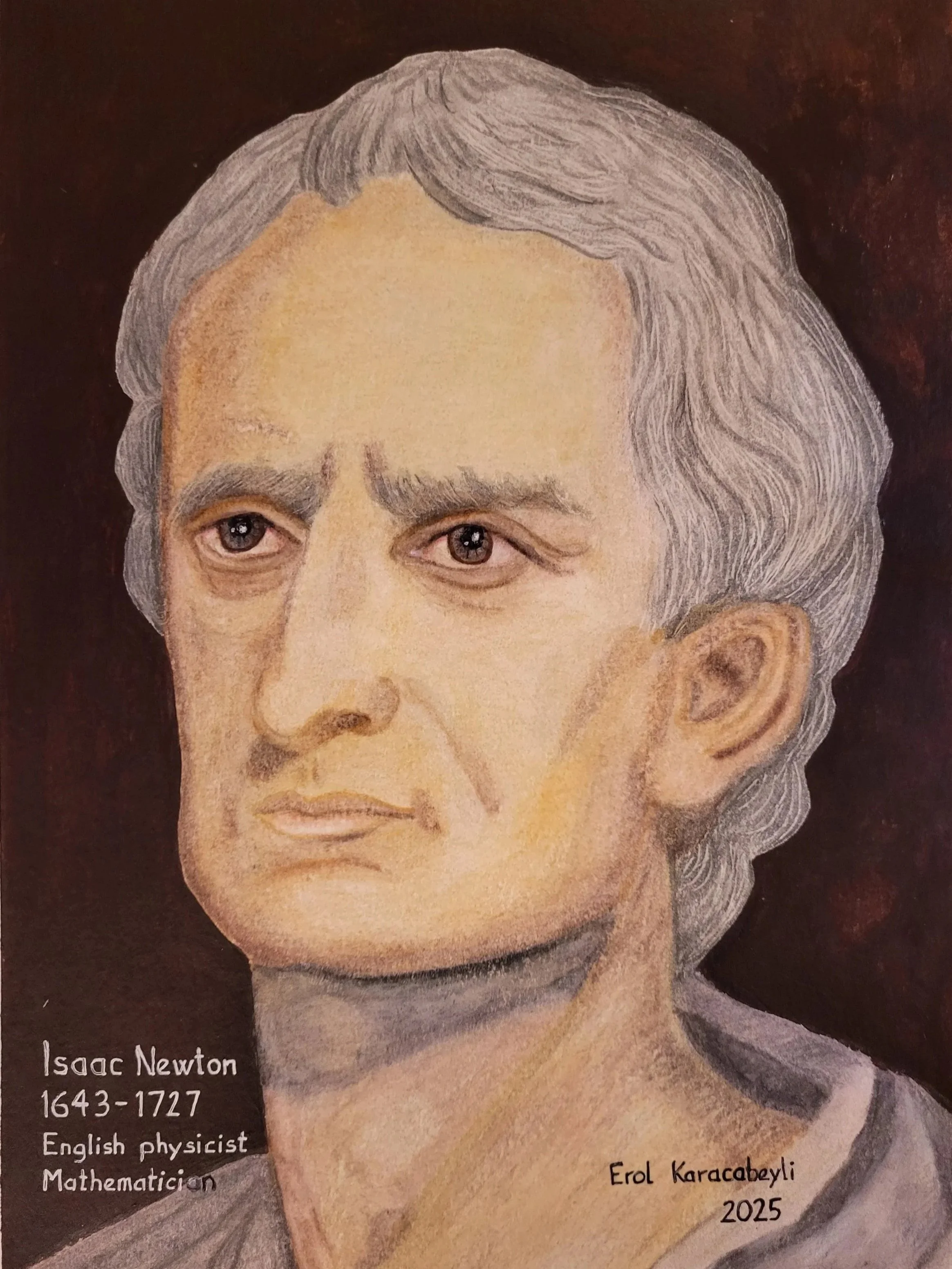
Isaac Newton
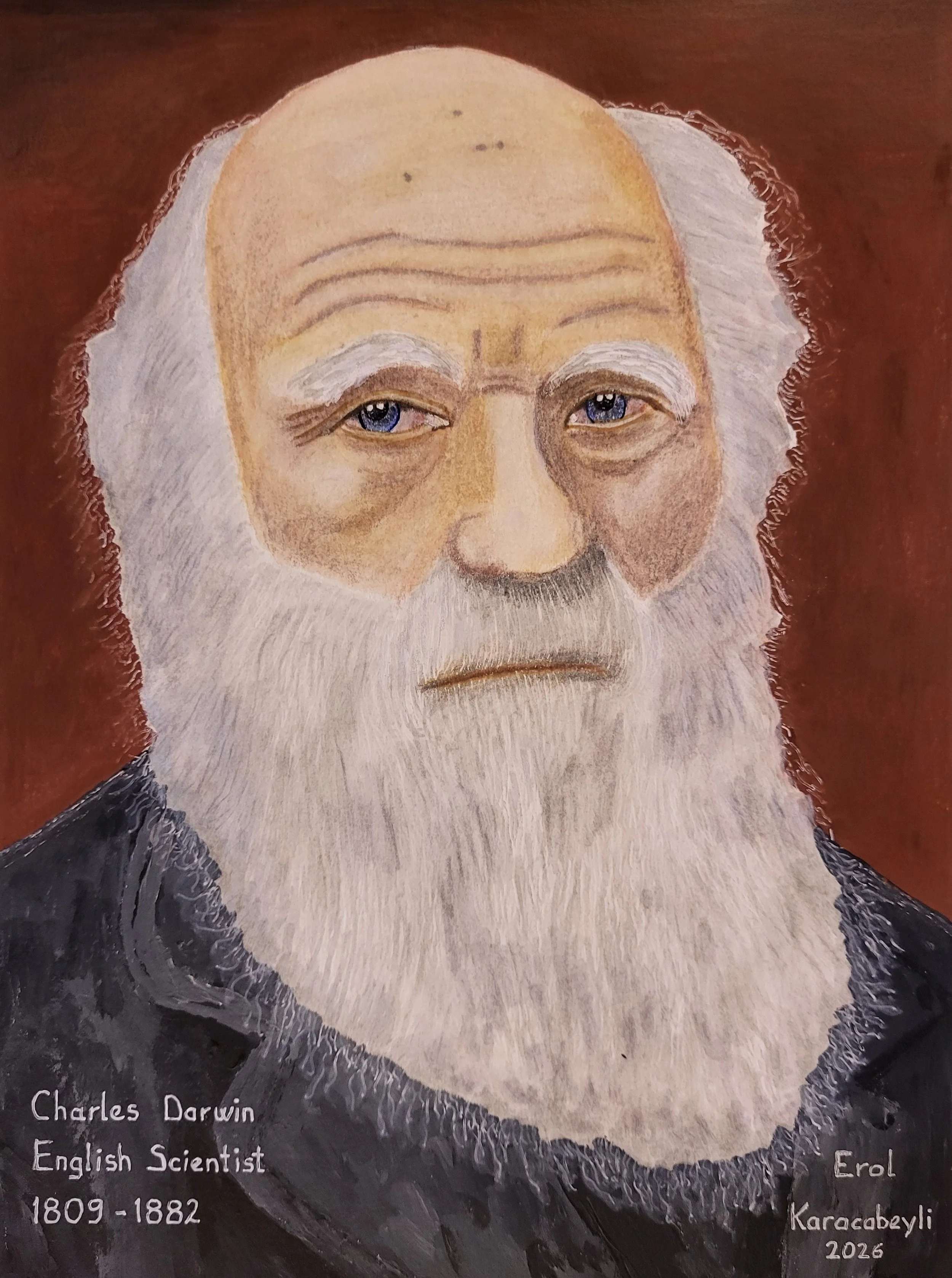
Charles Darwin
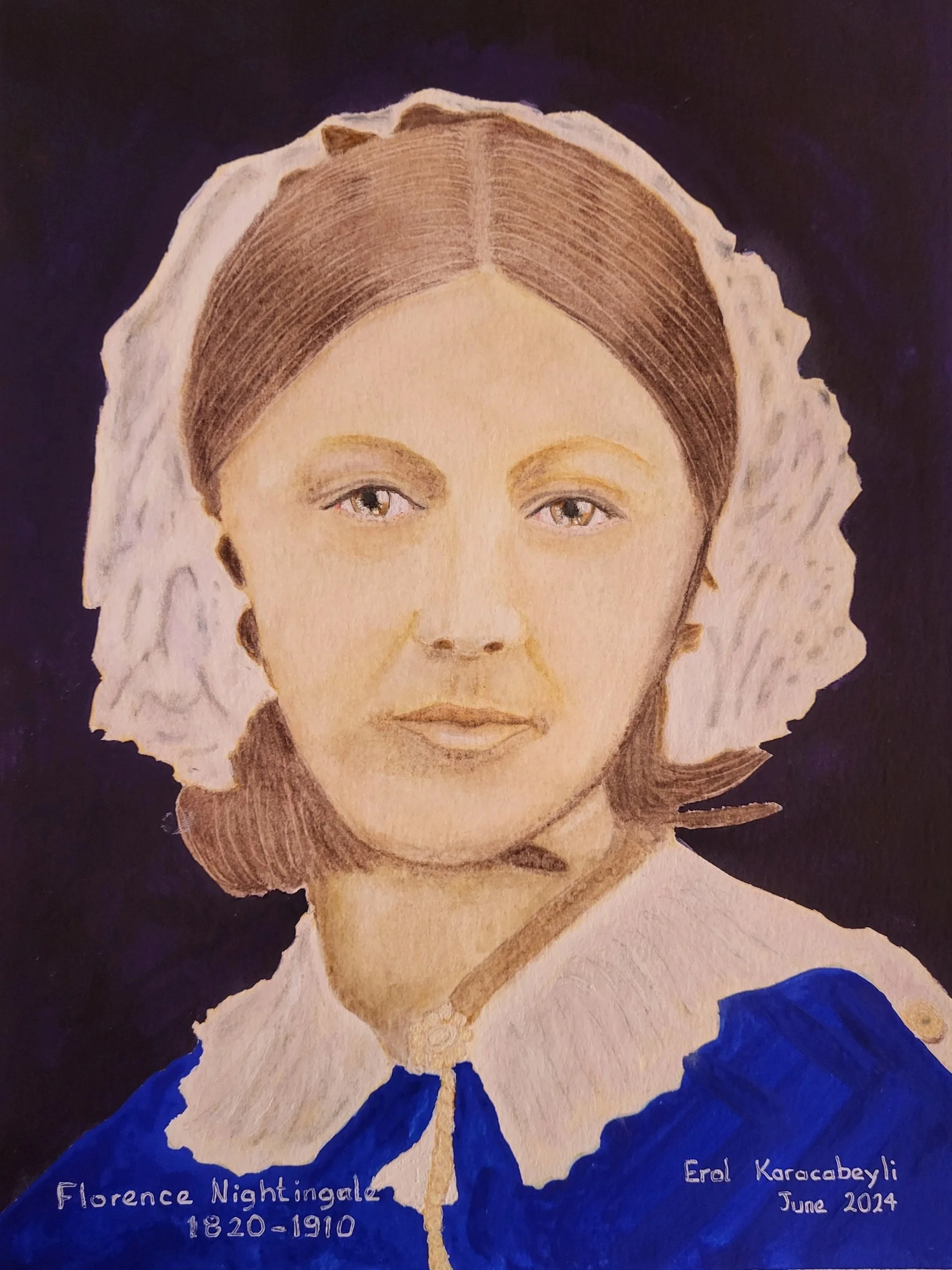
Florence Nightingale
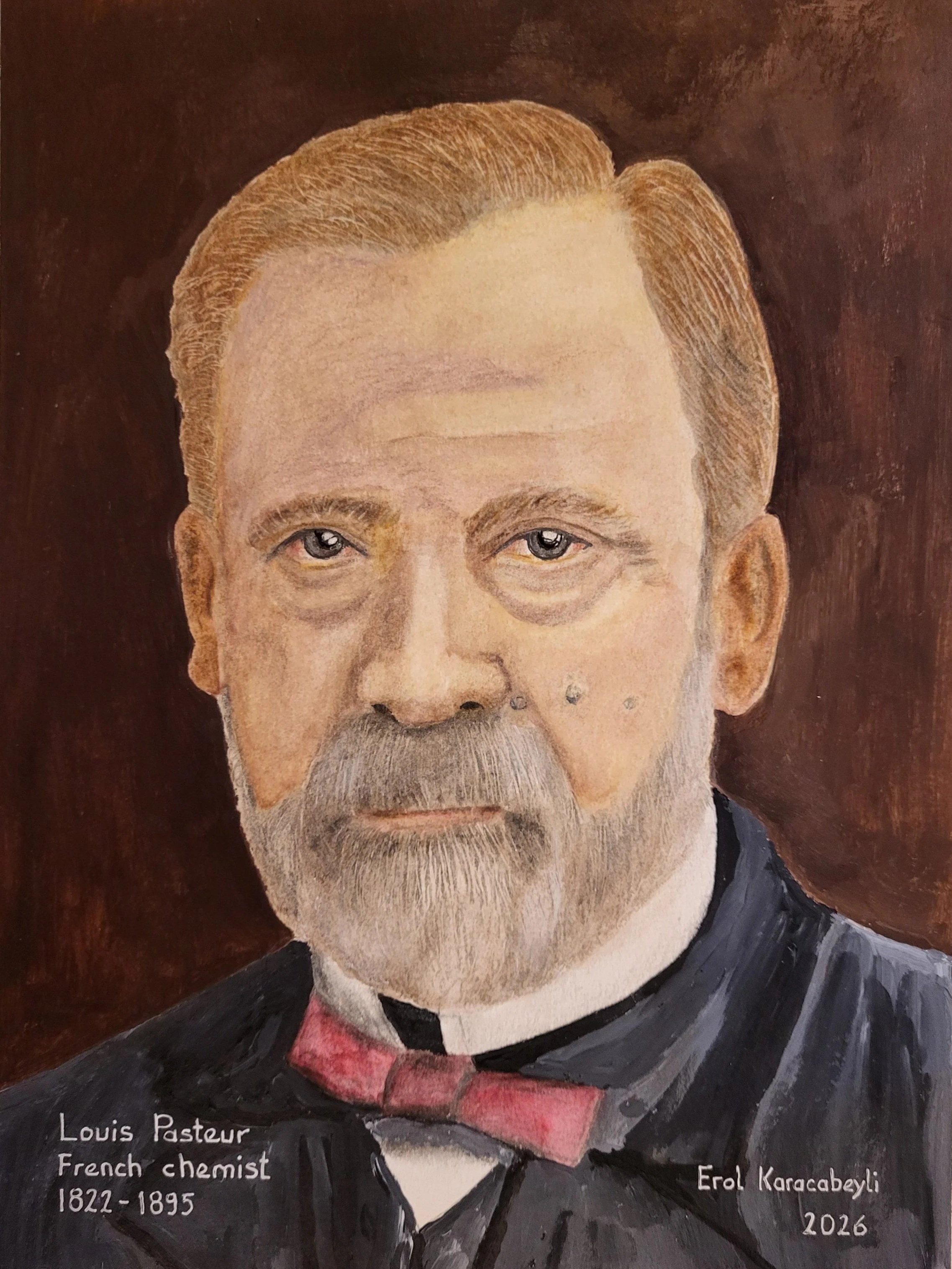
Louis Pasteur
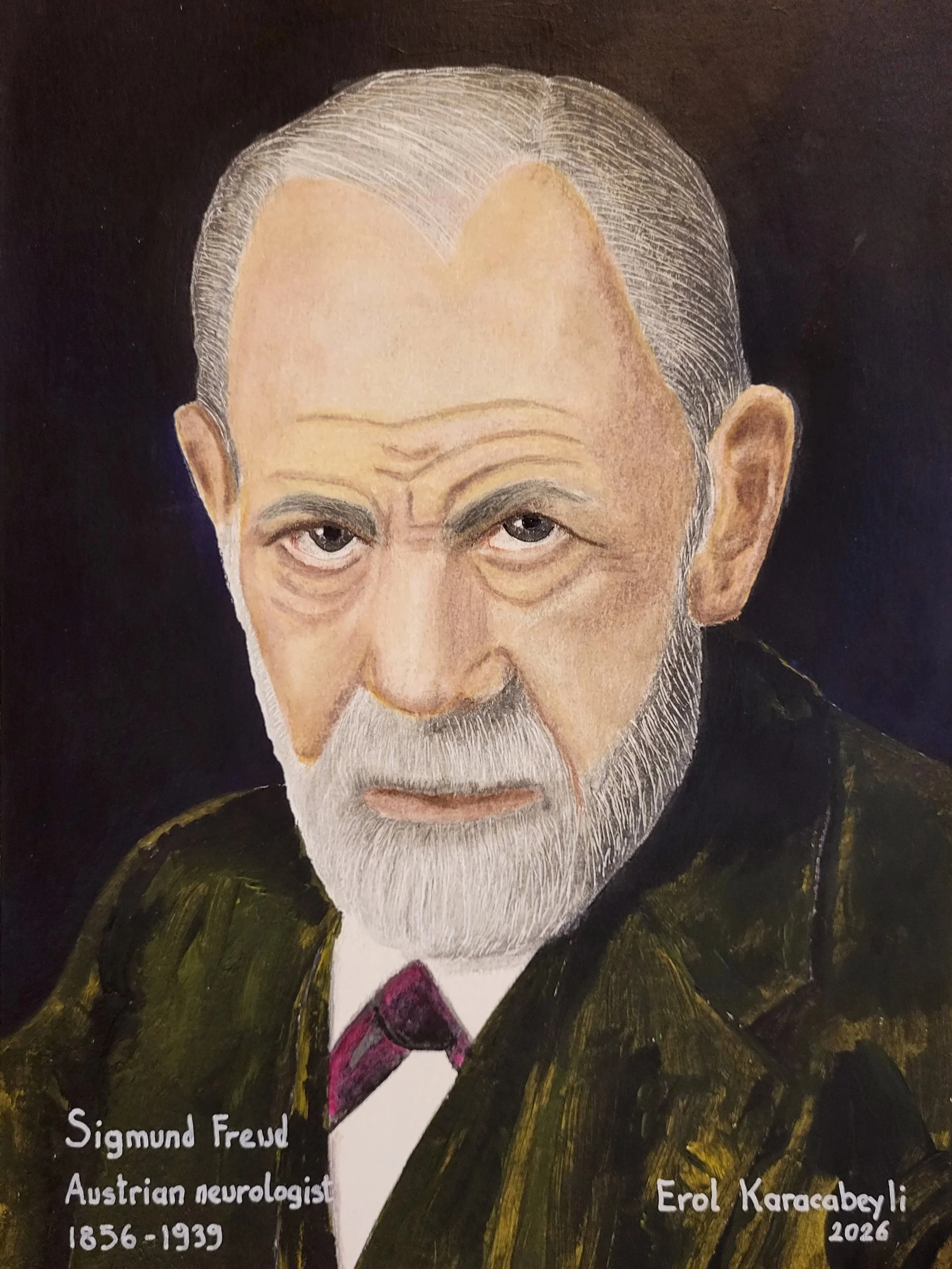
Sigmund Freud
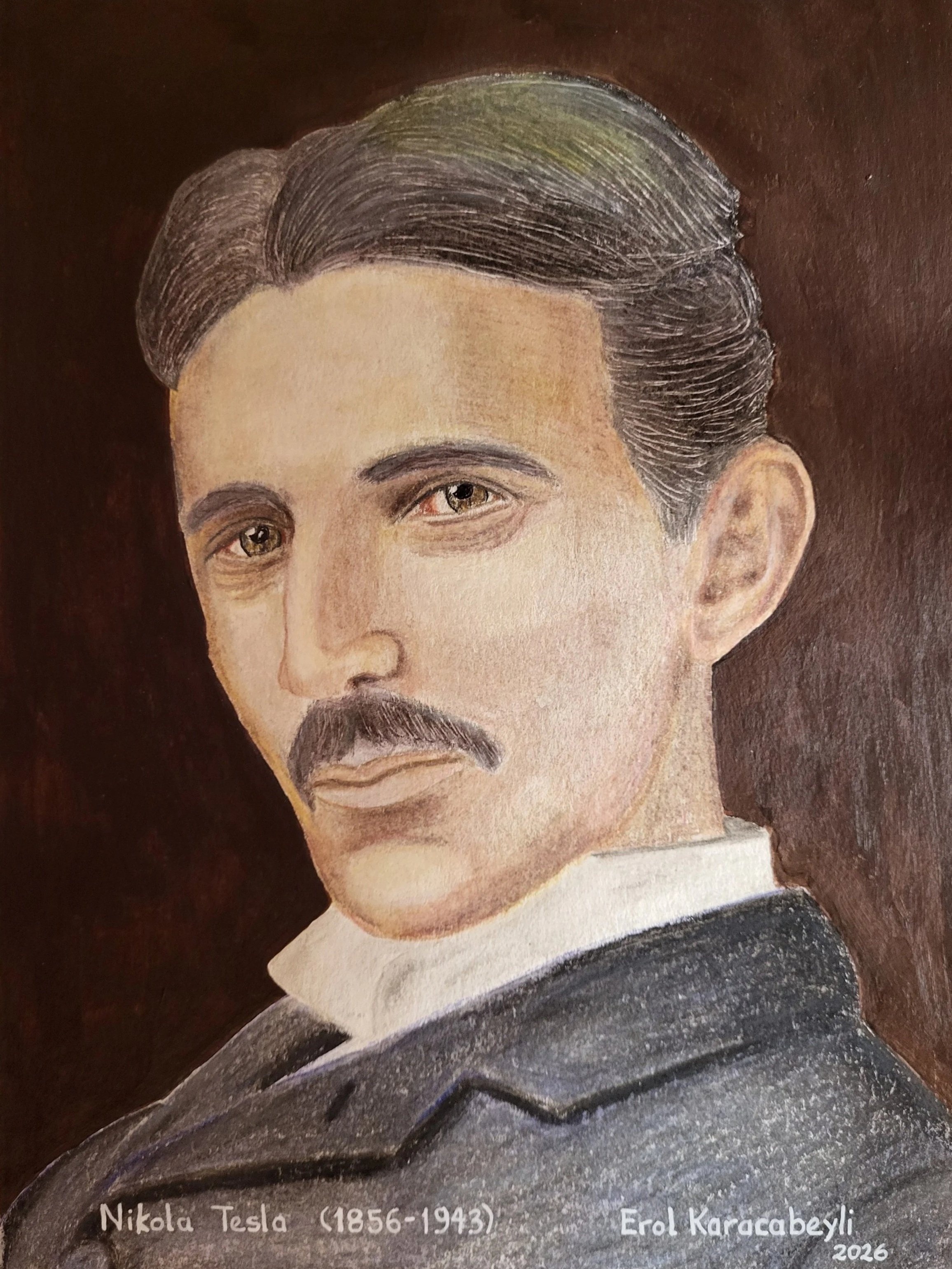
Nikola Tesla
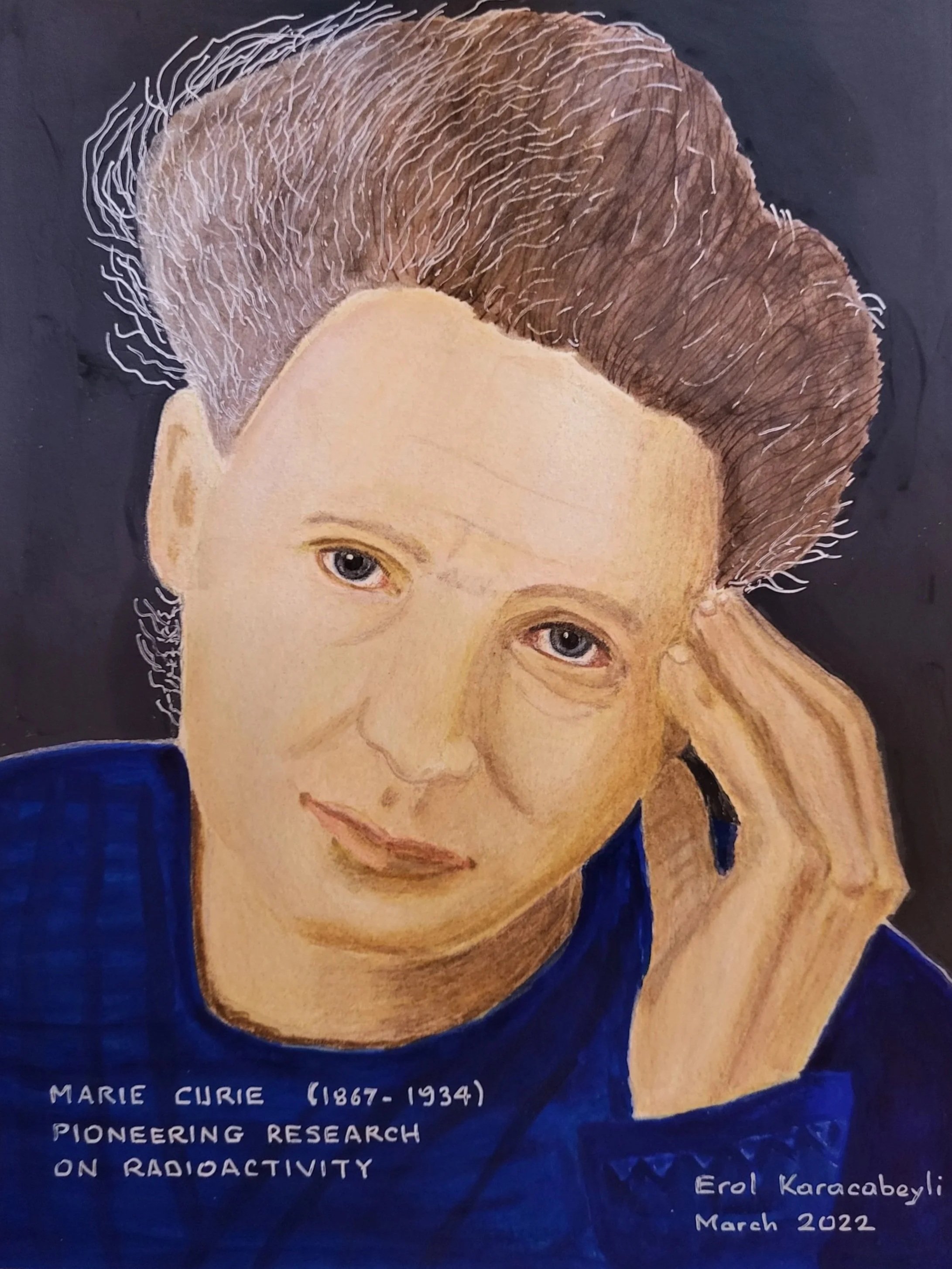
Marie Curie
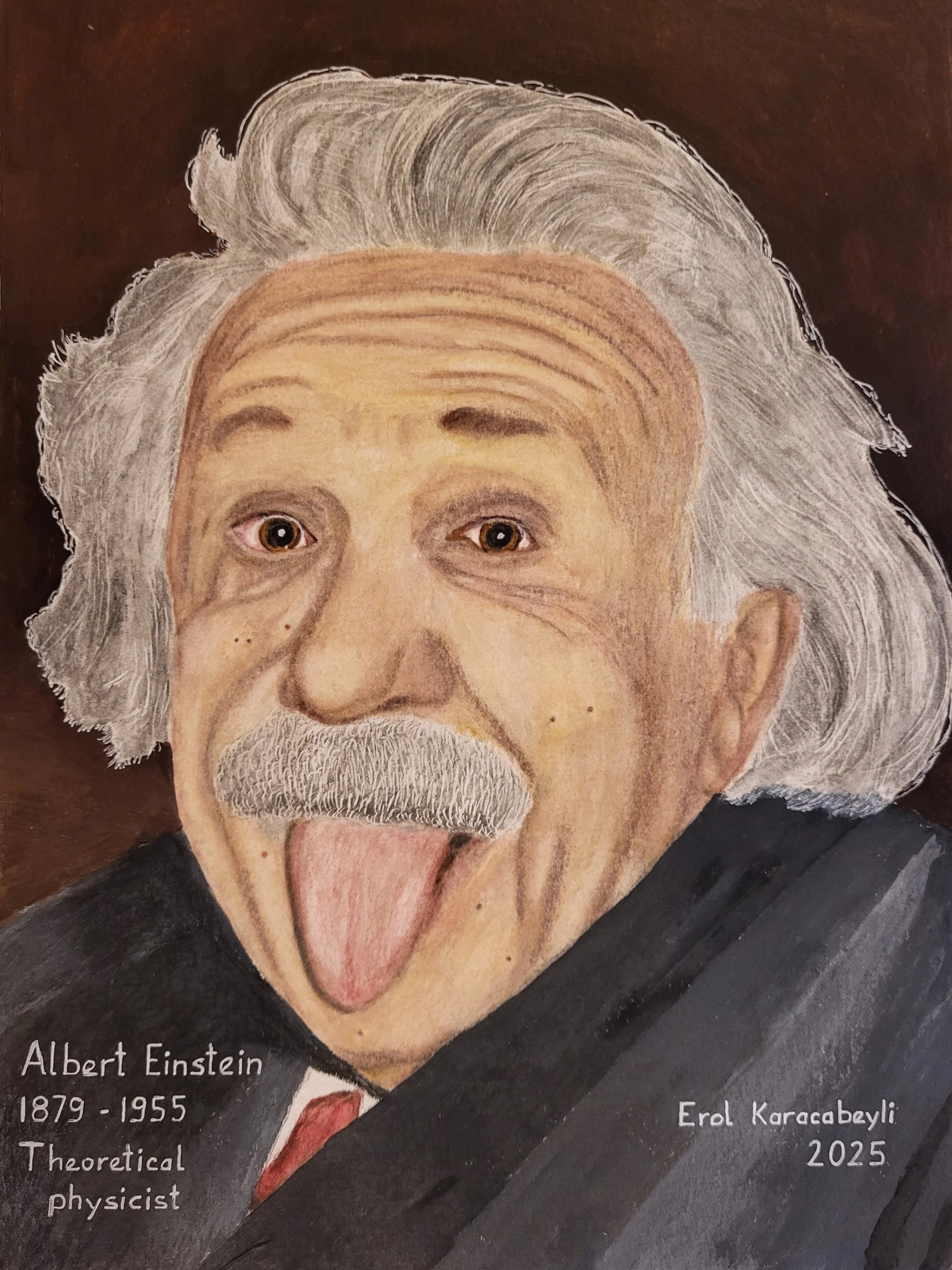
Albert Einstein
Portrait of Aristotle
Essence: Everything in nature has a purpose
Aristotle, an Ancient Greek philosopher and polymath, one of the most influential thinkers in Western history. A student of Plato and teacher of Alexander the Great, Aristotle shaped centuries of thought in fields ranging from philosophy and ethics to biology, politics, and logic.
Türkçe Öz: Doğadaki her şeyin bir amacıvardır
Aristoteles, Antik Yunan filozofu ve çok yönlü bir bilge olarak, Batı tarihinin en etkili düşünürlerinden biridir. Platon’un öğrencisi ve Büyük İskender’in hocası olan Aristoteles, felsefe ve etik alanlarından biyolojiye, siyasetten mantığa kadar birçok alanda yüzyıllar boyunca düşünce dünyasını şekillendirmiştir.
Profile
At the heart of Aristotle's (384 BCE - 322 BCE) work is a deep love for knowledge based on observation, reason, and experience. Unlike his teacher Plato, who emphasized abstract ideals, Aristotle was deeply grounded in the physical world. He believed that to understand anything—whether a plant, a person, or a political system—you must study how it functions in reality.
During the Islamic Golden Age spanning 8th to 13th centuries C.E., Islamic philosophers and scientists such as Al-Farabi (Alpharabius), Ibn Sina (Avicenna) and Ibn Rushd (Averroes) learned a lot from Aristotle's ideas. They expanded on his work, helping to advance philosophy and science and paving the way for the Renaissance.
Portrait of Al-Khwarizmi
Essence: Al-Khwarizmi laid the foundations of algebra and introduced algorithms to the world. He helped preserve, expand, and transmit mathematical knowledge from ancient civilizations to Europe, shaping modern science and mathematics
Al-Khwarizmi stands as one of the most influential mathematicians in history, living during the Islamic Golden Age—a period of remarkable intellectual growth from the 8th to the 13th century. Based in Baghdad’s renowned House of Wisdom, he wrote groundbreaking works on algebra, arithmetic, astronomy, and geography. His systematic approach to solving equations gave birth to algebra as an independent discipline, while his name became the origin of the word algorithm. Through translations of his works into Latin, Al-Khwarizmi’s ideas spread across Europe and became central to the development of modern mathematics.
Türkçe - Öz: Harezmi, cebirin temellerini atan ve algoritmaları dünyaya tanıtan 9. yüzyıl Fars bilginiydi. İslam Altın Çağı'nda çalışarak, eski uygarlıklardan matematiksel bilgiyi korumak, genişletmek ve Avrupa'ya aktarmak için modern bilim ve matematiği şekillendirdi
Harezmi, 8. yüzyıldan 13. yüzyıla kadar olağanüstü entelektüel gelişim dönemi olan İslam Altın Çağı'nda yaşamış tarihin en etkili matematikçilerinden biri olarak durmaktadır. Bağdat'ın ünlü Bilgelik Evi'nde yaşayan Sher, cebir, aritmetik, astronomi ve coğrafya alanlarında çığır açan eserler yazdı. Denklemleri sistematik çözme yaklaşımı, cebirin bağımsız bir disiplin olarak doğmasına yol açarken, adı algoritma kelimesinin kökeni oldu. Eserlerinin Latince'ye çevrilmesiyle Harezmi'nin fikirleri Avrupa'ya yayıldı ve modern matematiğin gelişiminde merkezi haline geldi.
Profile
Al-Khwarizmi (c. 780 CE-c. 850 CE) was a pioneering scholar whose contributions transformed mathematics from practical arithmetic into a structured science. His most famous book, Al-Kitab al-Mukhtasar fi Hisab al-Jabr wal-Muqabala, systematically explained how to solve linear and quadratic equations, giving the world the term algebra (from al-jabr). Another of his works introduced the Hindu-Arabic numeral system, including the concept of zero, which later replaced Roman numerals in Europe.
Beyond mathematics, Al-Khwarizmi wrote influential texts on astronomy, geography, and mapmaking, refining Ptolemy’s geographical data and producing some of the most accurate maps of his time. When his mathematical works were translated into Latin in medieval Europe, his name was rendered as Algoritmi, giving rise to the modern term algorithm—a concept central to today’s computing and artificial intelligence.
Islamic Golden Age Context & Other Mathematicians
Al-Khwarizmi was part of a vibrant intellectual tradition that included scholars such as:
Al-Kindi, who integrated philosophy and mathematics
Omar Khayyam, who developed geometric solutions to cubic equations
Al-Biruni, who made major contributions to trigonometry and scientific measurement
Together, these scholars preserved Greek and Indian knowledge, expanded it with original discoveries, and passed it on to Renaissance Europe—making the Islamic Golden Age a crucial bridge in the history of global science.
Portrait of Ibn Sina (Avicenna)
Essence: Avicenna’s philosophy became a major force in shaping medieval and Renaissance thought across Europe
Ibn Sina, known in the West as Avicenna, was a 11th-century Persian polymath whose profound influence on philosophy, medicine, and science shaped both Islamic and European intellectual traditions. A pioneer of rational thought, he synthesized Greek, Islamic, and his original ideas into works that remained authoritative for centuries.
Türkçe - Öz: İbn Sina’nın felsefesi, Avrupa’daki Orta Çağ ve Rönesans düşüncesinin şekillenmesinde önemli bir güç haline geldi
Batı'da Avicenna olarak bilinen İbn Sina, felsefe, tıp ve bilim üzerinde derin etkiler bırakan bir Fars bilginiydi. Akılcı düşüncenin öncülerinden biri olarak, Yunan, İslami ve kendi özgün fikirlerini sentezleyerek yüzyıllar boyunca otorite kabul edilen eserler ortaya koymuştur.
Profile
Ibn Sina (980–1037 CE) was born in Afshana near Bukhara, in present-day Uzbekistan. As a brilliant child, he had mastered the Quran and much of the classical sciences by the age of 16. His early education included intensive study of Aristotle, Hippocrates, and Galen—figures whose ideas he later analyzed, critiqued, and expanded upon in his own writings.
His most famous medical work, The Canon of Medicine (Al-Qanun fi al-Tibb), became a foundational text in both the Islamic world and Europe. It served as the standard reference in many medical schools for over six centuries, earning him the title “father of early modern medicine.”
Beyond medicine, Ibn Sina made lasting contributions to philosophy, especially through his integration of Aristotelian metaphysics with Islamic thought. His philosophical magnum opus, The Book of Healing (Kitab al-Shifa), is an encyclopedic work covering logic, natural sciences, psychology, and metaphysics. His concept of the “Necessary Existent” profoundly influenced Islamic theology and was later taken up by medieval Christian philosophers such as Thomas Aquinas.
Ibn Sina’s legacy endures not only for the breadth of his knowledge but also for his efforts to harmonize reason with faith, and science with philosophy. His life and works embody the intellectual vigor of the Islamic Golden Age and its enduring influence on global scholarship.
Portrait of René Descartes
Essence: The very act of thinking proves that one’s existing is real “I think, therefore I am”
René Descartes was a 17th-century French philosopher, mathematician, and scientist, often called the father of modern philosophy. He is best known for the statement "I think, therefore I am" and for reshaping how we think about knowledge, reason, and the mind. His work laid the foundation for both modern science and Western philosophical thought.
Türkçe - Öz: Düşünme eyleminin kendisi, birinin varlığının gerçek olduğunu kanıtlar: “Düşünüyorum, öyleyse varım.”
René Descartes, 17. yüzyılda yaşamış Fransız bir filozof, matematikçi ve bilim insanıdır; genellikle modern felsefenin babası olarak anılır. En çok, "Düşünüyorum, öyleyse varım" sözüyle ve bilgi, akıl ve zihin üzerine düşünme biçimimizi yeniden şekillendirmesi ile tanınır. Çalışmaları, hem modern bilimin hem de Batı felsefi düşüncesinin temellerini atmıştır.
Profile
René Descartes (1596–1650) was a pivotal figure in the transition from medieval to modern thought. Born in France and educated in a Jesuit school, he initially trained in law but shifted his focus to philosophy and mathematics, disciplines where he would leave a lasting legacy. He lived much of his adult life in the Dutch Republic, a hub of intellectual freedom at the time.
Descartes is perhaps most famous for his philosophical method of doubt — questioning everything that could possibly be false in order to arrive at fundamental truths. This method led to his famous conclusion, "Cogito, ergo sum" — "I think, therefore I am" — which he considered the first principle of true knowledge. By starting from this self-evident truth, Descartes attempted to build a secure foundation for all human knowledge. Descartes has often been called the father of modern philosophy and is largely seen as responsible for the increased attention given to epistemology. He laid the foundation for 17th-century rationalism, later advocated by Spinoza and Leibniz in the era of “Age of Reason” and was later opposed by the empiricist school of thought consisting of Hobbes, Locke, Berkeley, and Hume.
In mathematics, Descartes developed Cartesian geometry, which links algebra and geometry and laid the groundwork for calculus. His approach to science emphasized rational analysis and deductive reasoning, helping to move scientific thought away from religious or purely observational explanations toward more systematic inquiry.
Descartes’ ideas were controversial in his time, challenging both religious authorities and prevailing academic traditions. Yet his influence persists today — not only in philosophy, where he is considered a central figure in rationalism, but also in science, logic, and mathematics. His legacy is one of bold intellectual independence and a deep belief in the power of human reason.
Portrait of Isaac Newton
Essence: Isaac Newton was a foundational figure of modern science who unified motion, gravity, and mathematics into a single system. His work explained both earthly and celestial phenomena using universal laws. For centuries, his ideas shaped how humanity understood the universe.
Isaac Newton (1643–1727) was an English physicist and mathematician whose laws of motion and universal gravitation formed the basis of classical physics. In Principia, he demonstrated that the same mathematical principles govern falling objects on Earth and the motion of planets in space. Building on the work of Copernicus, Kepler, and Galileo, Newton created a unified mechanical view of nature that dominated science until the early twentieth century, when Einstein expanded it with relativity.
Türkçe - Öz: Isaac Newton, hareket, yerçekimi ve matematiği tek bir sistemde birleştiren modern bilimin temel figürlerinden biriydi. Çalışmaları, evrensel yasalarla hem dünyevi hem de göksel olayları açıkladı. Yüzyıllar boyunca fikirleri, insanlığın evreni nasıl anlamasını şekillendirdi.
Isaac Newton (1643–1727), hareket yasaları ve evrensel yerçekimi klasik fiziğin temelini oluşturan İngiliz bir fizikçi ve matematikçiydi. Principia'da, aynı matematiksel ilkelerin Dünya'daki düşen cisimleri ve uzaydaki gezegenlerin hareketini yönettiğini gösterdi. Kopernik, Kepler ve Galileo'nun çalışmalarına dayanarak, Newton, bilime egemen olan ve Einstein'ın görelilikle genişlettiği yirminci yüzyılın başlarına kadar domine eden birleşik mekanik bir doğa görüşü yarattı.
Profile
Newton emerged during the Scientific Revolution, a time when observation and mathematics were transforming science. Nicolaus Copernicus had already displaced Earth from the center of the universe with his heliocentric model, and Johannes Kepler described planetary orbits with precise mathematical laws. Newton brought these ideas together by identifying the underlying cause of planetary motion: universal gravitation, governed by exact equations.
Galileo Galilei’s experiments on motion strongly influenced Newton’s thinking. Galileo showed that physical laws could be discovered through measurement and experimentation rather than philosophy alone. Newton combined Galileo’s experimental insights with powerful mathematics, formulating his three laws of motion. These laws unified terrestrial and celestial motion, revealing that the same rules apply everywhere in the universe.
Newton defined gravity as a force acting instantaneously at a distance between two masses. This concept successfully explained planetary orbits, tides, and falling objects, and it remains very accurate for everyday phenomena and engineering. However, in the early twentieth century, Albert Einstein offered a deeper interpretation. In Einstein’s theory of general relativity, gravity is not a force but the curvature of spacetime caused by mass and energy. Objects move as they do because they follow paths shaped by this curvature. Einstein’s theory extends Newton’s ideas rather than discarding them, showing that Newton’s gravity is a special case that works well under ordinary conditions.
Through this progression—from Copernicus and Galileo to Newton and Einstein—Newton stands as a crucial link in the development of scientific thought. His synthesis of motion and gravity laid the groundwork for modern physics and continues to influence science, technology, and our understanding of the universe today.
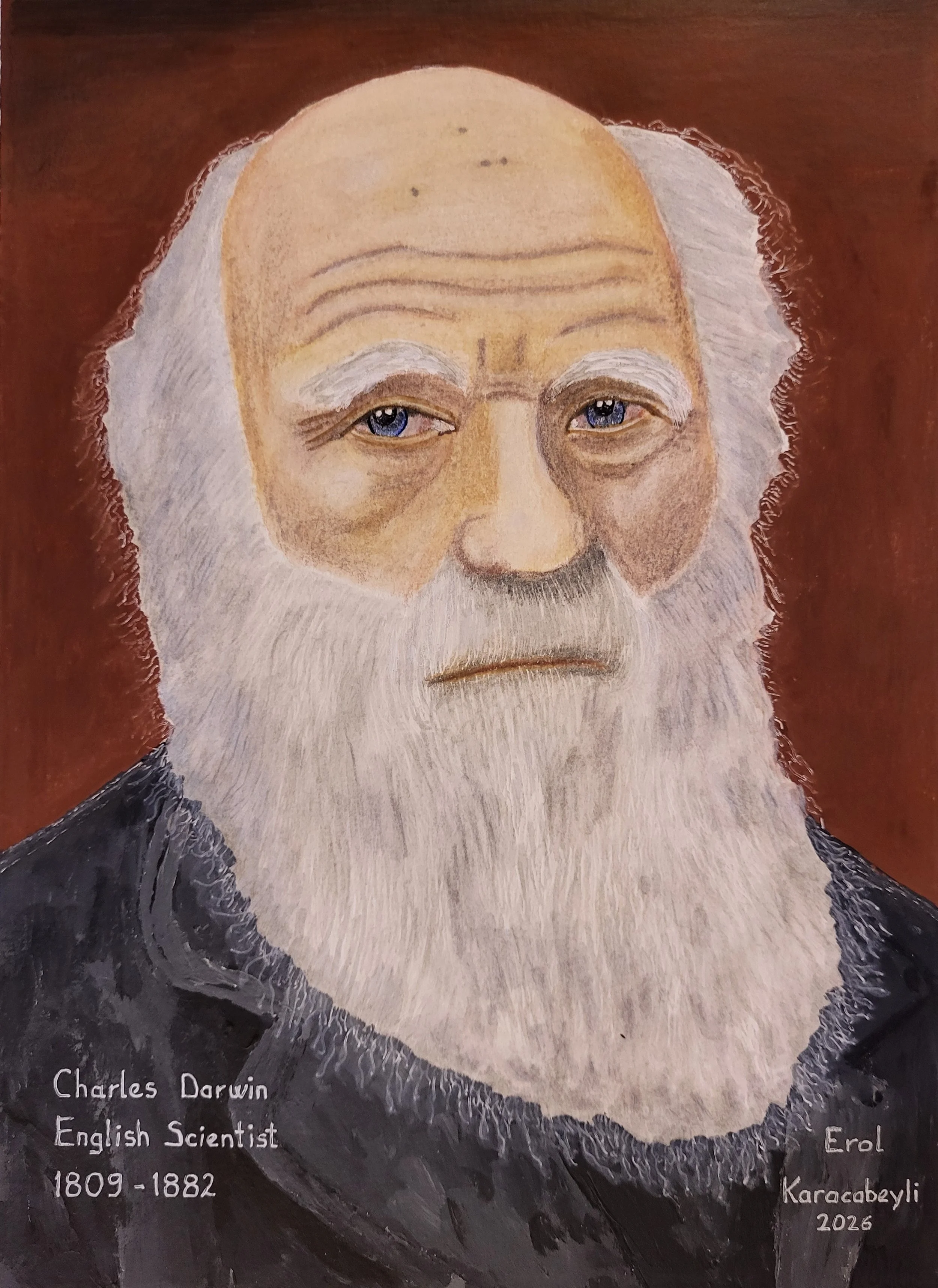
Portrait of Charles Darwin
Essence: Charles Darwin was a naturalist who changed how people understand life on Earth. His greatest contributions were explaining how species evolve through natural selection and showing that all living things, including humans, are connected through a shared evolutionary history.
Charles Darwin was an English scientist best known for developing the theory of evolution. At a time when most people believed that plants, animals, and humans were created exactly as they are, Darwin suggested something radical: that living organisms slowly change over long periods of time. His ideas, especially those presented in On the Origin of Species and later in The Descent of Man, reshaped science and challenged how humans viewed their own place in nature.
Türkçe - Öz: Charles Darwin, insanların Dünya'daki yaşamı anlama biçimini değiştiren bir doğa bilimciydi. En büyük katkısı, türlerin doğal seçilimle nasıl evrimleştiğini açıklamak ve tüm canlıların, insanlar dahil, ortak evrimsel tarih aracılığıyla birbirine bağlı olduğunu göstermekti.
Charles Darwin, evrim teorisini geliştirmesiyle en çok tanınan İngiliz bir bilim insanıydı. Çoğu insanın bitkilerin, hayvanların ve insanların tam olarak oldukları gibi yaratıldığına inandığı bir dönemde, Darwin radikal bir şey önerdi: canlı organizmaların uzun zaman sürelerinde yavaşça değiştiği. Özellikle Türlerin Kökeni ve daha sonra İnsanın Soyundan Çıkması adlı eserinde sunulan fikirleri, bilimi yeniden şekillendirdi ve insanların doğadaki kendi yerlerini nasıl gördüklerini sorguladı.
Profile
Charles Darwin’s (1809-1882) ideas were grounded in close observation of the natural world. During his journey aboard the HMS Beagle, he studied plants, animals, and fossils from different parts of the world. He noticed that similar species showed small differences depending on where they lived. These observations led him to conclude that species are not fixed but gradually change as they adapt to their environments.
One of Darwin’s most debated ideas concerned the relationship between humans and apes. He argued that humans did not evolve from modern apes, but that humans and apes share a common ancestor. This explained the strong similarities in body structure, behavior, and mental abilities between them. From Darwin’s perspective, the differences between humans and other apes were differences of degree rather than kind — humans developed greater intelligence, language, and culture, but remained part of the same natural family.
Darwin built on the work of earlier thinkers such as Jean-Baptiste Lamarck, Charles Lyell, and Thomas Malthus, who helped shape his views on change, time, and competition in nature. After Darwin, scientists like Gregor Mendel and later evolutionary biologists strengthened his ideas by explaining how traits are inherited. Together, their work placed humans firmly within the evolutionary story rather than apart from it.
Like some other thinkers of the 19th century, Darwin held some views on race and gender that are now recognized as flawed. While these views do not represent modern science, they remind us that even transformative ideas emerge from imperfect individuals shaped by their time.
Portrait of Florence Nightingale
Essence: The pioneering nurse and reformer whose compassion, scientific rigor, and leadership laid the foundations of modern nursing.
Florence Nightingale is remembered worldwide as a trailblazing nurse, statistician, and social reformer. Her work during the Crimean War and her lifelong dedication to public health transformed nursing from an informal task into a respected profession grounded in training, discipline, and evidence.
Türkçe - Öz: Merhameti, bilimsel titizliği ve liderliği ile modern hemşireliğin temellerini atan öncü hemşire ve reformcu.
Florence Nightingale dünya çapında çığır açan bir hemşire, istatistikçi ve sosyal reformcu olarak hatırlanıyor. Kırım Savaşı sırasındaki çalışmaları ve ömür boyu halk sağlığına olan bağlılığı, hemşireliği gayri resmi bir görevden eğitim, disiplin ve kanıtlara dayalı saygın bir mesleğe dönüştürdü.
Profile
Florence Nightingale’s (1820-1910) defining mission began during the Crimean War (1853–1856), a geopolitical moment in which Britain, France, and the Ottoman Empire joined forces against Russia—an unusual coalition that reflected the shifting power balance of nineteenth-century Europe. This alignment is especially striking in hindsight, given that roughly two decades after the Crimean War, Britain and France would become enemies of the Ottoman Empire in World War I, underscoring how unique their earlier cooperation had been.
In 1854, Nightingale was appointed to lead a group of around forty volunteer nurses to the Ottoman Empire to support the care of wounded soldiers. They were stationed at the British military hospital in Scutari (modern-day Üsküdar in Istanbul). The conditions they encountered were dire: overcrowded wards, inadequate supplies, and unsanitary environments that caused more deaths from disease than from battle injuries.
Nightingale responded by imposing strict hygiene practices, improving ventilation, reorganizing kitchens and laundries, and introducing systematic record-keeping. These interventions dramatically lowered mortality rates and demonstrated the life-saving power of disciplined, evidence-based care.
Her approach drew equally on compassion and scientific reasoning. Nightingale’s pioneering use of statistics—particularly her visually striking “coxcomb” diagrams—helped illustrate the causes of soldier mortality and persuaded government officials to invest in sanitation and hospital reform. This application of data to public health was revolutionary and continues to influence healthcare analytics today.
Following the war, Nightingale established the Nightingale Training School for Nurses at St. Thomas’ Hospital in London, giving nursing a professional identity grounded in rigorous education, ethical responsibility, and respect for patient dignity. Her night rounds in Scutari, lamp in hand, created her enduring image as the “Lady with the Lamp,” a symbolic figure of compassion recognized around the world.
Florence Nightingale’s legacy continues to shape modern nursing, public health, hospital design, and the use of data to improve healthcare outcomes. Her life remains a powerful example of how dedication, empathy, and scientific insight can drive lasting social change.
Portrait of Louis Pasteur
Essence: Louis Pasteur transformed medicine and everyday life by proving that invisible microbes cause disease and spoilage. His work laid the foundations of microbiology, vaccination, and modern hygiene. Because of Pasteur, practices like sterilization, safer food processing (pasteurization), and disease prevention became possible.
Few scientists have changed both science and daily life as profoundly as Louis Pasteur. Working in the 19th century, a time when disease was poorly understood and often blamed on “bad air” or superstition, Pasteur revealed a hidden world of microorganisms shaping health, illness, and decay. His discoveries not only revolutionized biology and medicine but also saved countless lives—then and now—by reshaping how humanity understands infection, immunity, and prevention.
Türkçe -Öz : Louis Pasteur, görünmez mikropların hastalık ve bozulmaya neden olduğunu kanıtlayarak tıbbı ve günlük yaşamı dönüştürdü. Çalışmaları mikrobiyoloji, aşılama ve modern hijyenin temellerini attı. Pasteur sayesinde sterilizasyon, güvenli gıda işleme ve hastalık önleme gibi uygulamalar mümkün oldu.
Çok az bilim insanı hem bilimi hem de günlük yaşamı Louis Pasteur kadar derindendeğiştirmiştir. 19. yüzyılda, hastalığın yeterince anlaşılmadığı ve sıkça "kötü hava" veya batıl inançla suçlandığı bir dönemde, Pasteur sağlığı, hastalığı ve çürümeyi şekillendiren gizli bir mikroorganizma dünyasını ortaya çıkardı. Keşifleri sadece biyoloji ve tıpta devrim yaratmakla kalmadı, aynı zamanda insanlığın enfeksiyon, bağışıklık ve önleme anlayışını yeniden şekillendirerek sayısız hayatı—o zaman ve şimdi—kurtardı.
Profile
Louis Pasteur (1822–1895) was a French chemist whose work fundamentally reshaped how humans understand disease, decay, and prevention. At a time when illnesses were often blamed on “bad air,” divine punishment, or mysterious imbalances, Pasteur revealed that many diseases are caused by microbes—tiny living agents invisible to the naked eye.
Pasteur’s early studies focused on fermentation, the process by which substances like wine, beer, and milk change over time. Through experiments, he showed that fermentation was caused by living microorganisms, mainly what we now call bacteria and yeasts. These microbes enter food and liquids from the environment and multiply, producing chemical changes. Importantly, Pasteur demonstrated that different microbes cause different effects—some produce desirable outcomes (like wine or cheese), while others cause spoilage and disease.
Pasteur designed experiments using specially shaped glass flasks that allowed air in but trapped dust and microorganisms. When no microbes could enter, no life appeared. His results showed conclusively that life comes only from pre-existing life, and that microbes originate from contamination, not spontaneous creation. This finding was critical, because it made disease something that could be prevented, not merely endured.
From this foundation emerged the germ theory of disease—the idea that specific diseases are caused by specific microorganisms. Most of the microbes Pasteur studied were bacteria, which are single-celled living organisms capable of reproducing on their own. Although viruses are much smaller and were not fully understood until later, Pasteur’s framework paved the way for their discovery by establishing that invisible biological agents can cause illness.
Germ theory transformed medicine. Once scientists understood that microbes invade the body and cause disease, prevention became possible. This insight directly led to the development of vaccines. Pasteur discovered that when certain microbes are weakened (attenuated), they can stimulate the body’s defenses without causing severe illness. The immune system “learns” to recognize the microbe, so that if the real, dangerous version appears later, the body can respond quickly and effectively.
Using this principle, Pasteur developed vaccines for chicken cholera, anthrax, and rabies. His rabies vaccine was particularly revolutionary, as it was administered after exposure—saving lives from a disease that was otherwise almost always fatal. Although Pasteur did not fully understand the immune system as experts do today, his work established the essential logic behind vaccination: expose the body safely to a germ so it can defend itself in the future.
Pasteur built upon earlier contributors such as Antonie van Leeuwenhoek, who first observed bacteria through microscopes, and Edward Jenner, who developed the smallpox vaccine without knowing the microbial cause. Later scientists expanded Pasteur’s ideas: Robert Koch identified specific bacteria responsible for diseases like tuberculosis, while advances in virology in the 20th century extended germ theory to viruses such as polio and influenza.
Portrait of Sigmund Freud
Essence: Sigmund Freud, the founder of psychoanalysis, revolutionized the treatment of mental illness by shifting the focus from physical ailments to the hidden depths of the unconscious mind.
Freud was an Austrian neurologist who transformed the way we think about the human mind. At a time when mental illness was poorly understood and often stigmatized, Freud proposed that hidden thoughts, childhood experiences, repressed memories, and unconscious desires create internal conflicts and shape personality and behavior. His ideas sparked both admiration and controversy, laying the foundation for modern psychotherapy and influencing fields far beyond medicine—including literature, art, education, and popular culture.
Türkçe Öz: Sigmund Freud, Psikanaliz'in kurucusudur ve konuşma terapisi ile bilinçdışı zihnin keşfi yoluyla zihinsel hastalıkları anlamak ve tedavi etmek için çığır açan bir yöntem geliştirmiştir.
Freud, insan zihni hakkındaki düşüncemizi dönüştüren Avusturyalı bir nörologdu. Zihinsel hastalıkların yeterince anlaşılmadığı ve sıkça damgalandığı bir dönemde, Freud gizli düşüncelerin, çocukluk deneyimlerinin ve bilinçdışı arzuların kişiliği ve davranışı şekillendirdiğini öne sürdü. Fikirleri hem hayranlık hem de tartışma uyandırdı, modern psikoterapinin temelini attı ve edebiyat, sanat, eğitim ve popüler kültür gibi tıp alanlarının çok ötesine nüfuz etti.
Profile
Born in Moravia (now the Czech Republic) and based in Vienna, Sigmund Freud (1856–1939) began his career as a physician. While studying in Paris under Jean-Martin Charcot, he became fascinated by how psychological distress could manifest as physical symptoms. This led Freud away from purely biological medicine toward the "talking cure" (discovered by Joseph Breuer and made as a formal therapeutic method by Freud) where patients explored repressed memories and dreams.
Freud introduced revolutionary concepts such as defense mechanisms and the Oedipus complex. In his landmark 1900 book, The Interpretation of Dreams, he argued that dreams are a "royal road" to the unconscious. He later mapped the human psyche into three parts: the Id (primitive instincts), the Ego (rational reality), and the Superego (moral conscious).
Freud’s work launched a massive intellectual movement, attracting famous collaborators like Carl Jung and Alfred Adler—both of whom eventually broke away to develop their own theories. His legacy was furthered by his daughter, Anna Freud, and thinkers like Jacques Lacan.
While modern critics often argue he overemphasized sexuality and lacked scientific rigor, Freud's impact is undeniable. He gave us the vocabulary we still use to describe our inner lives, forever changing how we talk about the human mind.
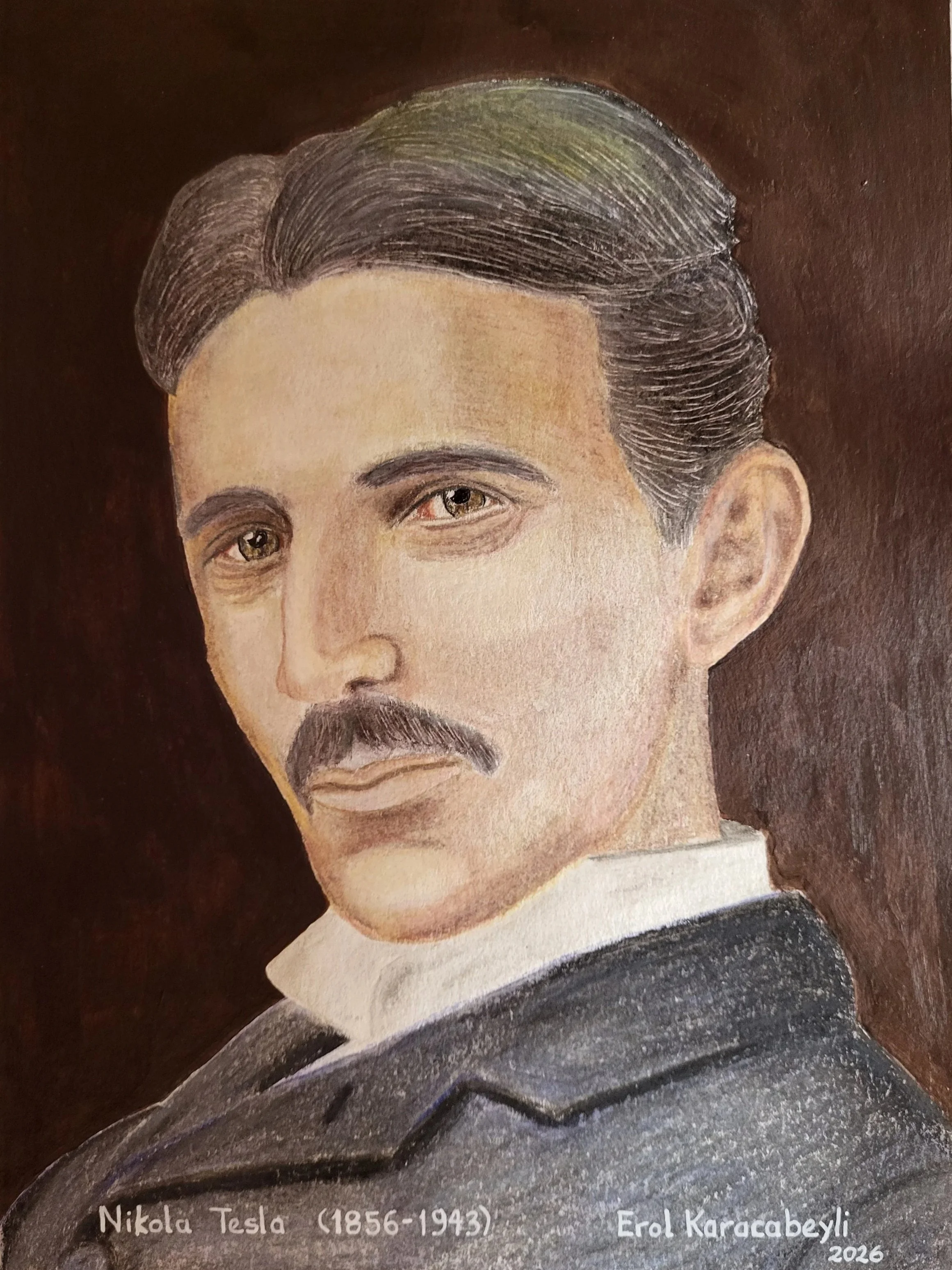
Portrait of Nikola Tesla
Essence: Nikola Tesla pioneered the modern alternating current (AC) electrical system, making large-scale power distribution practical and efficient.
Tesla also advanced the development of radio and wireless transmission, laying groundwork for modern communications. Though often portrayed as a lone genius overshadowed by rivals, his work quietly shaped how electricity powers cities, industries, and homes today.
Türkçe Öz: Nikola Tesla, alternatif akım (AC) elektrik sisteminin öncüsü olan Sırp-Amerikalı bir mucittir. Büyük ölçekli elektrik güç dağıtımını pratik ve verimli hale getirdi.
Tesla, radyo ve kablosuz teknolojinin gelişimini ilerleterek modern iletişim için temel attı. Çoğu zaman rakiplerinin gölgesinde kalan yalnız bir dahi olarak tasvir edilse de, buluşları bugün elektrik enerjisinin şehirleri aydınlatmasına ve sanayide kullanılmasına yol açtı.
Profile
Nikola Tesla (1856-1943) was a Serbian-American inventor and electrical engineer who built upon the early electrical experiments of pioneers like Michael Faraday and James Clerk Maxwell, who established the scientific foundations of electromagnetism. Where they provided theory, Tesla brought bold practical systems. His development of AC motors and transformers made it possible to transmit electricity over long distances—an improvement over the direct current (DC) systems that were then common.
Tesla briefly worked for Thomas Edison after arriving in America. Their relationship quickly soured due to technical disagreements and business conflicts—particularly over AC versus DC power systems. Edison favored DC, while Tesla’s AC was championed by industrialist George Westinghouse as more efficient for large-scale transmission. Though often dramatized, both men contributed significantly to the electrical age in different ways.
Tesla’s work later influenced innovators such as Guglielmo Marconi in wireless communication and modern electrical engineers who design today’s power grids.
Despite his brilliance, Tesla struggled professionally. He was not as commercially savvy as his rivals and often failed to secure lasting financial backing for his ambitious projects. His grand visions—such as wireless global power transmission—were ahead of their time and sometimes lacked practical feasibility. As a result, he faced financial hardship later in life.
Tesla died impoverished in New York, but his reputation grew posthumously.
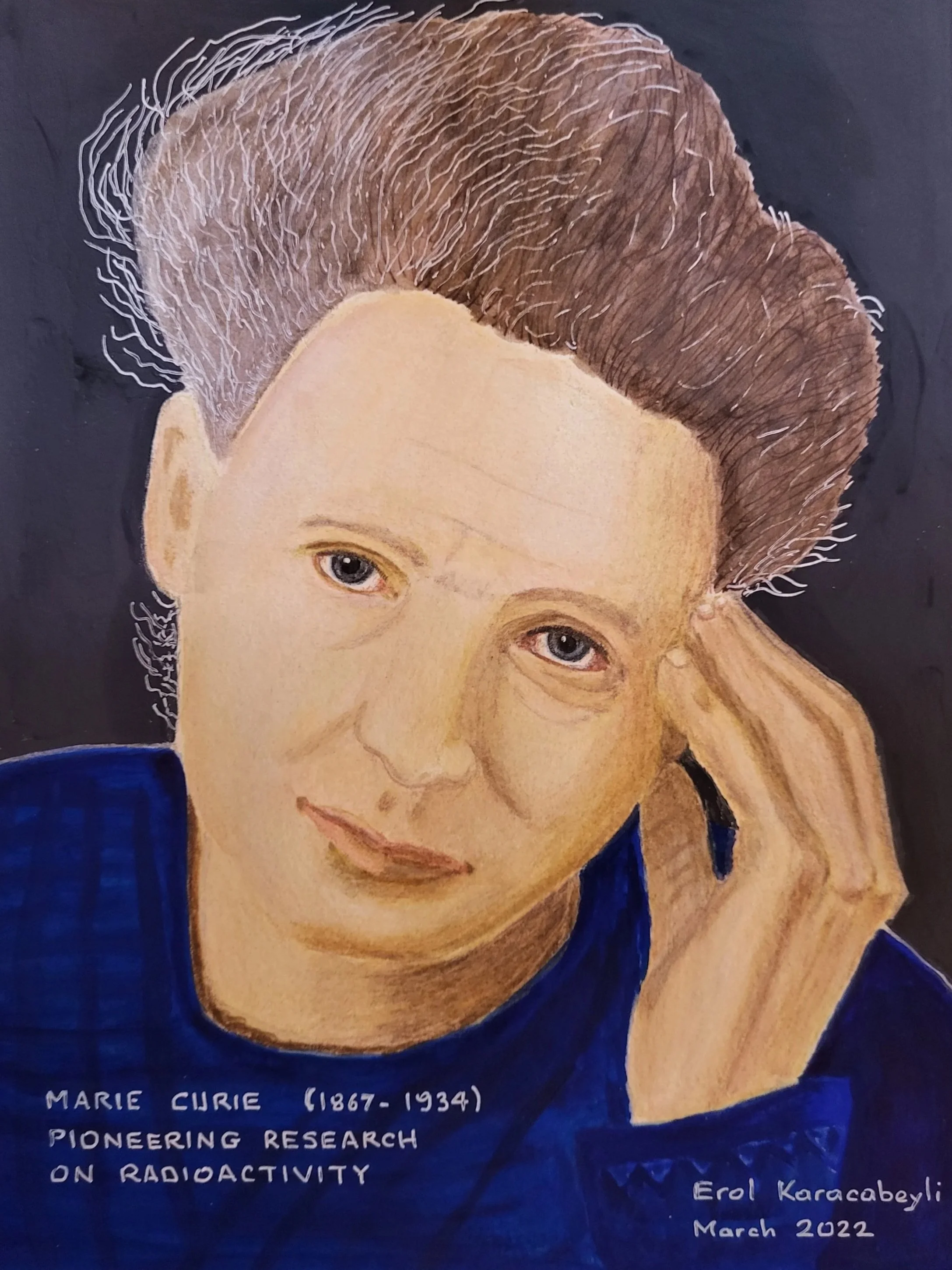
Portrait of Marie Curie
Essence: The groundbreaking scientist whose discoveries in radioactivity reshaped modern physics and chemistry .
Marie Curie, born Maria Skłodowska in Poland and later a naturalized French citizen, stands as one of the most influential scientists in history. Her pioneering research on radioactivity opened new scientific frontiers, challenged the barriers facing women in science, and transformed medicine, physics, and chemistry. Curie’s dedication to discovery and her extraordinary achievements continue to inspire generations.
Türkçe Öz: Radyoaktivite üzerine yaptığı çığır açan keşiflerle modern fizik ve kimyayı kökten değiştiren, bilim dünyasının öncü ismi.
Polonya'da Maria Skłodowska olarak doğan ve daha sonra Fransız vatandaşı olan Marie Curie, tarihin en etkili bilim insanlarından biri olarak duruyor. Radyoaktivite üzerine yaptığı öncü araştırmalar yeni bilimsel ufuklar açtı, kadınların bilimde karşılaştığı engellere meydan okudu ve tıp, fizik ve kimyayı dönüştürdü. Curie'nin keşfe olan bağlılığı ve olağanüstü başarıları nesillere ilham vermeye devam ediyor.
Profile
Marie Curie’s (1867–1934) scientific journey began when she left Russian-occupied Poland to study at the Sorbonne in Paris, overcoming significant financial hardship and the obstacles women faced in higher education. It was there that she met Pierre Curie, who became both her husband and her collaborator. Together, the Curies and physicist Henri Becquerel laid the foundations of radioactivity research—a term Marie herself coined. In 1903, for their groundbreaking work, Marie Curie became the first woman to receive the Nobel Prize, honored alongside Pierre and Becquerel in Physics.
Curie’s pursuit of knowledge did not stop there. After Pierre’s tragic death in 1906, she continued their work with remarkable determination, eventually isolating two new elements: polonium (named after her homeland, Poland) and radium. Her achievements were recognized again in 1911 when she received the Nobel Prize in Chemistry, making her the first person to win Nobel Prizes in two different scientific fields.
Beyond the laboratory, Curie applied her discoveries for the benefit of society. During World War I, she helped develop and operate mobile X-ray units, known as “Little Curies,” which brought life-saving diagnostic imaging to battlefield hospitals. Her scientific leadership also helped establish the Radium Institute in Paris, a major center for research and cancer treatment.
Curie’s unwavering dedication came at a personal cost. Long before the dangers of radiation were understood, she worked with radioactive materials without protective measures, eventually developing aplastic anemia, a condition believed to have resulted from prolonged exposure to radiation. She died in 1934, but her contributions fundamentally reshaped modern science and medicine.
Marie Curie remains a symbol of intellectual brilliance, perseverance, and the power of curiosity. Her life demonstrates how scientific discovery can illuminate the world—sometimes literally—and leave a legacy that endures for generations.
Portrait of Albert Einstein
Essence: The theoretical physicist who reshaped our understanding of space, time, energy, and the very structure of the universe.
Albert Einstein was a German-born physicist whose groundbreaking ideas transformed modern science. Best known for developing the theories of special and general relativity, Einstein showed that time and space are flexible, not fixed; that motion and gravity behave in ways far stranger and more beautiful than everyday experience suggests; and that energy and mass are deeply connected. His work didn’t just rewrite physics—it paved the way for technologies we rely on today, from GPS to nuclear energy, and helped shape how humanity thinks about the cosmos.
Türkçe - Öz: Uzay, zaman, enerji ve evrenin bizzat yapısına dair anlayışımızı yeniden şekillendiren teorik fizikçi.
Albert Einstein, çığır açıcı fikirleriyle modern bilimi dönüştüren Almanya doğumlu bir fizikçiydi. En çok özel ve genel görelilik kuramlarını geliştirmesiyle tanınan Einstein, zaman ve uzayın sabit değil, esnek olduğunu; hareketin ve kütleçekimin, gündelik deneyimlerimizin düşündürdüğünden çok daha tuhaf ve bir o kadar da güzel biçimlerde davrandığını; enerji ile kütlenin ise derin bir şekilde birbirine bağlı olduğunu ortaya koydu. Onun çalışmaları yalnızca fiziği baştan yazmakla kalmadı — GPS’ten nükleer enerjiye kadar bugün güvendiğimiz pek çok teknolojinin önünü açtı ve insanlığın evrene bakışını şekillendirmeye yardımcı oldu.
Profile
Albert Einstein (1879–1955) grew up curious, slow to speak but endlessly questioning. Fascinated by puzzles, geometry, and music, he favored imagination and deep reasoning over memorization, often clashing with Germany’s rigid schooling system. After studying in Switzerland and struggling to find academic work, he took a job at the Swiss patent office. This quiet position gave him the time and space to think freely—leading to 1905, his “miracle year.”
Einstein’s “miracle year” papers included his formulation of special relativity and the equation E = mc², revealing that mass and energy are two forms of the same thing. A decade later, his general theory of relativity offered a radically new picture of gravity—not as a force acting at a distance, but as the curvature of space and time caused by mass and energy.
This achievement was not made in isolation. Einstein’s breakthroughs were built upon the foundations laid by earlier scientists. Isaac Newton’s laws of motion and universal gravitation provided the classical framework that Einstein later refined and extended, showing where it did not work accurately at high speeds and strong gravitational fields. The experimental work of Michael Faraday and the electromagnetic theory of James Clerk Maxwell revealed that light is an electromagnetic wave with a constant speed—an insight that directly inspired special relativity. During the most mathematically demanding phase of the work, Einstein collaborated closely with his former classmate and friend Marcel Grossmann whose expertise allowed Einstein’s physical intuition to be translated into a precise mathematical framework, making general relativity possible.
Einstein’s growing international fame was soon overtaken by political upheaval. With Adolf Hitler’s rise to power in 1933 and the rapid persecution of Jews and dissident intellectuals in Germany, Einstein—who was Jewish, outspoken, and internationally visible—found it impossible to return safely to Europe. While traveling abroad, he resigned from the Prussian Academy of Sciences and emigrated permanently to the United States, accepting a position at the newly founded Institute for Advanced Study in Princeton, New Jersey. America became his home for the remainder of his life.
This period of displacement deepened Einstein’s sense of moral responsibility toward other persecuted scholars. In 1933, amid the mass dismissal of Jewish academics from German universities, Einstein wrote a letter to Mustafa Kemal Atatürk, the founder of modern Türkiye, urging him to offer refuge and academic positions to displaced Jewish scientists and physicians. The Turkish government soon invited and employed dozens of exiled German and Austrian scholars. These émigré academics made lasting contributions to Türkiye’s universities, medical schools, and scientific institutions.
Einstein’s life in the United States brought safety but also new ethical dilemmas. Although he never worked on the Manhattan Project, he signed a 1939 letter warning President Franklin D. Roosevelt that Nazi Germany might be pursuing nuclear weapons. When atomic bombs were dropped on Hiroshima and Nagasaki in 1945, Einstein was deeply saddened and disturbed. He later regretted signing the letter, believing that the fear motivating it no longer applied once Germany was defeated, and he was shaken by the destructive consequences of scientific knowledge.
The bombings marked a turning point. Einstein became an advocate for nuclear disarmament, global cooperation, and responsible scientific leadership. He warned that humanity’s technological power had outpaced its wisdom, famously observing that the release of atomic energy had “changed everything except our modes of thinking.”
Slideshow: Scientists/Inventors
Aristotle (384 BCE - 322 BCE): a deep love for knowledge based on observation, reason, and experience
Al-Khwarizmi (c. 780 CE-c. 850 CE) laid the foundations of algebra and introduced algorithms to the world
Ibn Sina (980–1037 CE): his medical book, The Canon of Medicine, served as the standard reference for over six centuries
René Descartes (1596–1650): developed Cartesian geometry, which links algebra and geometry, and laid the groundwork for calculus
Isaac Newton (1643-1727): unified motion, gravity, and mathematics into a single system
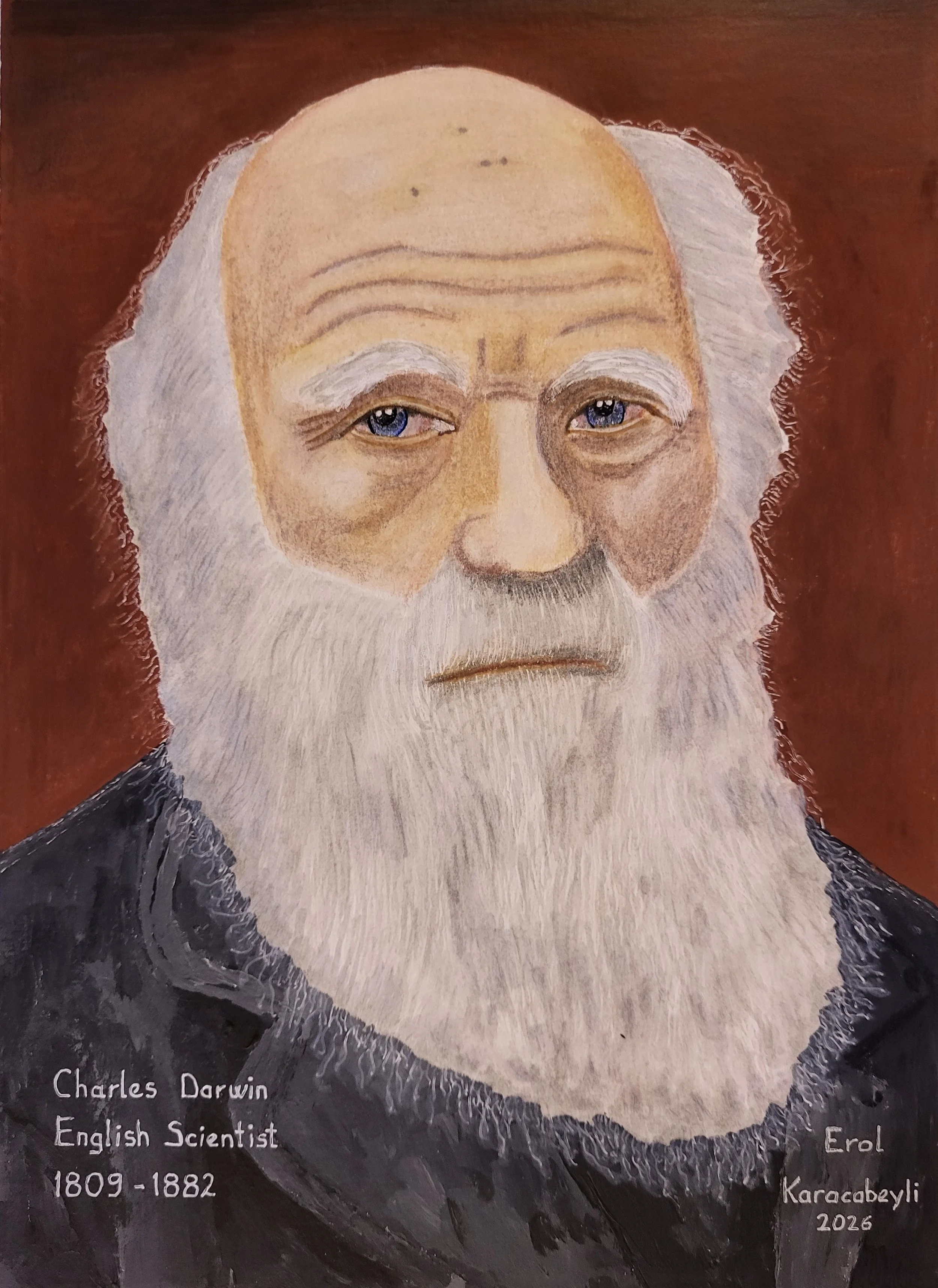
Charles Darwin (1809-1882): explained how species evolve through natural selection
Louis Pasteur (1822-1895): transformed medicine and everyday life by proving that invisible microbes cause disease and spoilage
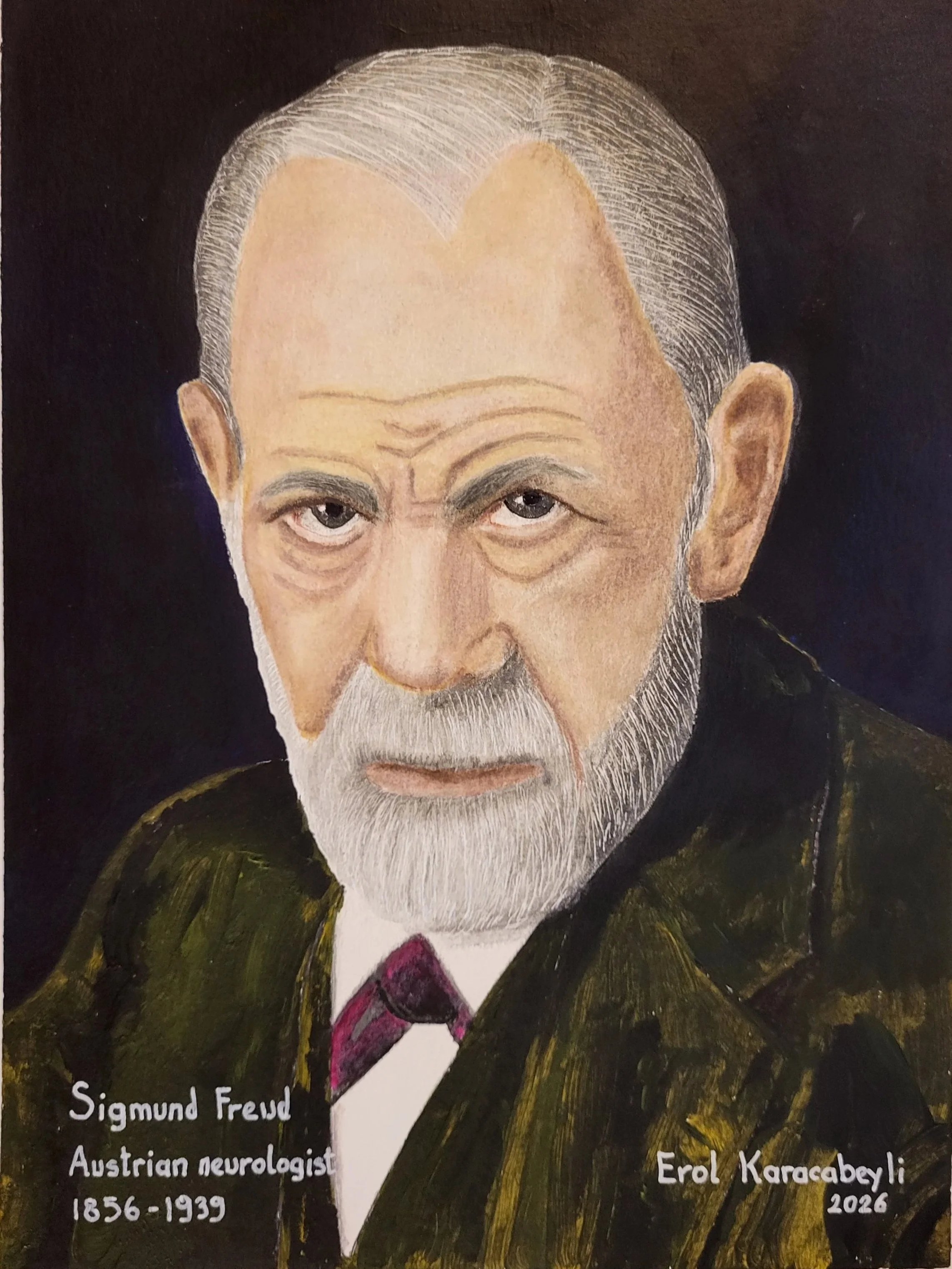
Sigmund Freud (1856-1939): revolutionized the treatment of mental illness by shifting the focus to the hidden depths of the unconscious mind
Florence Nightingale (1820-1910): pioneering nurse and reformer whose scientific rigor laid the foundations of modern nursing
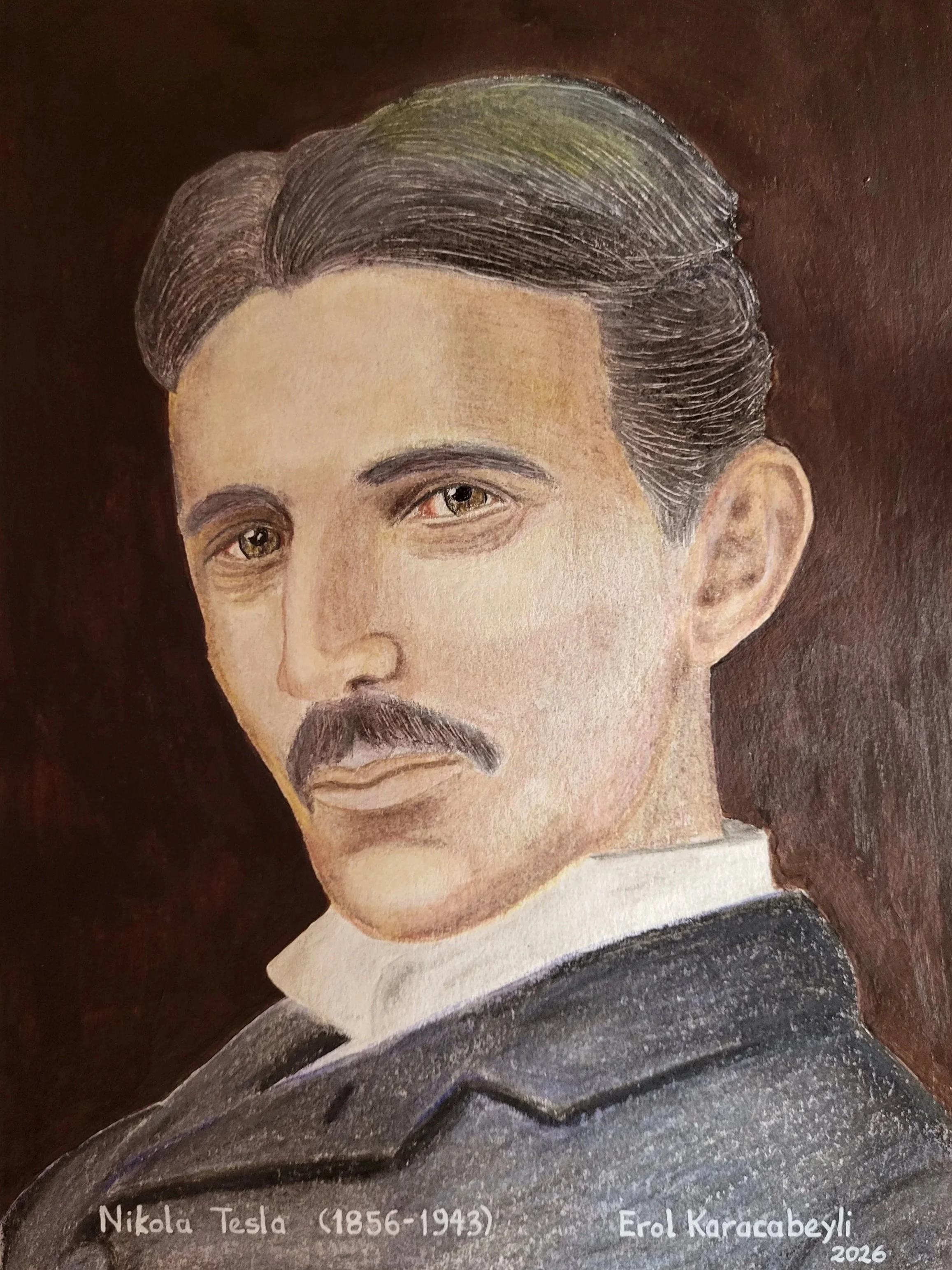
Nikola Tesla (1856-1943): pioneered the modern alternating current (AC) electrical system, making large-scale power distribution practical
Marie Curie (1867-1934): the groundbreaking scientist whose discoveries in radioactivity reshaped modern physics and chemistry
Albert Einstein (1879–1955): the theoretical physicist who reshaped our understanding of space, time, energy, and the universe