Portraits of philosophers
Philosophy, derived from the Greek words for 'love' and 'wisdom,' examines fundamental questions about life, knowledge, values, thinking, the mind, and language. For thousands of years, thinkers across various cultures have contributed to our understanding of the world. In this category, ideas and portraits of influential philosophers throughout history are presented, illustrating how their insights remain relevant in addressing contemporary challenges.
To explore the Collection
Select a portrait from the gallery below to view the full painting and explore the philosopher’s story (The images of paintings and profiles are licensed under Creative Commons Attribution 4.0 (CC BY 4.0), allowing free download and use with acknowledgement).
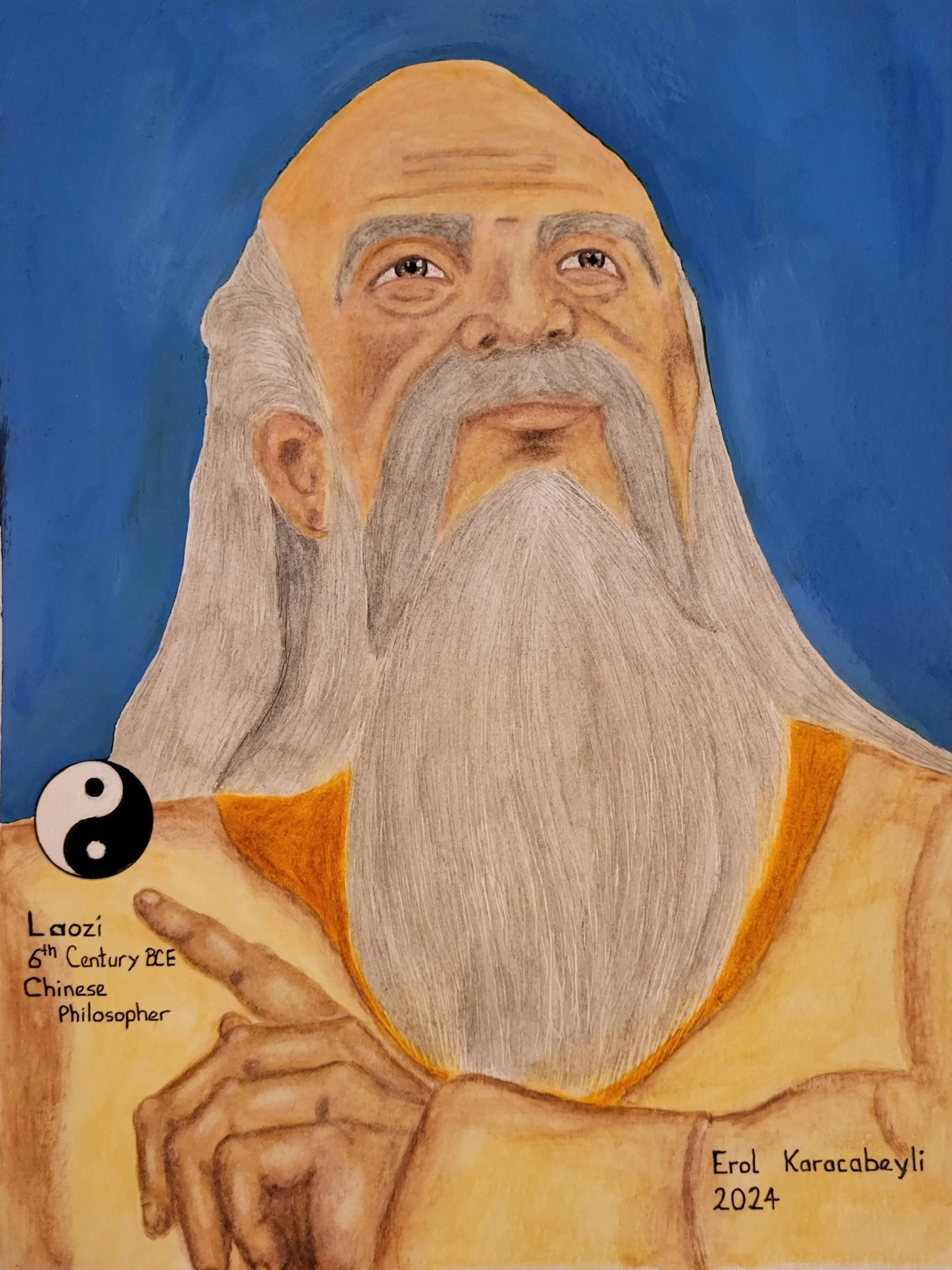
Laozi
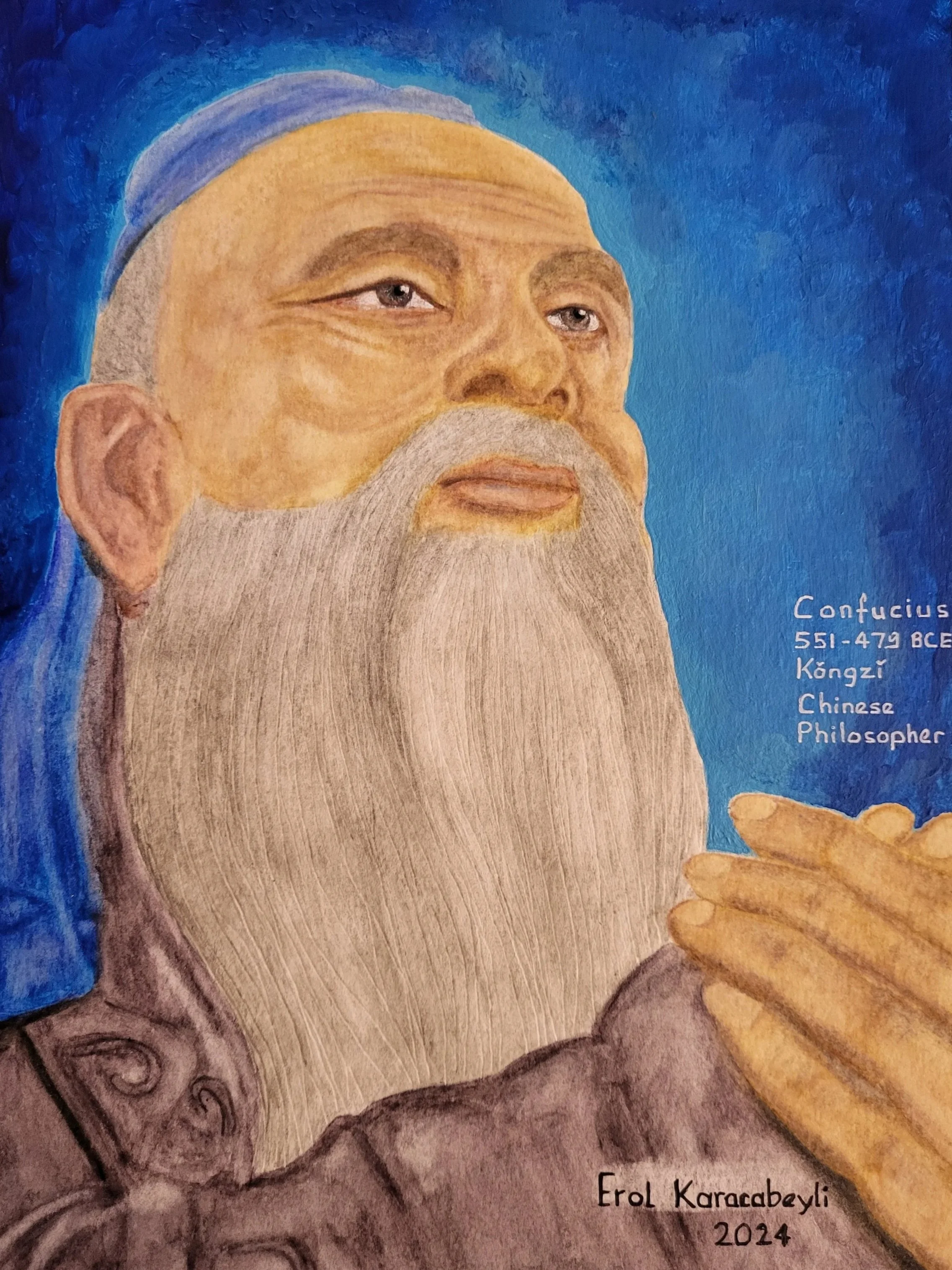
Confucius
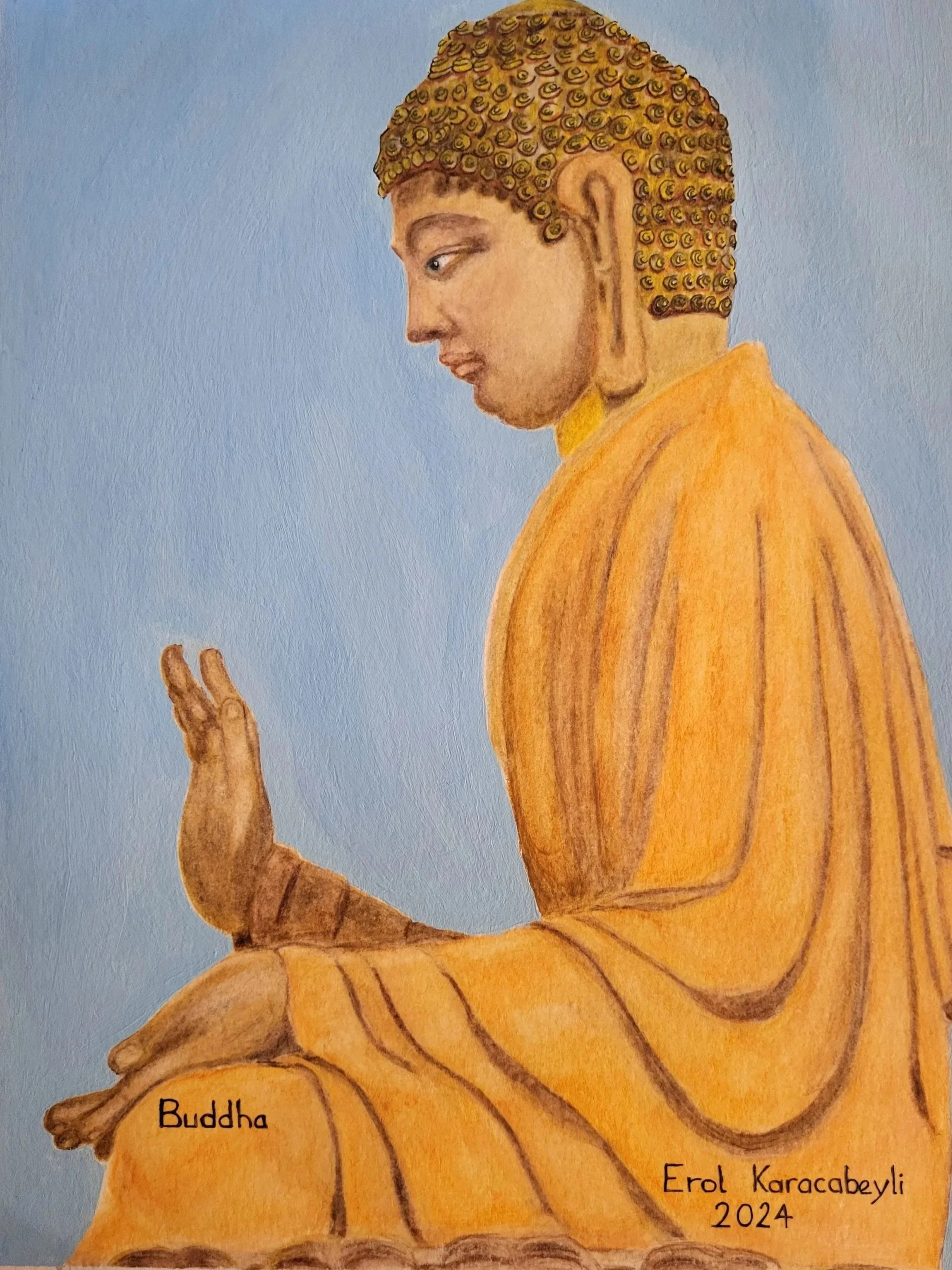
Buddha
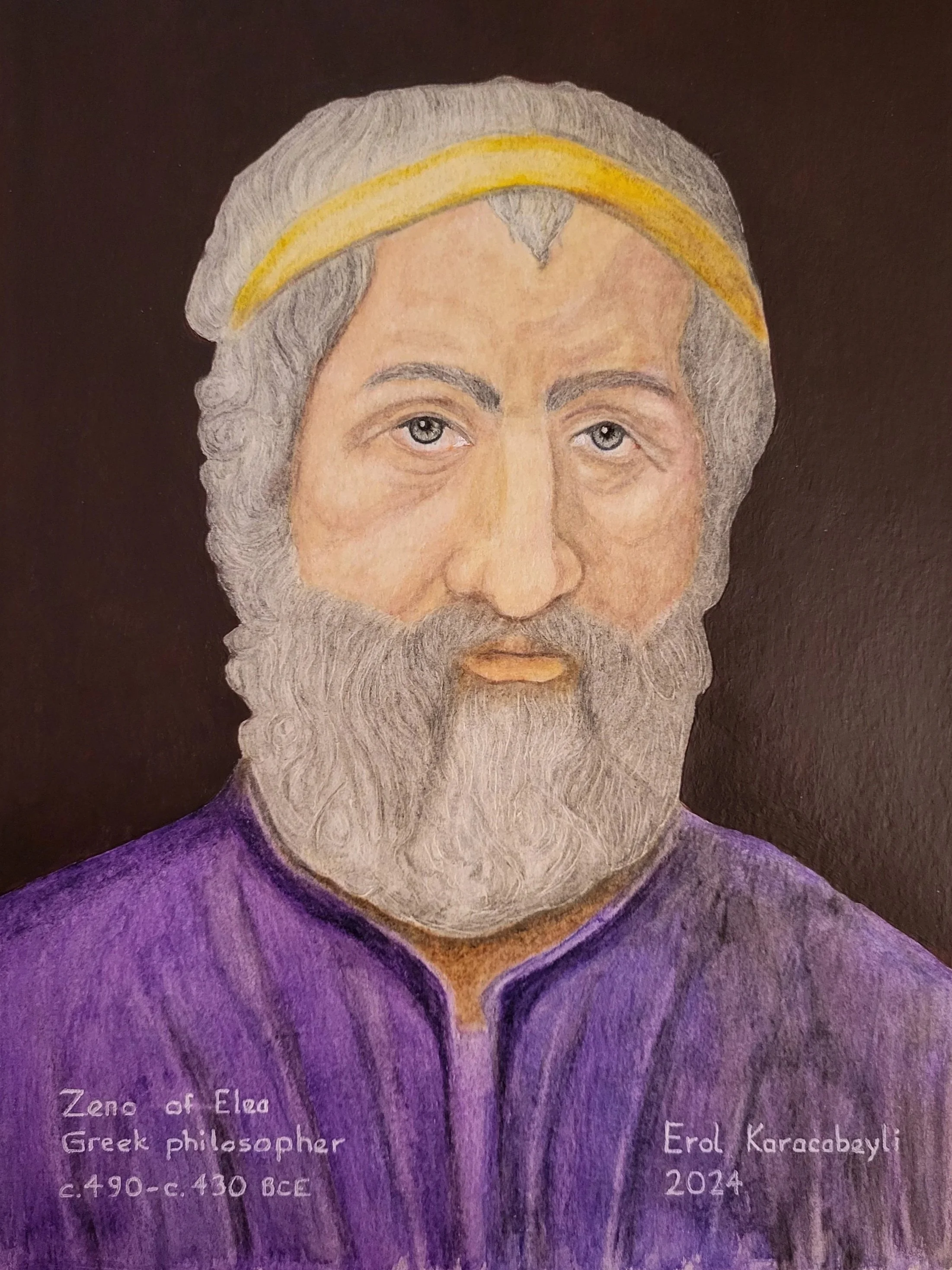
Zeno of Elea
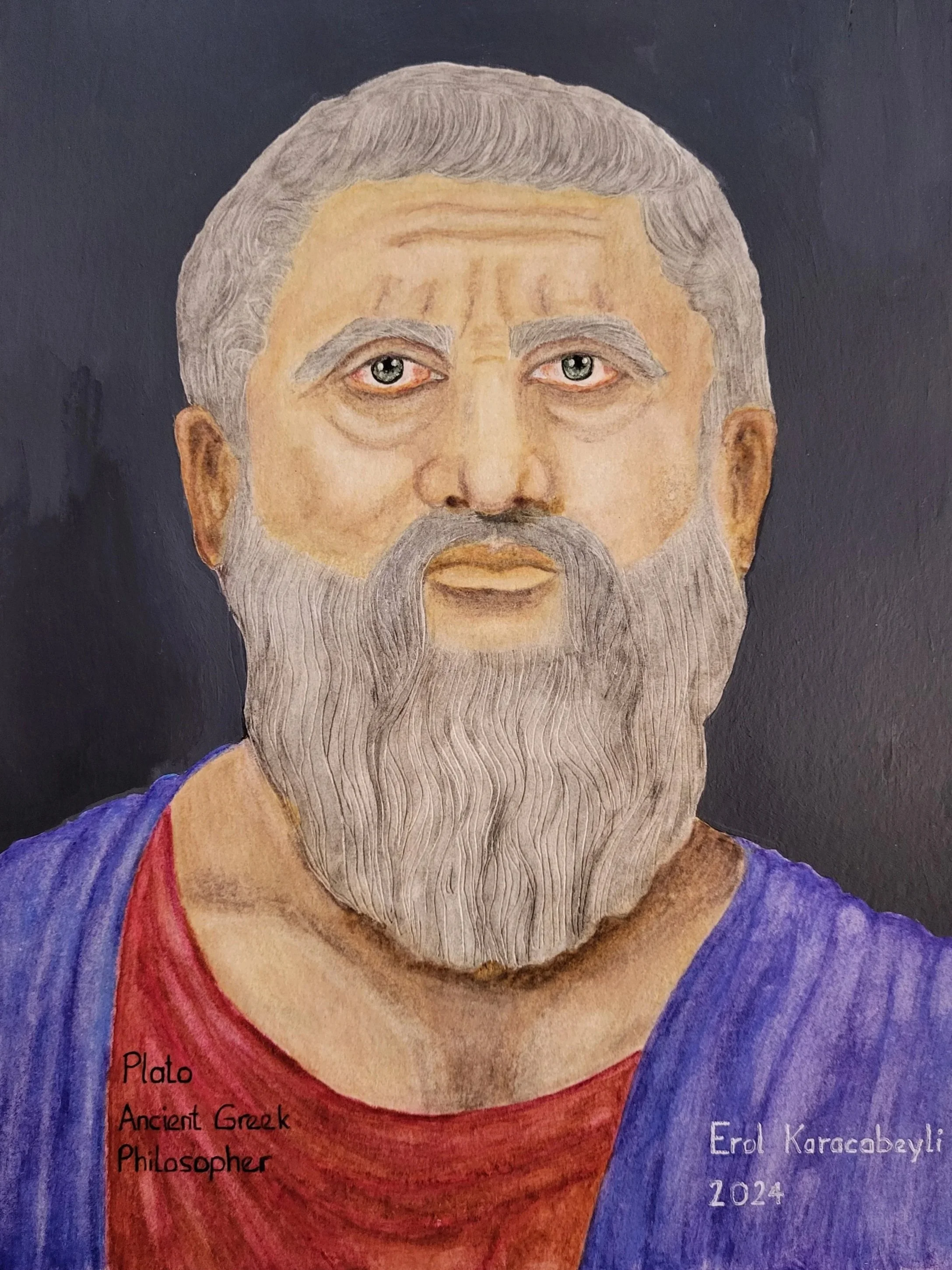
Plato
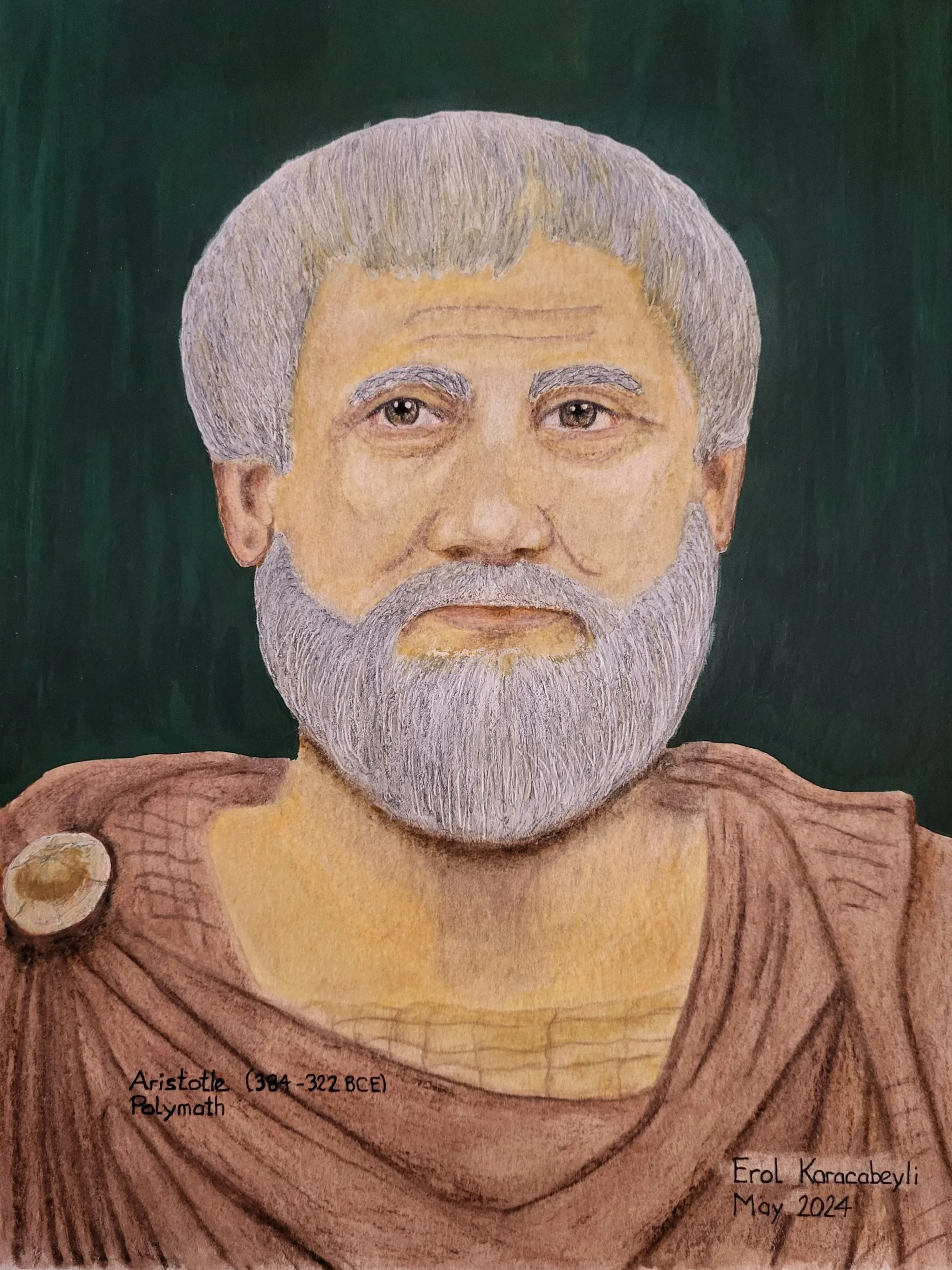
Aristotle
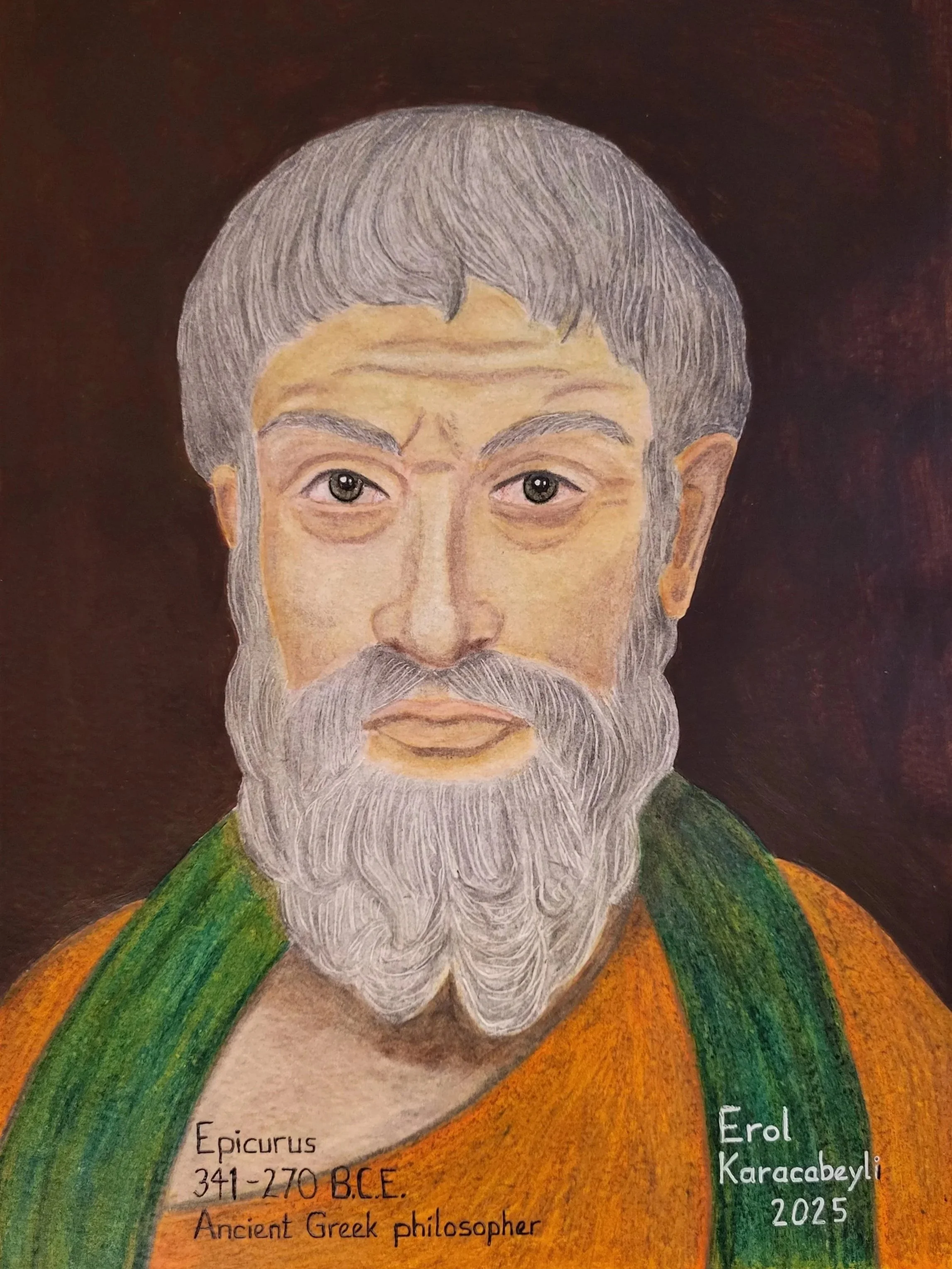
Epicurus
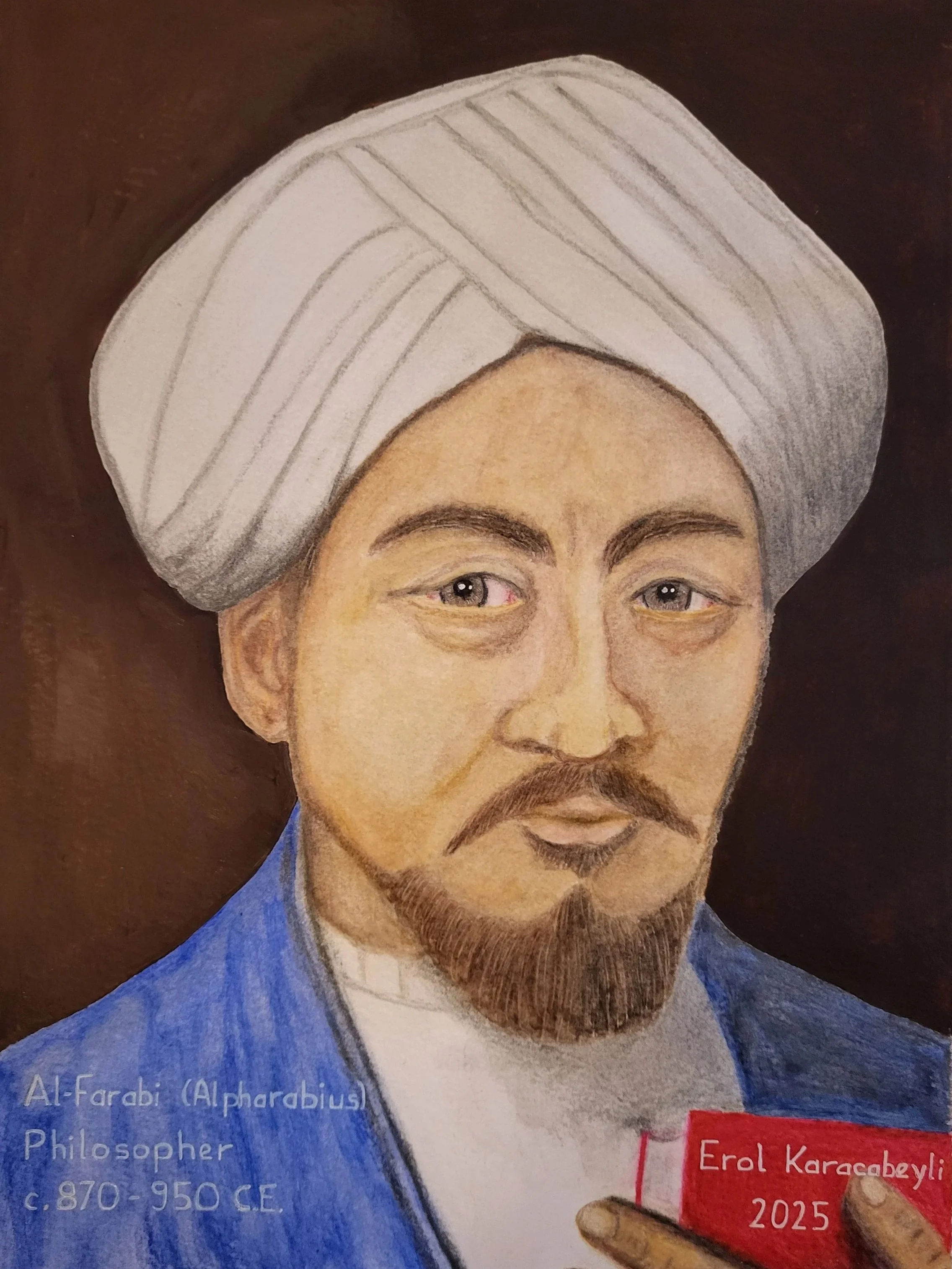
Al Farabi
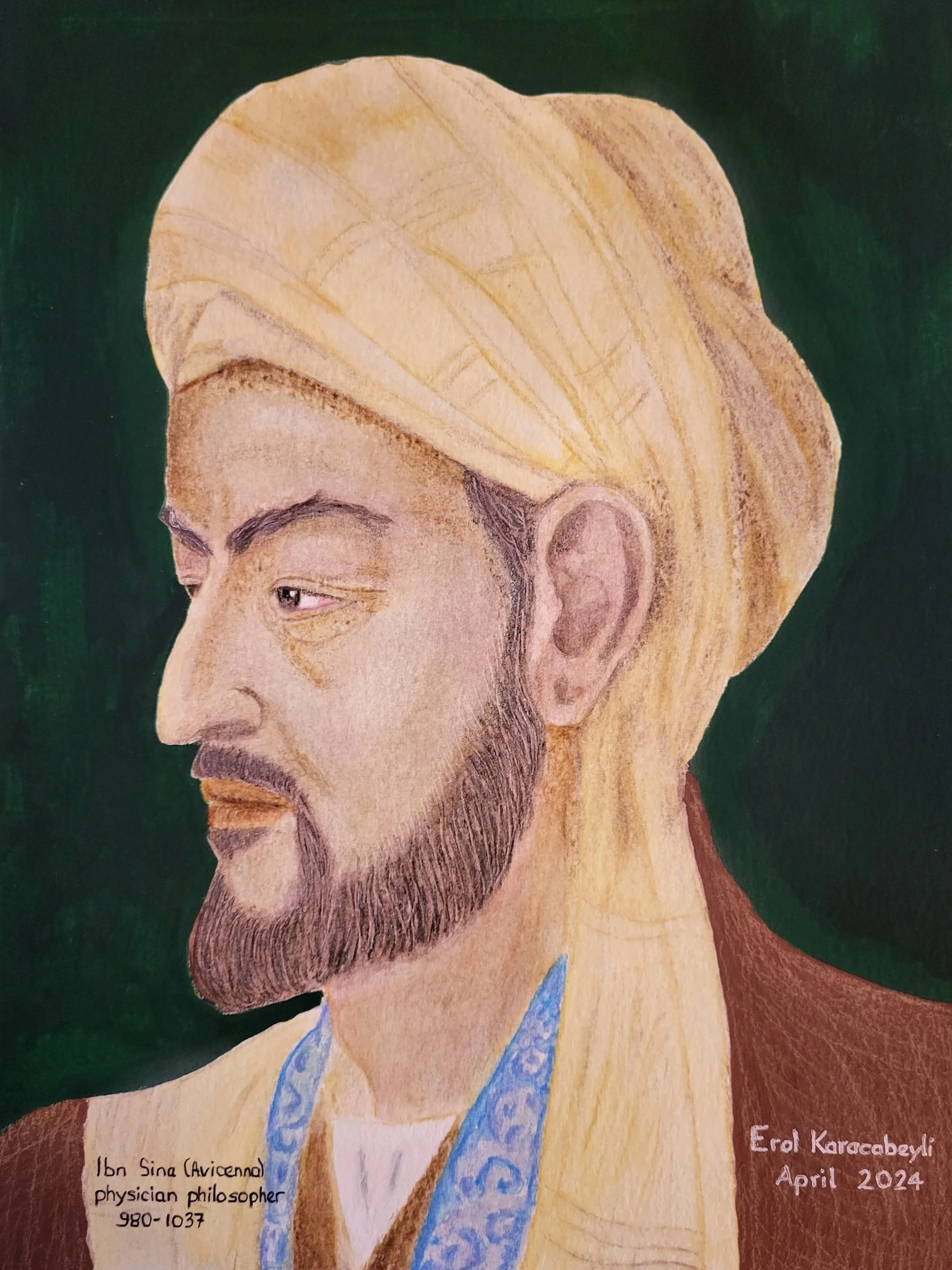
Ibn Sina (Avicenna)
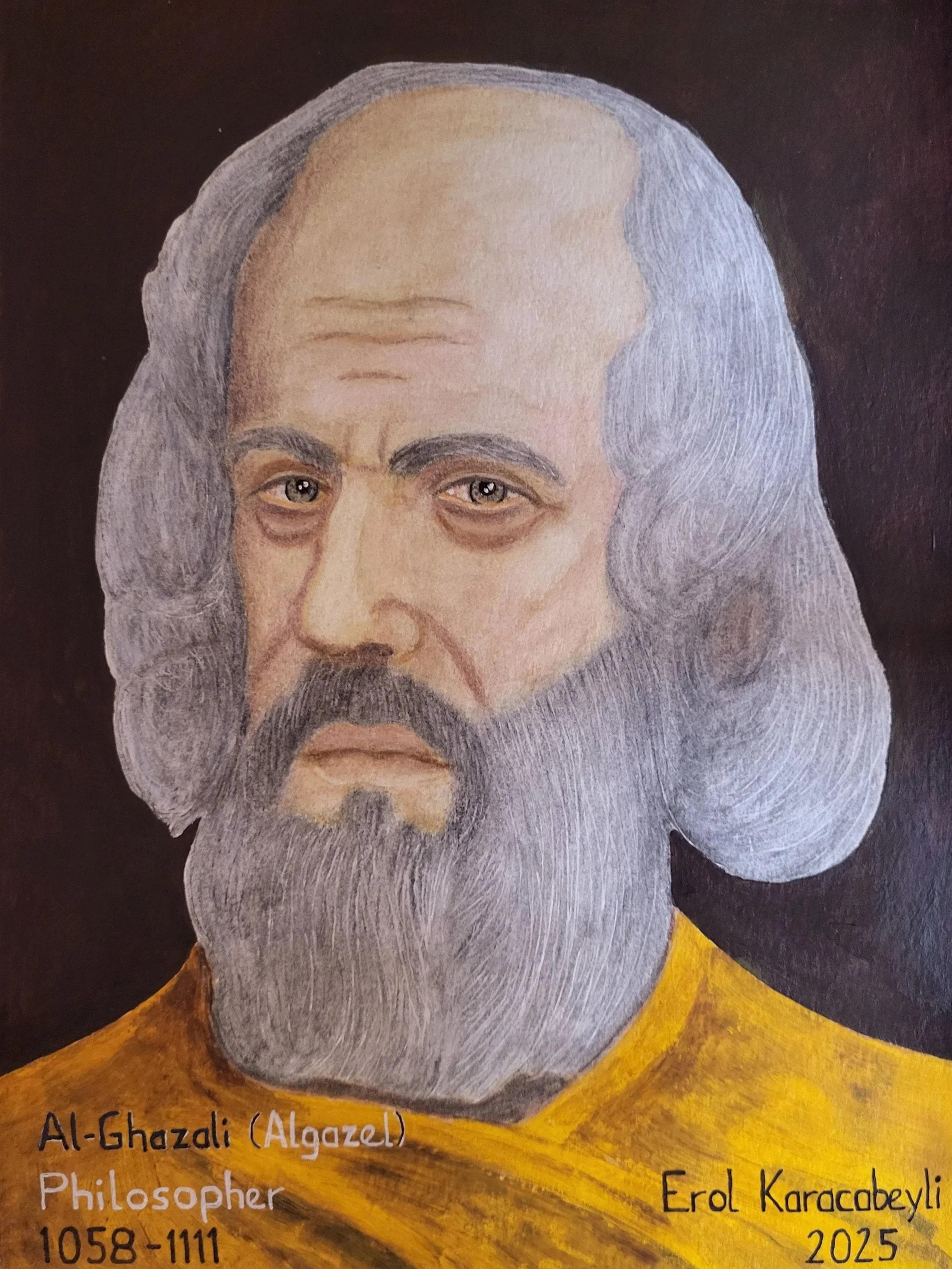
Al Ghazali
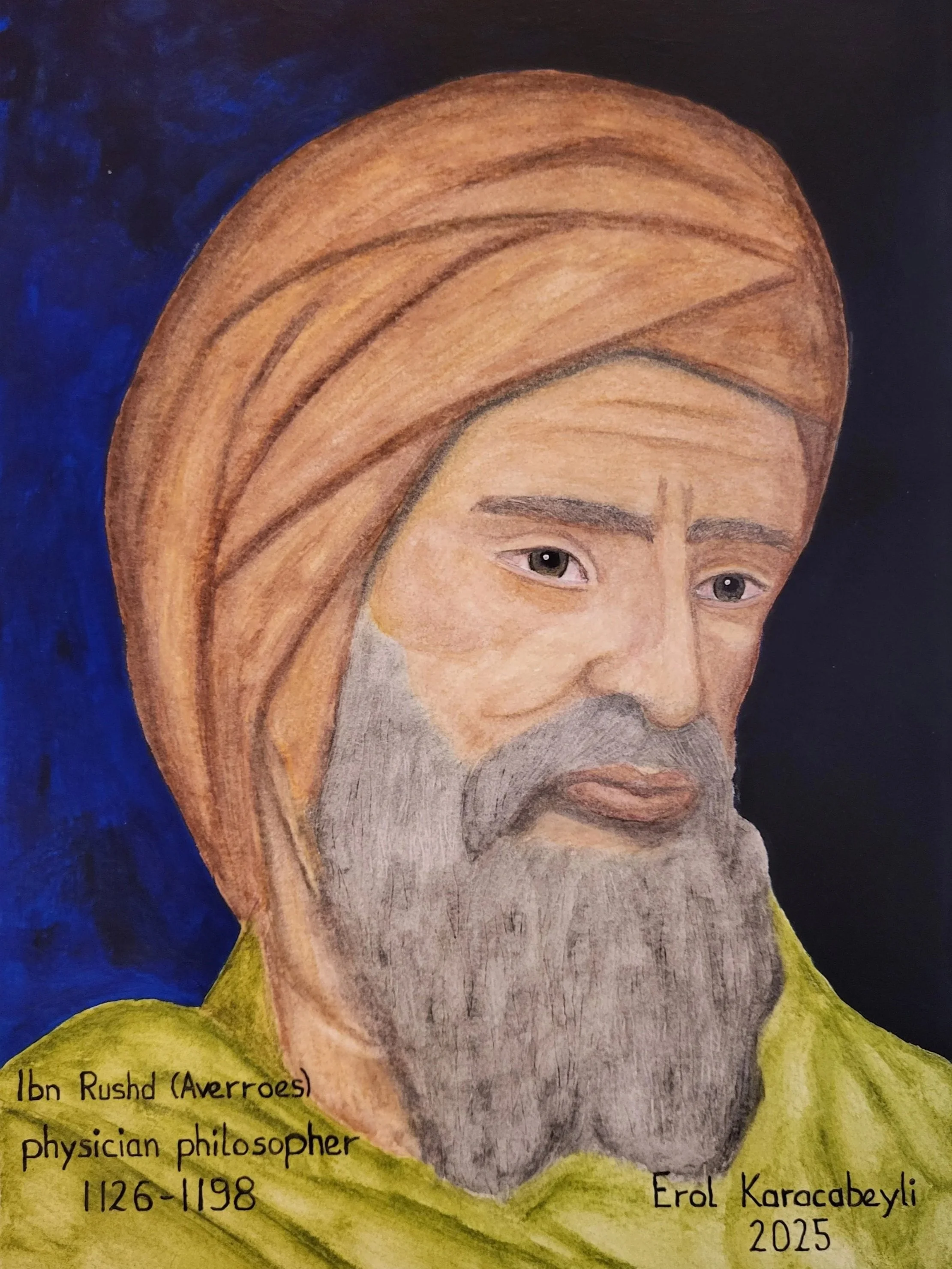
Ibn Rushd (Averroes)
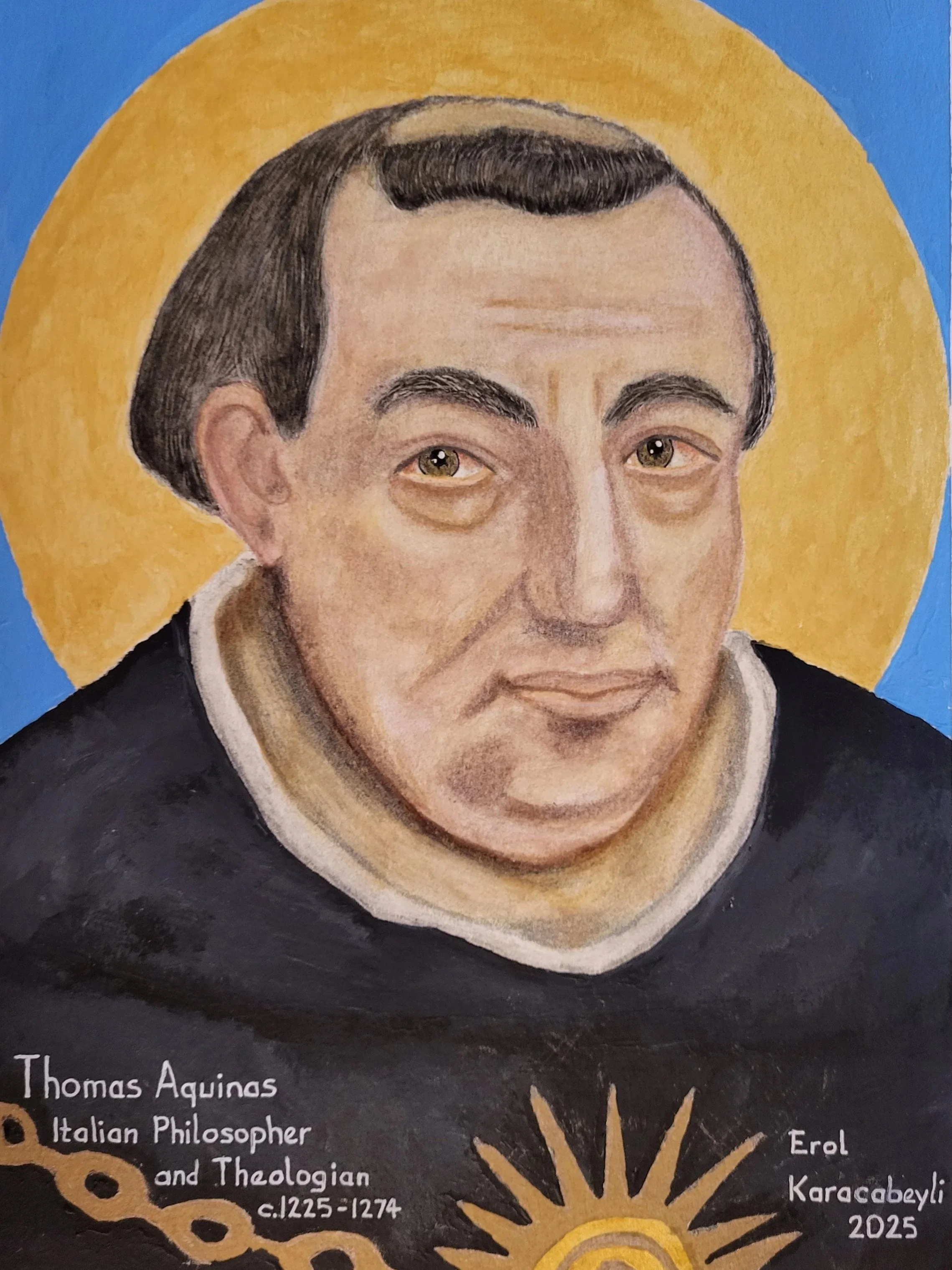
Thomas Aquinas
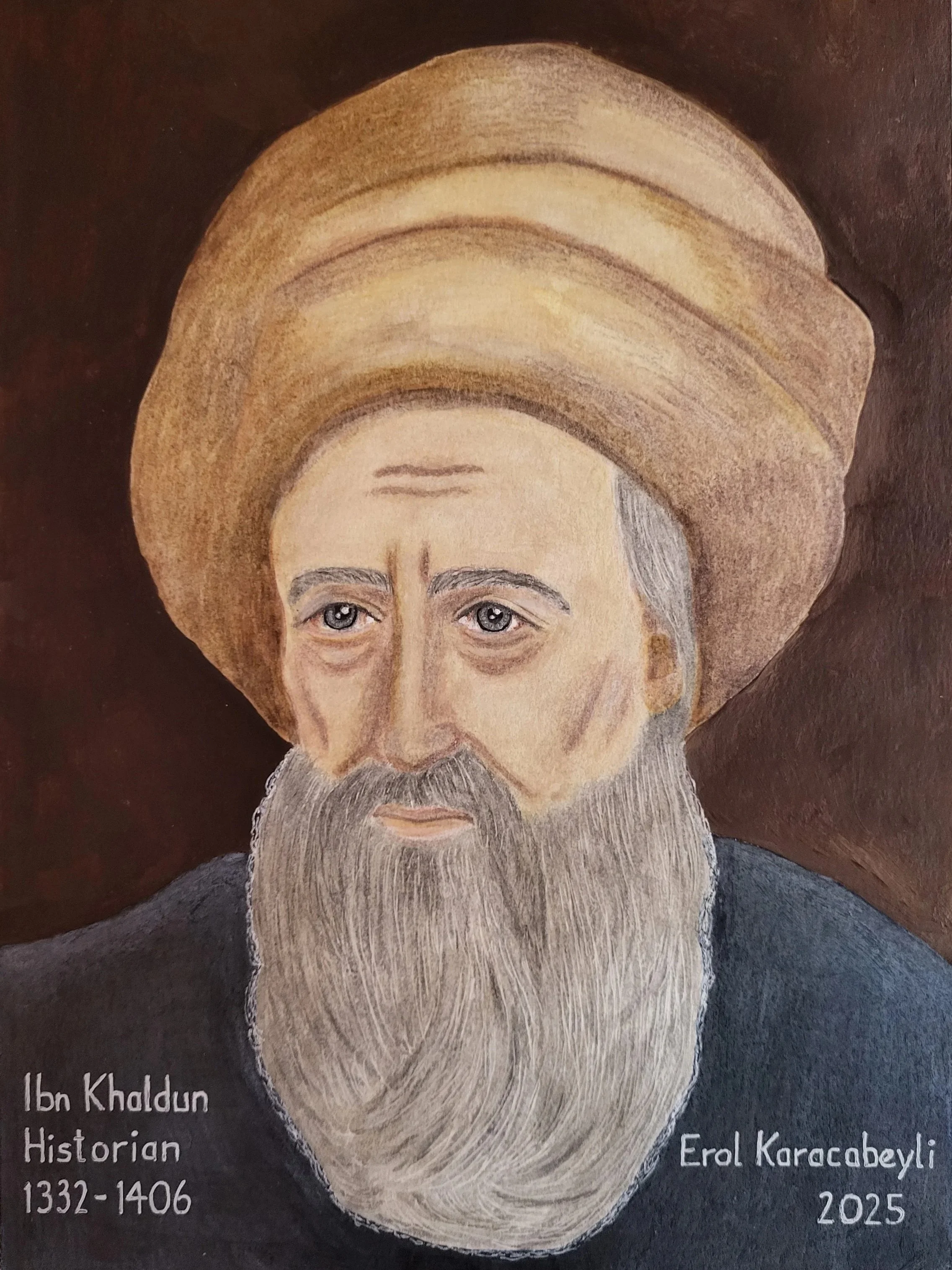
Ibn Khaldun
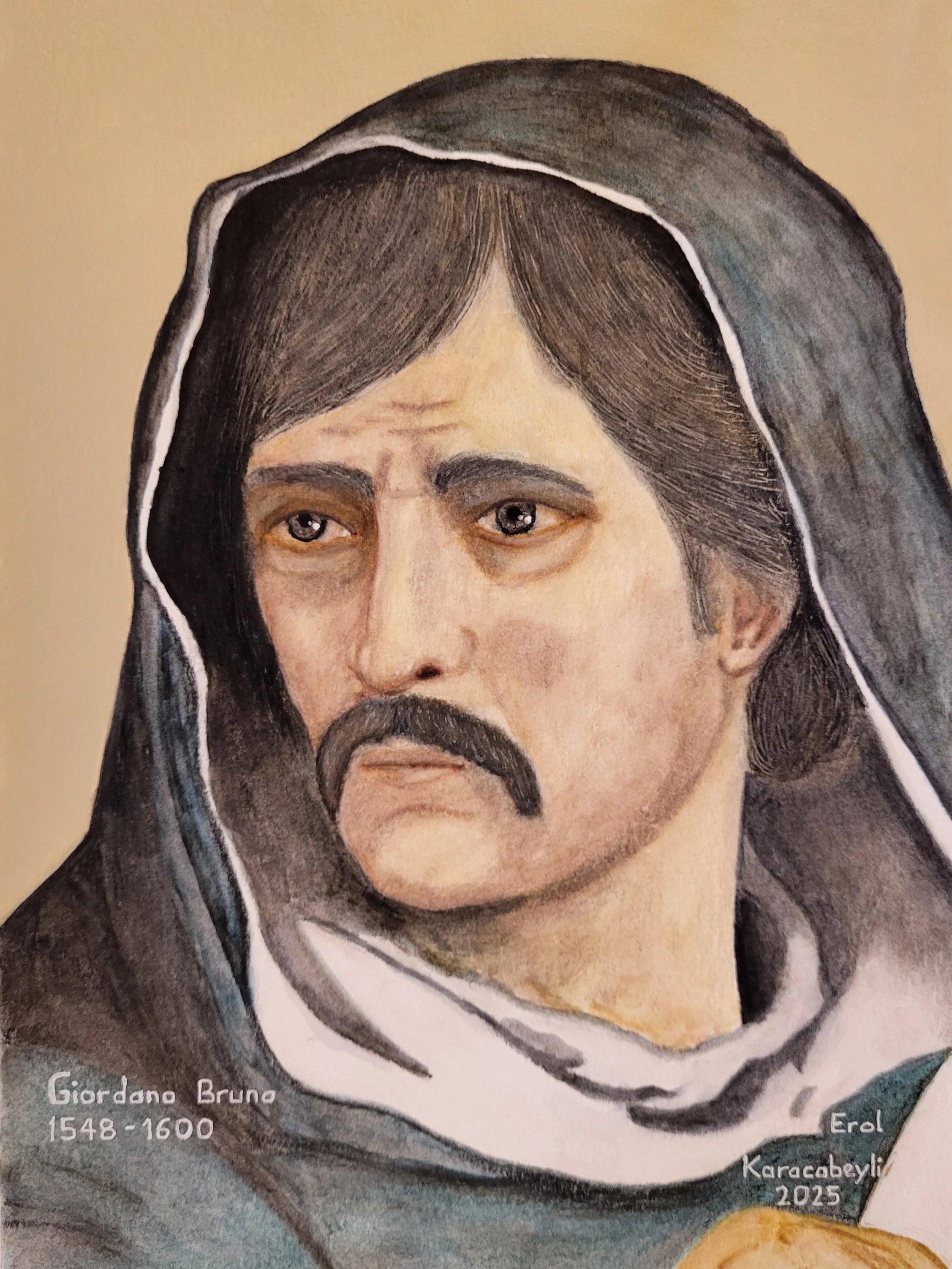
Giordano Bruno
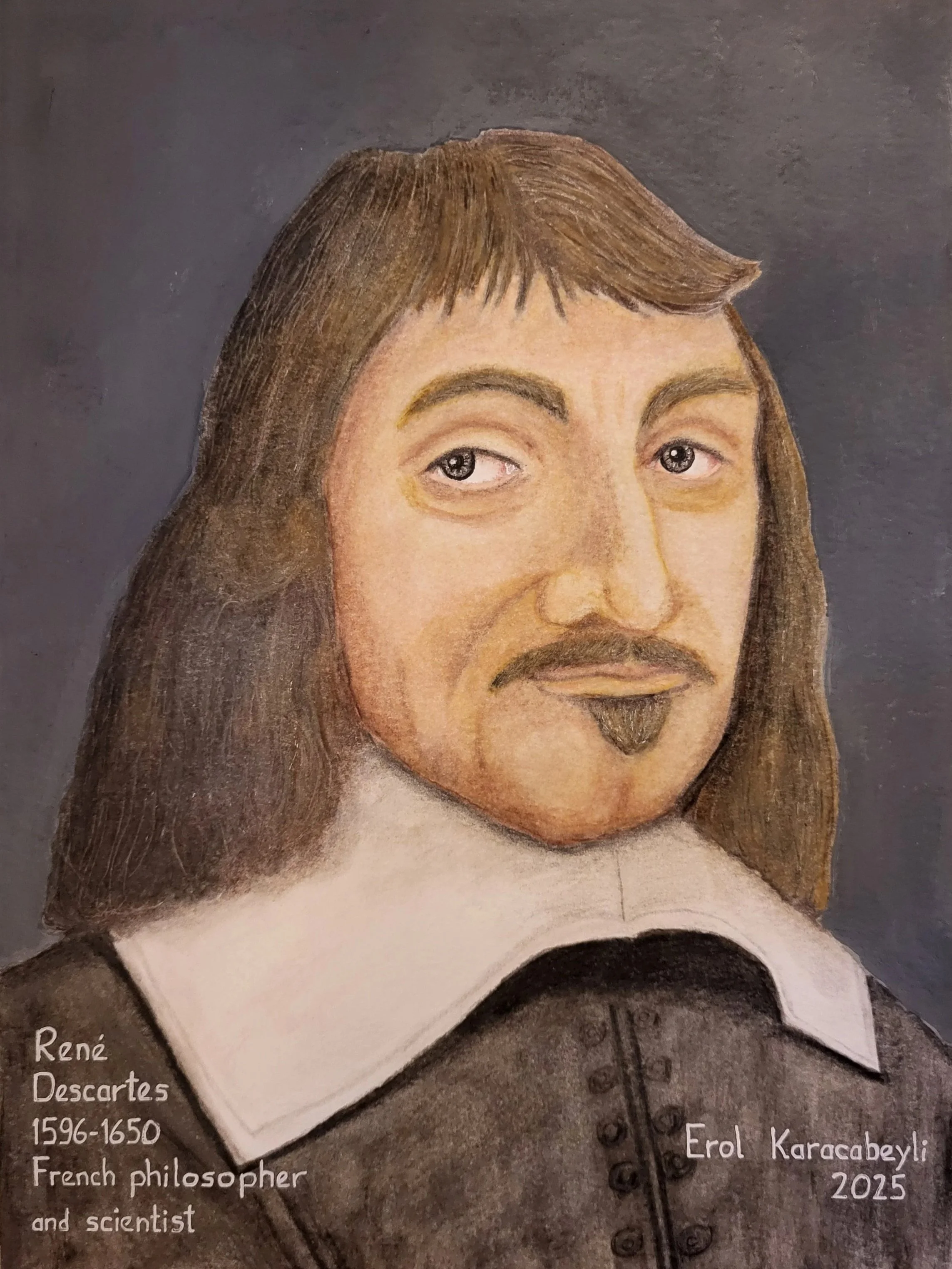
Rene Descartes
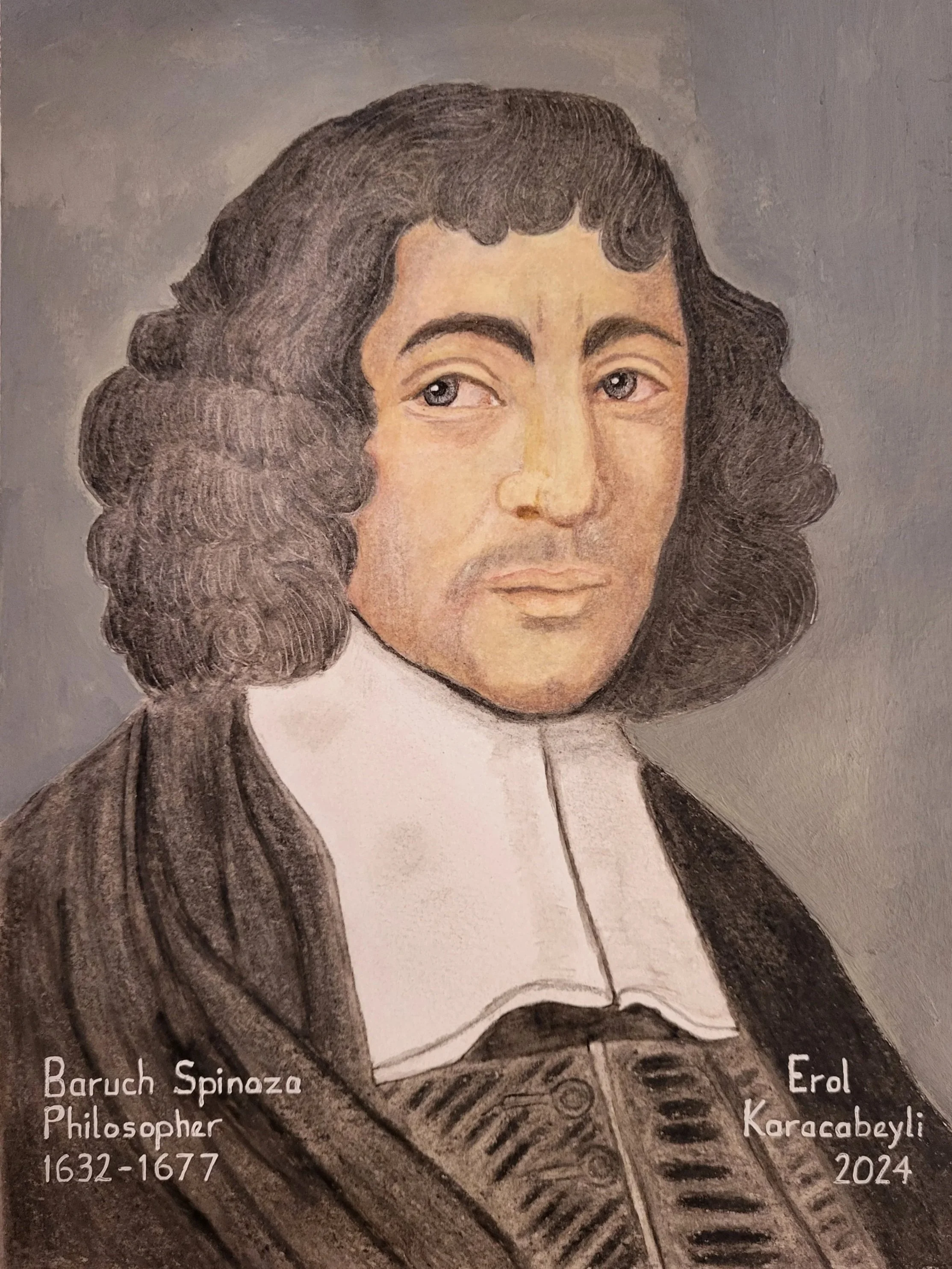
Baruch Spinoza
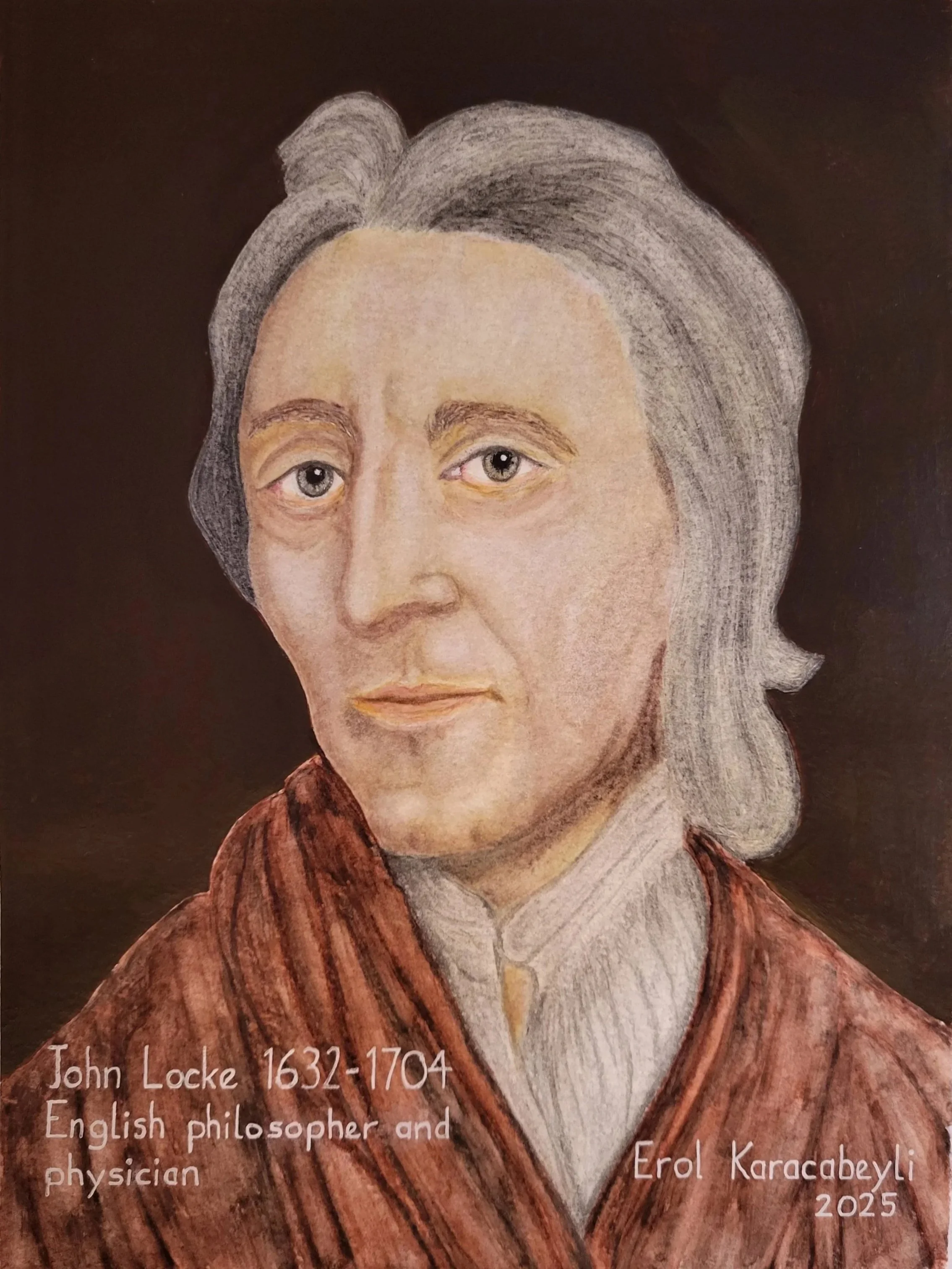
John Locke
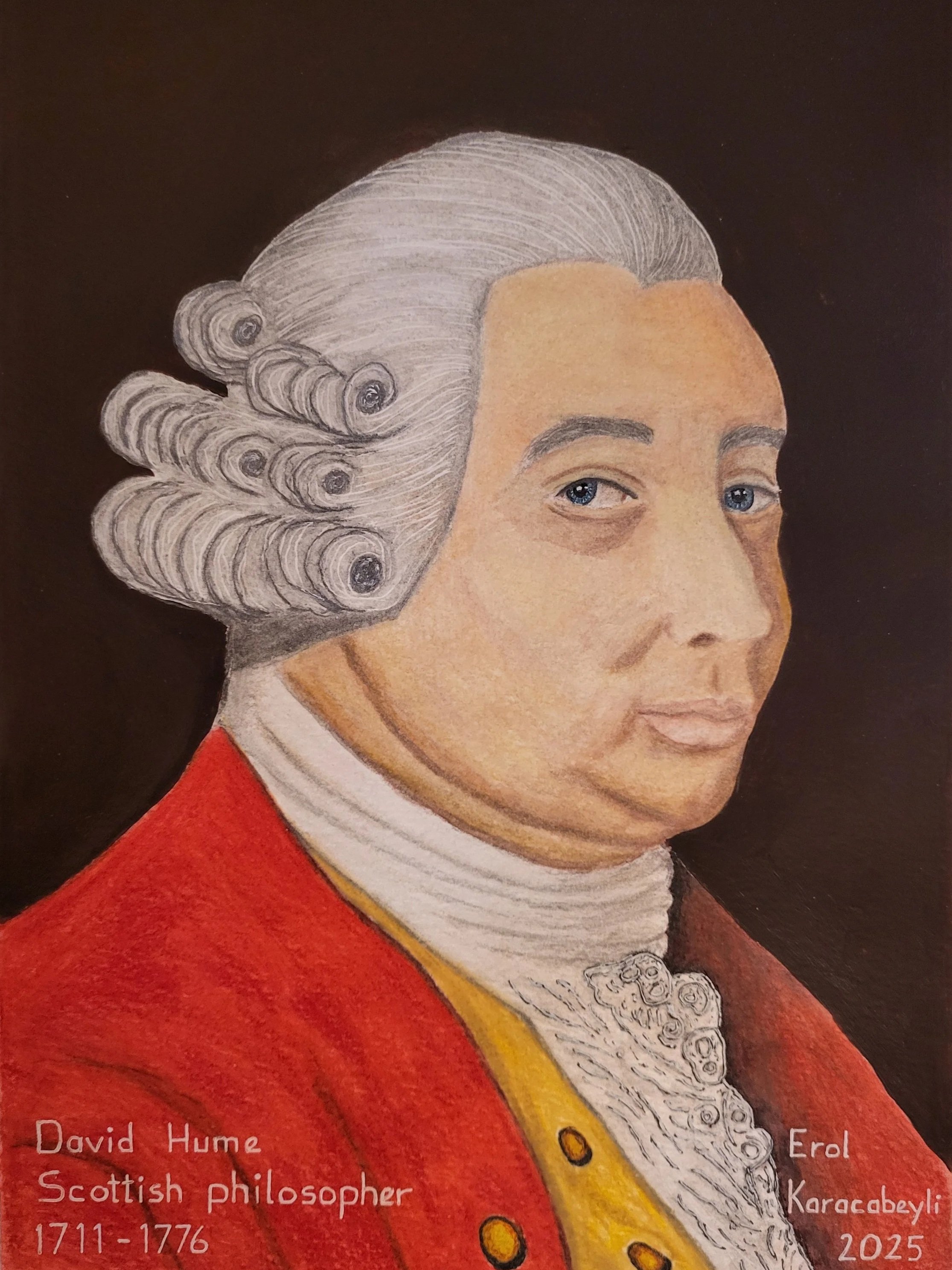
David Hume
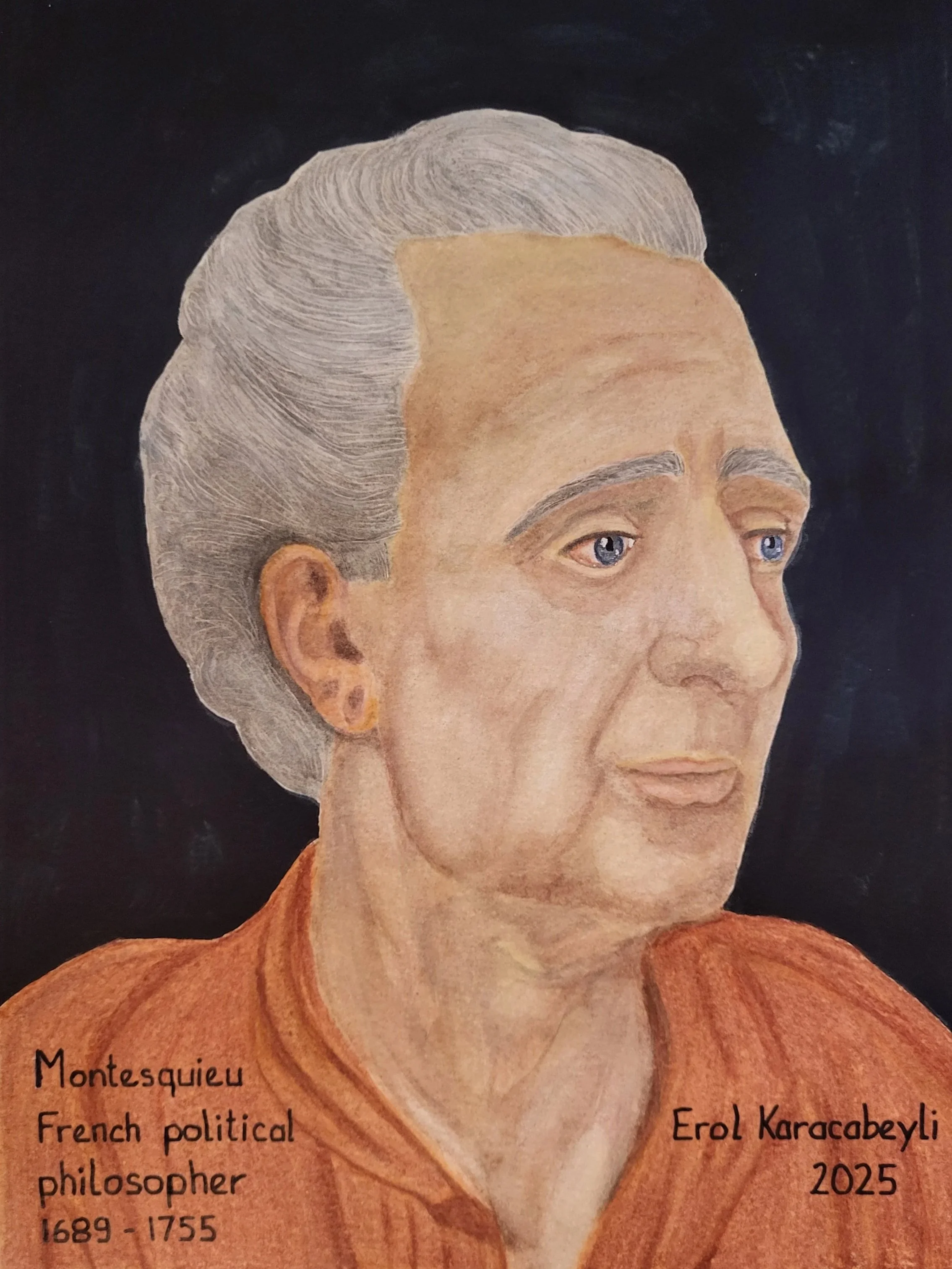
Montesquieu
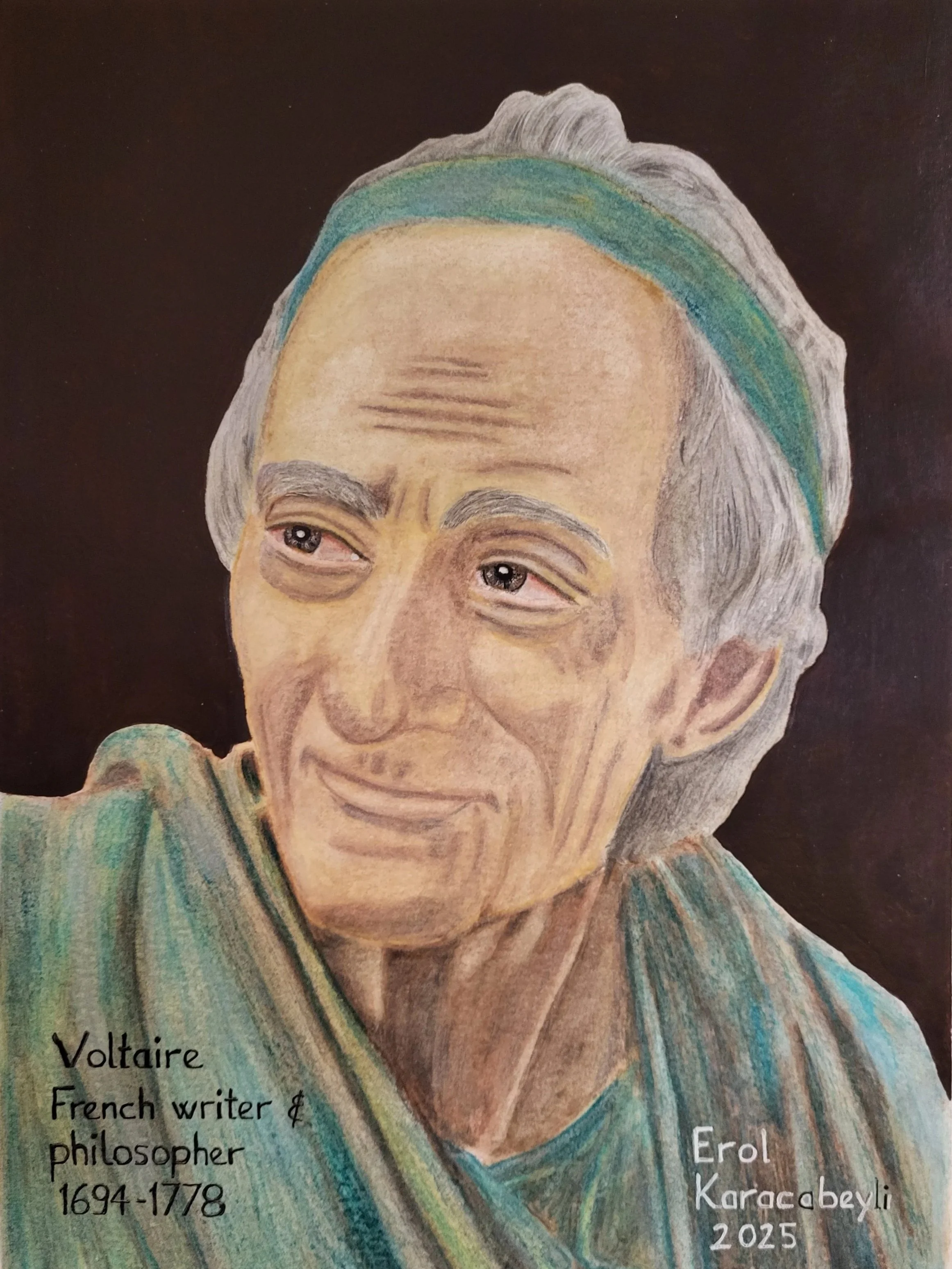
Voltaire
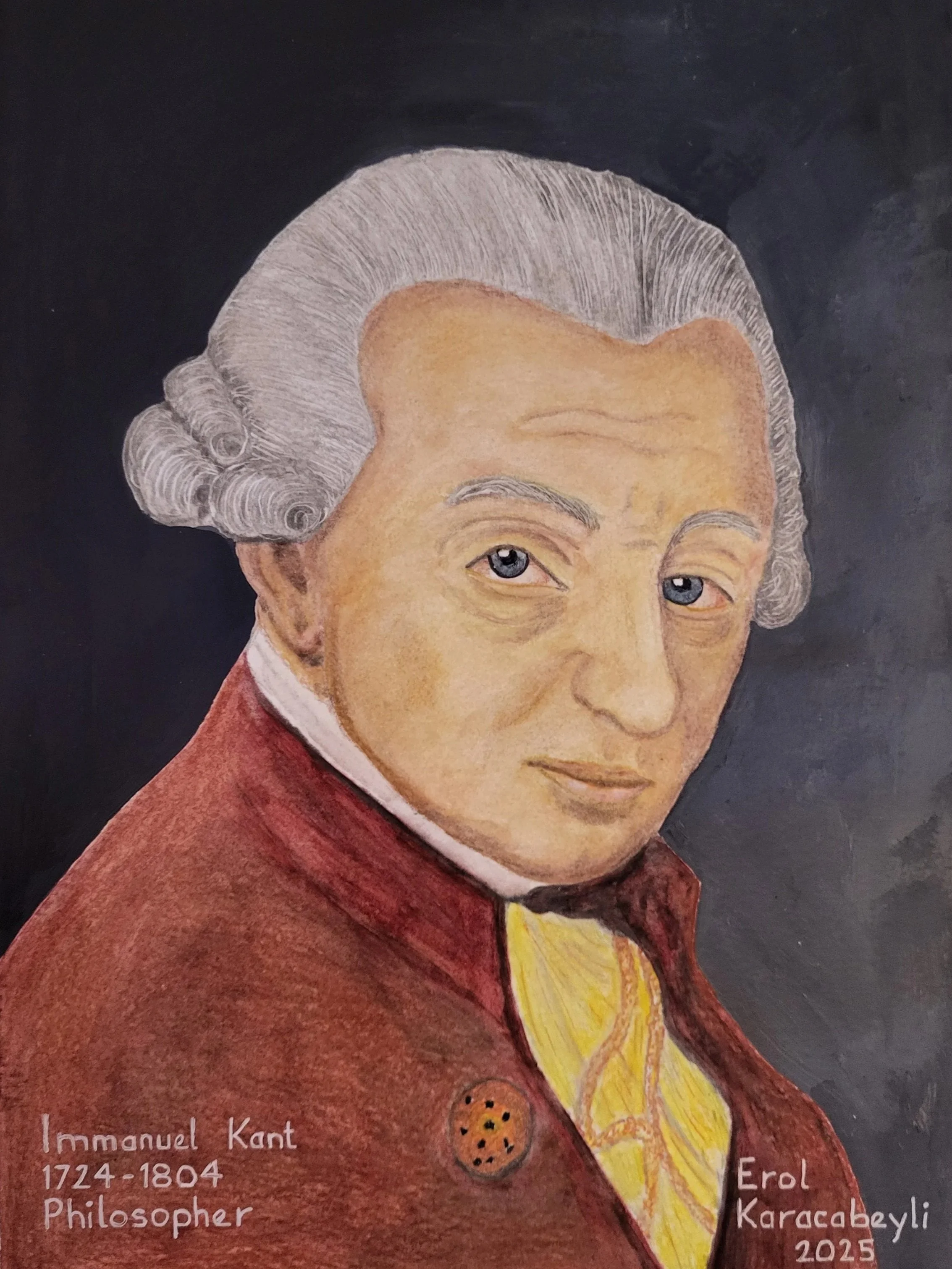
Immanuel Kant
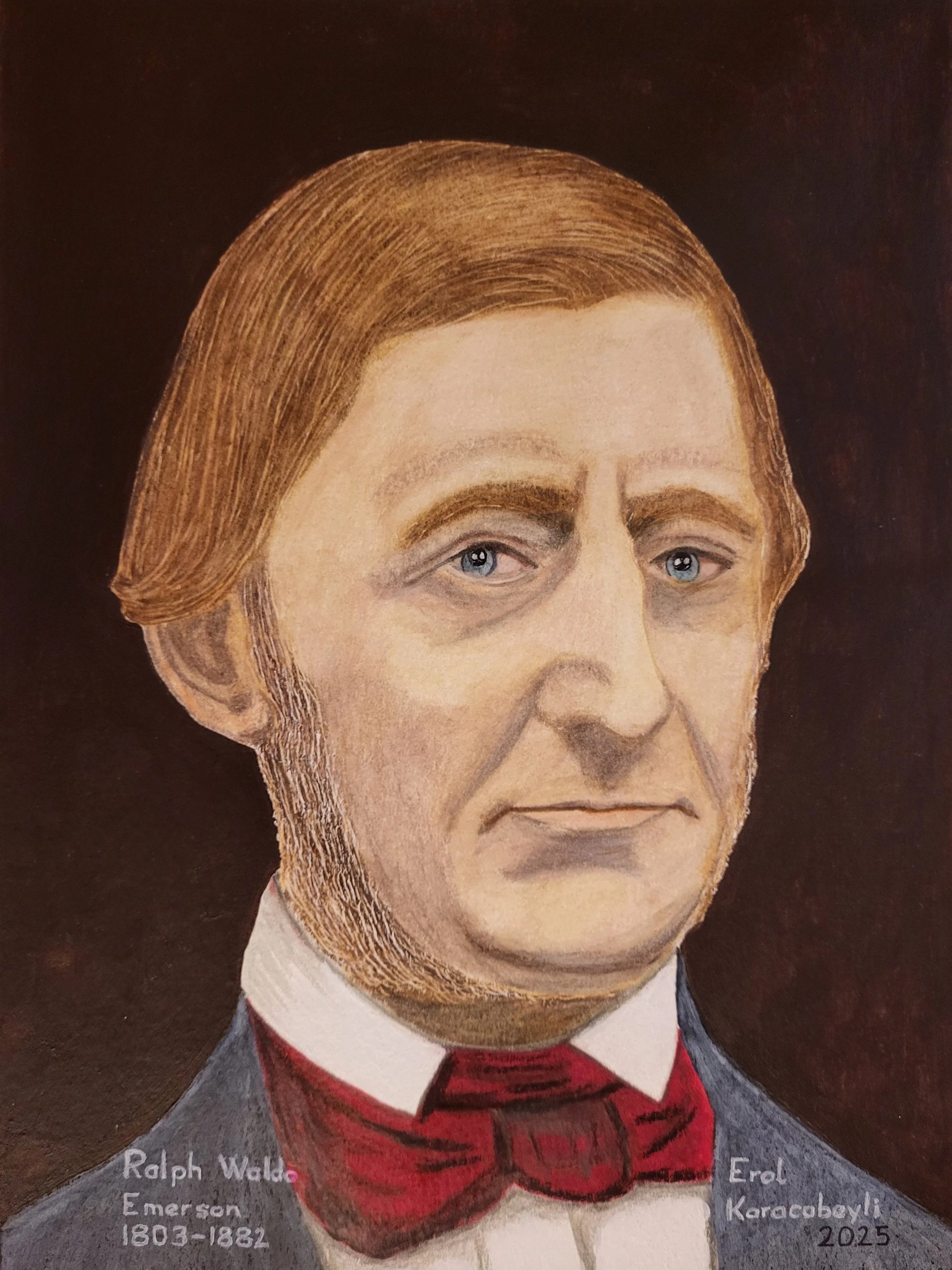
Ralf Waldo Emerson
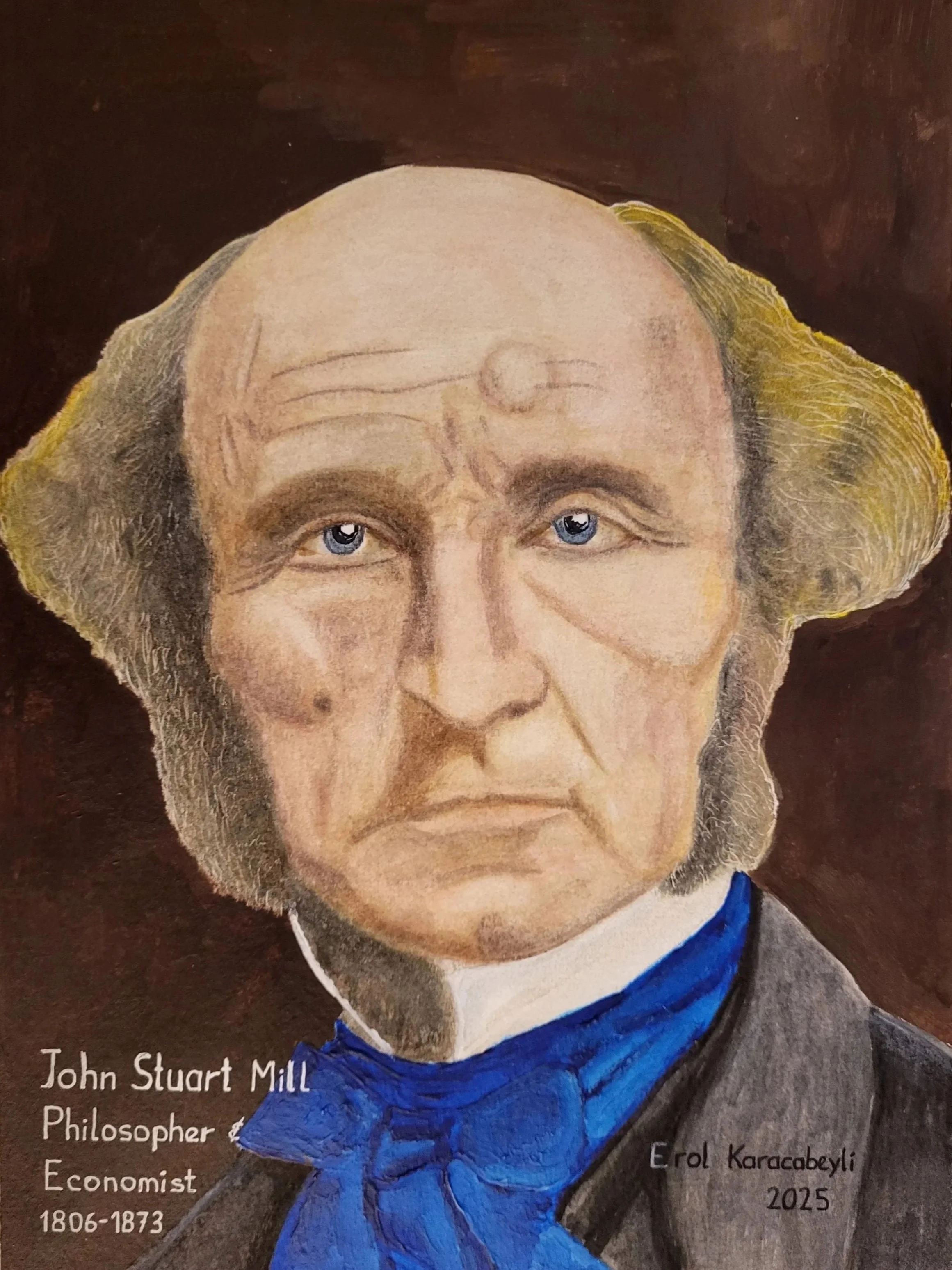
John Stuart Mill
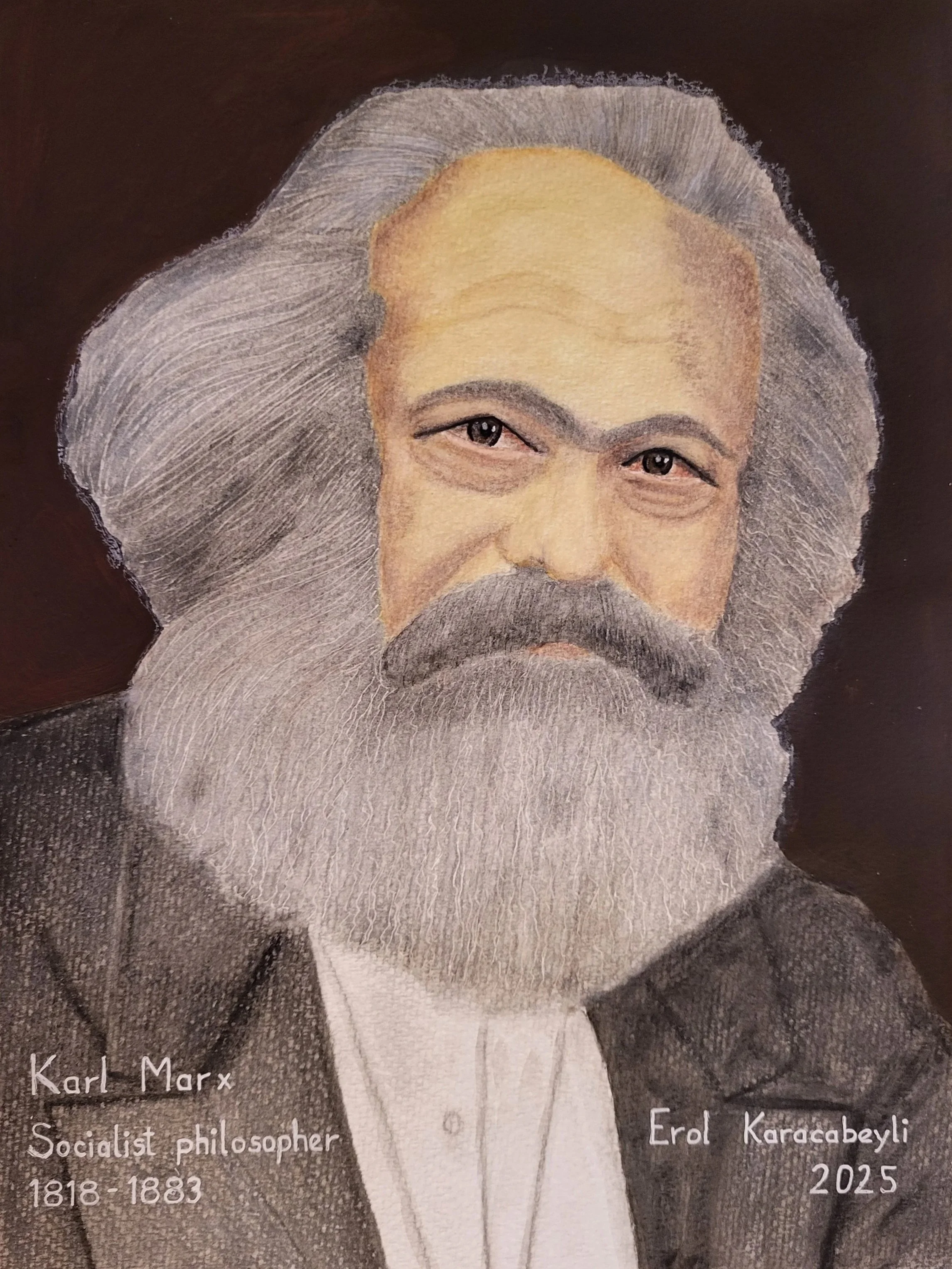
Karl Marx
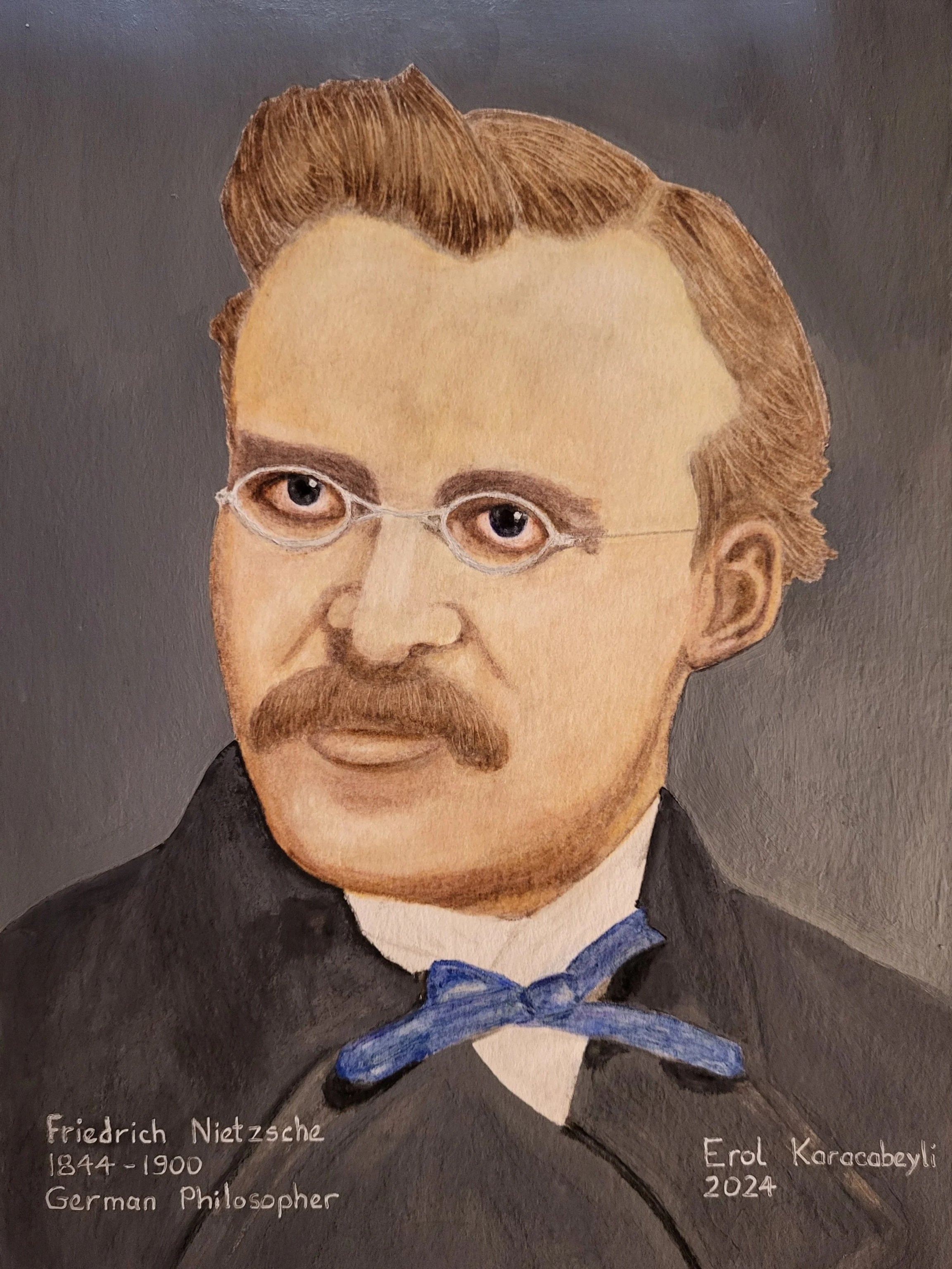
Friedrich Nietzsche
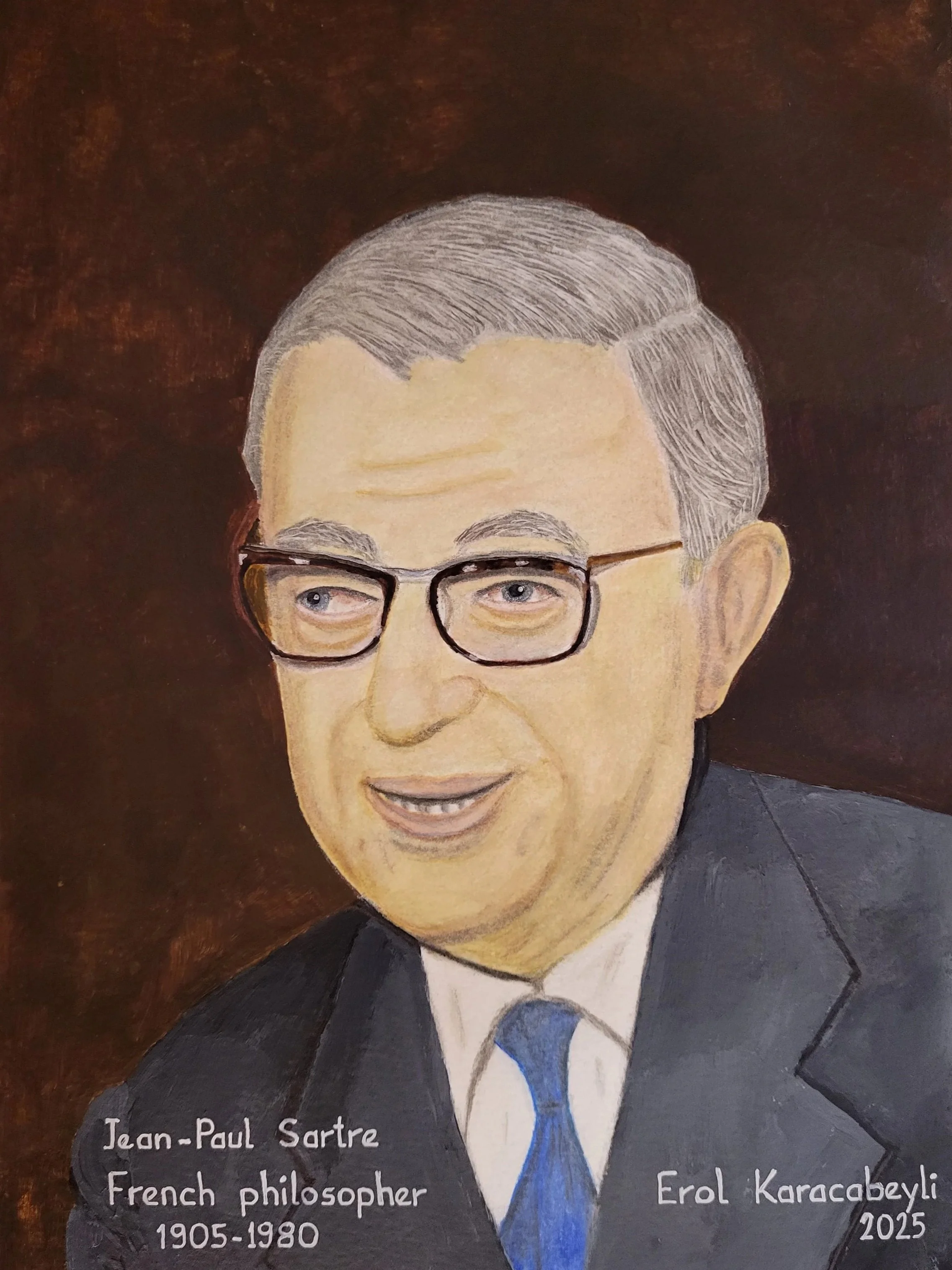
Jean-Paul Sartre
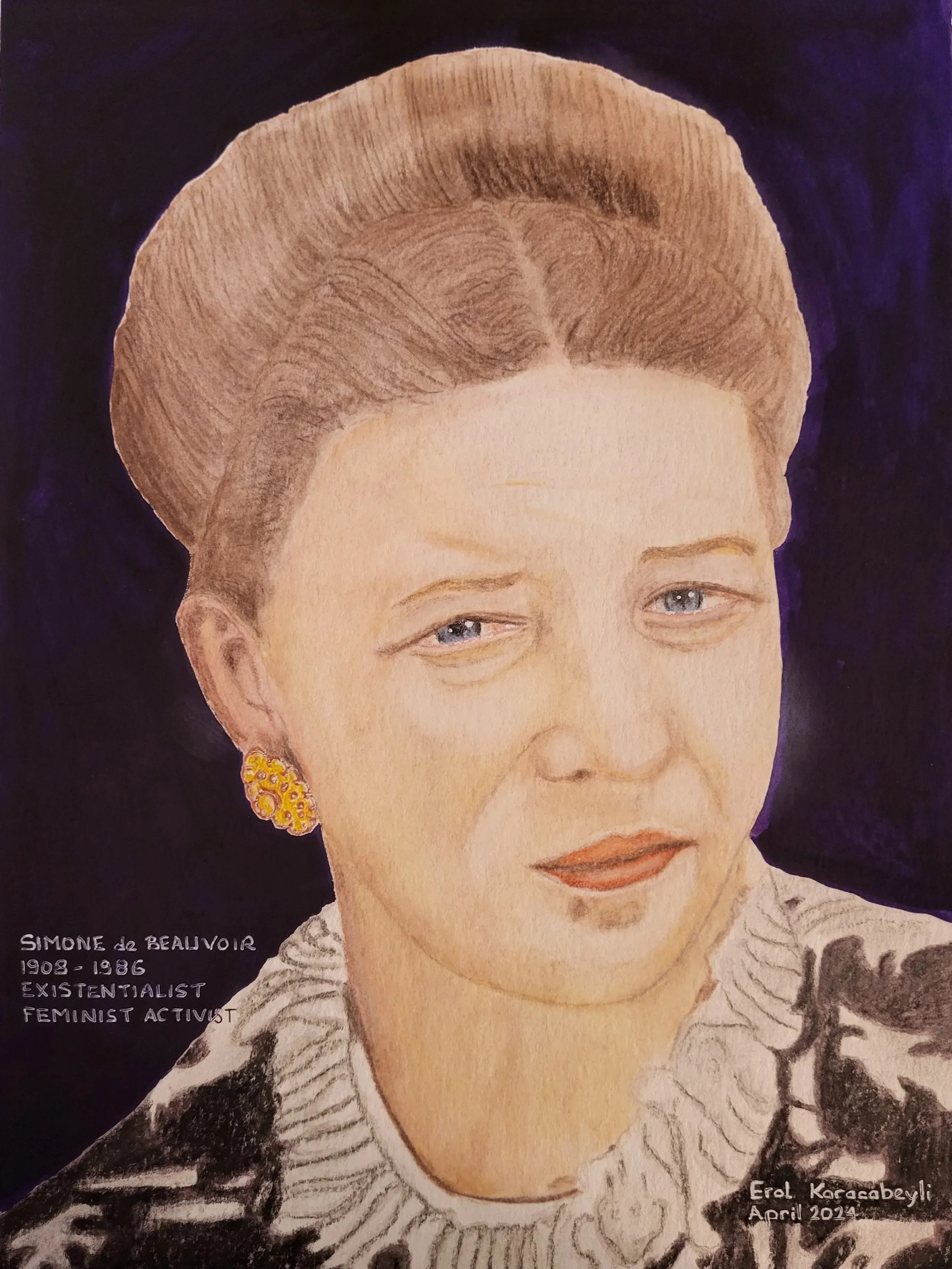
Simone de Beauvoir
Portrait of Laozi (Lao Tzu)
Essence: Key to a good life is living in harmony with the natural flow of the universe.
Laozi taught that the key to a good life is living in harmony with the natural flow of the universe, called the Dao, by embracing simplicity, humility, and gentle action. He emphasized the balance of opposites, known as Yin and Yang, as essential to maintaining harmony in all things.
Türkçe — Öz: İyi bir yaşamın anahtarı, evrenin doğal akışı ile uyum içinde yaşamaktır.
Laozi, iyi bir yaşamın anahtarının, evrenin doğal akışı olan Dao ile uyum içinde yaşamak olduğunu öğretti; bunun yolu da sadelik, alçakgönüllülük ve yumuşak davranışları benimsemekten geçer.
Profile
Laozi (also spelled Lao Tzu) is a 6th-century BCE legendary Chinese thinker who is considered the founder of Daoism (Taoism). He is best known for writing the Tao Te Ching, a short book of poetic wisdom that explores how to live peacefully, naturally, and wisely.
At the heart of Laozi’s philosophy is the idea of the Dao (or “the Way”)—a guiding force that flows through all things. He encouraged people to follow this natural order rather than resist it, promoting values like stillness, simplicity, and non-forceful action (known as Wu Wei). The concept of Yin and Yang—the dynamic balance between seeming opposites like light and dark, soft and hard, feminine and masculine—also plays a central role in understanding the Dao. The round figure that Laozi is pointing at in the portrait represents the “Yin-Yang” symbol (“Opposites make the whole"). Like Thesis and its opposite Antithesis clash, and out of that tension comes Synthesis.
Unlike those who believed in strict rules or strong control, Laozi suggested that less interference often leads to better outcomes, both in life and in leadership. His ideas continue to influence not just Chinese thought, but also modern views on mindfulness, balance, and the power of letting go.
Portrait of Confucius
Essence: Treat others as you would want to be treated.
Confucius taught that a good and harmonious society is built on moral virtue, respect for others, and the proper roles and relationships between people. The Golden Rule of Confucius is a simple yet powerful moral principle that emphasizes empathy and reciprocity in human relationships. In its classic form, it is stated as: “Do not do to others what you do not want done to yourself.”
Türkçe — Öz: Kendine yapılmasını istemediğini başkasına yapma.
Konfüçyüs, iyi ve uyumlu bir toplumun, ahlaki erdem, başkalarına saygı ve insanların rollerini ve ilişkilerini doğru şekilde yerine getirmesiyle kurulacağını öğretmiştir. Konfüçyüs’ün Altın Kuralı, insan ilişkilerinde empati ve karşılıklılığı vurgulayan basit ama güçlü bir ahlaki ilkedir. Bu kuralın klasik biçimi şu şekildedir: “Kendine yapılmasını istemediğini başkasına yapma.”
Profile
Confucius (Kongzi or Kong Fuzi), who lived between 551–479 BCE, was a Chinese philosopher and teacher whose ideas deeply shaped Chinese culture, government, and ethics for over two thousand years. He emphasized values such as filial piety (respect for parents and elders), righteousness, integrity, and the importance of education and self-discipline. According to the wisdom of Confucius, being good to others and having positive intentions for the people around us is not just good for them but also for us.
Central to his philosophy is the belief that a just and orderly society begins with individuals cultivating virtue and fulfilling their roles in family and community. His teachings, collected in the Analects, promote leading by moral example rather than by force or fear. The Golden Rule—the idea of treating others as you would want to be treated (or not treating them in ways you wouldn't want to be treated)—is indeed a common theme across many philosophical and religious traditions (east and west, ancient and modern) throughout history and across cultures. It's one of the rare moral principles that seems to transcend culture, religion, and era—perhaps because it's so intuitive and universally applicable in daily life.
Confucianism became the foundation of Chinese civil service, education, and ethical life, and continues to influence East Asian cultures and modern discussions about character, leadership, and social values.
Portrait of Buddha
Essence: A path that leads to the end of suffering through ethical living, mental discipline, and wisdom.
Buddha taught that the path to true happiness and freedom lies in understanding the nature of suffering, letting go of attachment, and living with compassion, mindfulness, and balance. His teachings offer a practical guide to inner peace and liberation for all beings.
Türkçe — Öz: Ahlaki bir yaşam, zihinsel disiplin ve bilgelik yoluyla acıları sonlandıran yol.
Buda, gerçek mutluluk ve özgürlüğe giden yolun, acının doğasını anlamaktan, bağlanmayı bırakmaktan ve şefkat, farkındalık ile denge içinde yaşamaktan geçtiğini öğretmiştir. Onun öğretileri, tüm varlıklar için içsel huzur ve özgürlük yolunda pratik bir rehber sunar.
Profile
Buddha, born as Siddhartha Gautama around the 5th–6th century BCE in South Asia, was a prince who left a life of luxury in search of deeper meaning. After years of spiritual seeking, he attained enlightenment under the Bodhi tree and became known as the Buddha, meaning “the Awakened One.”
At the core of his teachings, he explains that life involves suffering, but there is a path that leads to the end of suffering through ethical living, mental discipline, and wisdom. Buddha rejected extremes and taught the Middle Way—a life of balance between sensual indulgence and severe asceticism leading to freedom from ignorance, craving, rebirth, and suffering.
Though he did not claim to be a god or savior, his insights have guided millions for over two thousand years. Buddhism emphasizes mindfulness, compassion, and non-attachment, aligning closely with the idea of balance found in principles like yin and yang, even if not named as such. His teachings continue to influence spiritual practice, psychology, and philosophy around the world today.
Portrait of Zeno of Elea
Essence: What we perceive isn’t always what is real.
Zeno of Elea was a Greek philosopher known for his clever paradoxes that challenged the way people understood motion, space, and time.
Türkçe — Öz: Algıladığımız şey her zaman gerçek olan değildir.
Elealı Zeno, insanların hareket, uzay ve zaman kavrayışlarını sorgulayan zekice paradokslarıyla tanınan bir Antik Yunan filozofuydu.
Profile
Zeno of Elea (c. 490 – c. 430 BCE) was a student of Parmenides. Zeno defended his instructor's belief in monism, the idea that only one single entity exists that makes up all of reality. Zeno of Elea is especially known for his paradoxes that contributed to the development of logical and mathematical rigour which led to the establishment of dialectic, a method of philosophical inquiry and argument best known from Plato’s dialogues. The works of Plato and Aristotle would later form the basis of Western philosophy.
Zeno of Elea’s legacy lies not in providing a final answer, but in showing how deep, logical inquiry can unsettle even our most basic beliefs about reality.
Portrait of Plato
Essence: Ultimate reality lies beyond the world we see.
Plato was a foundational Greek philosopher. Along with his teacher Socrates, and his student Aristotle, Plato remains a central figure in the history of Western philosophy.
Türkçe Öz: Nihai gerçeklik, gördüğümüz dünyanın ötesindedir.
Platon, Antik Yunan’ın kurucu filozoflarından biridir. Öğretmeni Sokrates ve öğrencisi Aristoteles ile birlikte, Batı felsefesi tarihinde merkezi bir figürdür.
Profile
Plato (c. 427 – c. 347 BCE) believed that the world we see around us is only a shadow of a higher, more perfect reality. This concept, known as the Theory of Forms, suggests that abstract concepts like beauty, justice, or equality exist in a pure form, beyond our physical world.
He captured many of his ideas through dialogues, dramatic conversations between characters — often featuring Socrates — that explore big questions about life, ethics, politics, and knowledge. His most famous work, The Republic, outlines his vision of an ideal society ruled by philosopher-kings. He favoured intellectual democracy as opposed to democracy by birth right.
Plato also founded the Academy in Athens, often considered the first institution of higher learning in the Western world. His work laid the groundwork for much of Western philosophy, influencing everything from logic and politics to psychology and education.
Portrait of Aristotle
Essence: Everything in nature has a purpose.
Aristotle, an Ancient Greek philosopher and polymath, one of the most influential thinkers in Western history. A student of Plato and teacher of Alexander the Great, Aristotle shaped centuries of thought in fields ranging from philosophy and ethics to biology, politics, and logic.
Türkçe Öz: Doğadaki her şeyin bir amacı vardır.
Aristoteles, Antik Yunan filozofu ve çok yönlü bir bilge olarak, Batı tarihinin en etkili düşünürlerinden biridir. Platon’un öğrencisi ve Büyük İskender’in hocası olan Aristoteles, felsefe ve etik alanlarından biyolojiye, siyasetten mantığa kadar birçok alanda yüzyıllar boyunca düşünce dünyasını şekillendirmiştir.
Profile
At the heart of Aristotle's (384 BCE - 322 BCE) work is a deep love for knowledge based on observation, reason, and experience. Unlike his teacher Plato, who emphasized abstract ideals, Aristotle was deeply grounded in the physical world. He believed that to understand anything—whether a plant, a person, or a political system—you must study how it functions in reality.
During the Islamic Golden Age spanning 8th to 13th centuries C.E., Islamic philosophers and scientists such as Al-Farabi (Alpharabius), Ibn Sina (Avicenna) and Ibn Rushd (Averroes) learned a lot from Aristotle's ideas. They expanded on his work, helping to advance philosophy and science and paving the way for the Renaissance.
Portrait of Epicurus
Essence: Moderation and inner tranquility lead to better life.
Epicurus was an ancient Greek philosopher who taught that the key to a happy life lies in simple pleasures, friendship, and freedom from fear. He believed that understanding the natural world and overcoming irrational beliefs—especially the fear of gods and death—could lead to lasting peace of mind.
Türkçe - Öz: Ölçülülük ve iç huzur daha iyi bir hayata yol açar.
Epikuros, mutluluğun anahtarının sade zevklerde, dostlukta ve korkulardan özgür olmada yattığını öğreten Antik Yunanlı bir filozoftu. Doğayı anlamanın ve özellikle tanrılardan ve ölümden korkmak gibi düşüncelerin üstesinden gelmenin, kalıcı bir zihinsel huzura ulaşmayı sağlayacağına inanıyordu.
Profile
Epicurus (341–270 BCE) was a philosopher of the Hellenistic period who founded a school of thought known as Epicureanism. While the word “Epicurean” today might suggest indulgence in fine food or luxury, Epicurus himself promoted a very different philosophy—one centered on moderation, self-knowledge, and inner tranquility.
He believed that the greatest good was to seek modest pleasures in order to achieve a state of ataraxia (peace and freedom from fear) and aponia (absence of physical pain). To him, pleasure wasn't about excess—it was about the absence of suffering and mental disturbance. A simple meal, the company of trusted friends, and a calm understanding of nature were more valuable than riches or fame.
Epicurus challenged traditional religious views of his time. He taught that the gods, if they existed, were not concerned with human affairs and that death should not be feared, as it simply marked the end of sensation and consciousness. This naturalistic worldview laid early groundwork for secular thinking and modern science. Epicurus taught that the basic constituents of the world are atoms, uncuttable bits of matter.
His teachings were spread through letters and his garden-based school in Athens, famously open to women and slaves—a radical idea in his time. Although most of his writings are lost, the spirit of his philosophy survives in fragments and in the works of later followers like Lucretius, whose poem On the Nature of Things preserves much of Epicurean thought.
Epicurus’ influence grew considerably during and after the Enlightenment, profoundly impacting the ideas of major thinkers such as Thomas Jefferson and Karl Marx.
Portrait of Al-Farabi (Alpharabius)
Essence: Among the first Islamic philosophers who distinguished between philosophy and religion—arguing that both seek truth, but through different means.
Al-Farabiwas a brilliant 9th-10th century philosopher, scientist, and polymath of the Islamic Golden Age. Known as the "Second Teacher" after Aristotle, he helped preserve and expand Greek philosophy, blending it with Islamic thought. His ideas influenced centuries of philosophers both in the East and West.
Türkçe - Öz: Felsefe ile dini birbirinden ayıran ilk İslam filozofları arasında yer alır—her ikisinin de hakikati aradığını, ancak bunu farklı yollarla yaptıklarını savunur.
El-Fârâbî, İslam’ın Altın Çağı’nın parlak bir filozofu, bilim insanı ve çok yönlü bir düşünürüydü. Aristoteles’ten sonra “İkinci Öğretmen” olarak anılan El-Fârâbî, Yunan felsefesini koruyup geliştirerek İslam düşüncesiyle harmanladı. Fikirleri, hem Doğu’da hem de Batı’da yüzyıllar boyunca filozofları etkilemiştir.
Profile
Al-Farabi (Latinized as Alpharabius, c. 870–950 CE), born in what is now Kazakhstan, was one of the most influential thinkers of the early Islamic world. A true polymath, he made lasting contributions to philosophy, logic, political theory, music, and science. Drawing deeply from Greek thinkers—especially Plato and Aristotle—he became known as the "Second Teacher," second only to Aristotle.
Educated in Baghdad—a major center of learning in his time—Al-Farabi mastered a wide range of subjects. He became especially renowned for his work in logic and metaphysics, where he sought to harmonize the ideas of Plato and Aristotle within an Islamic context. In his Virtuous City, he envisioned an ideal society led by a wise and virtuous ruler, echoing Plato’s philosopher-king but grounded in Islamic principles.
His work in music theory was also groundbreaking. Al-Farabi’s treatises on the science of music laid the foundation for later developments in both the Islamic world and Europe.
Though less known to the general public today, Al-Farabi’s influence shaped the intellectual landscape of the medieval world and laid the groundwork for later giants like Avicenna (Ibn Sina) and Averroes (Ibn Rushd). He was among the first Islamic philosophers to clearly distinguish between philosophy and religion—arguing that both seek truth, but through different means.
More broadly, Al-Farabi helped establish a tradition of critical thinking and rational inquiry that bridged cultures and centuries. The philosophical revival of the Islamic Golden Age would, in turn, influence the rise of the European Renaissance. His legacy is a powerful reminder of the shared roots of global philosophical and scientific thought.
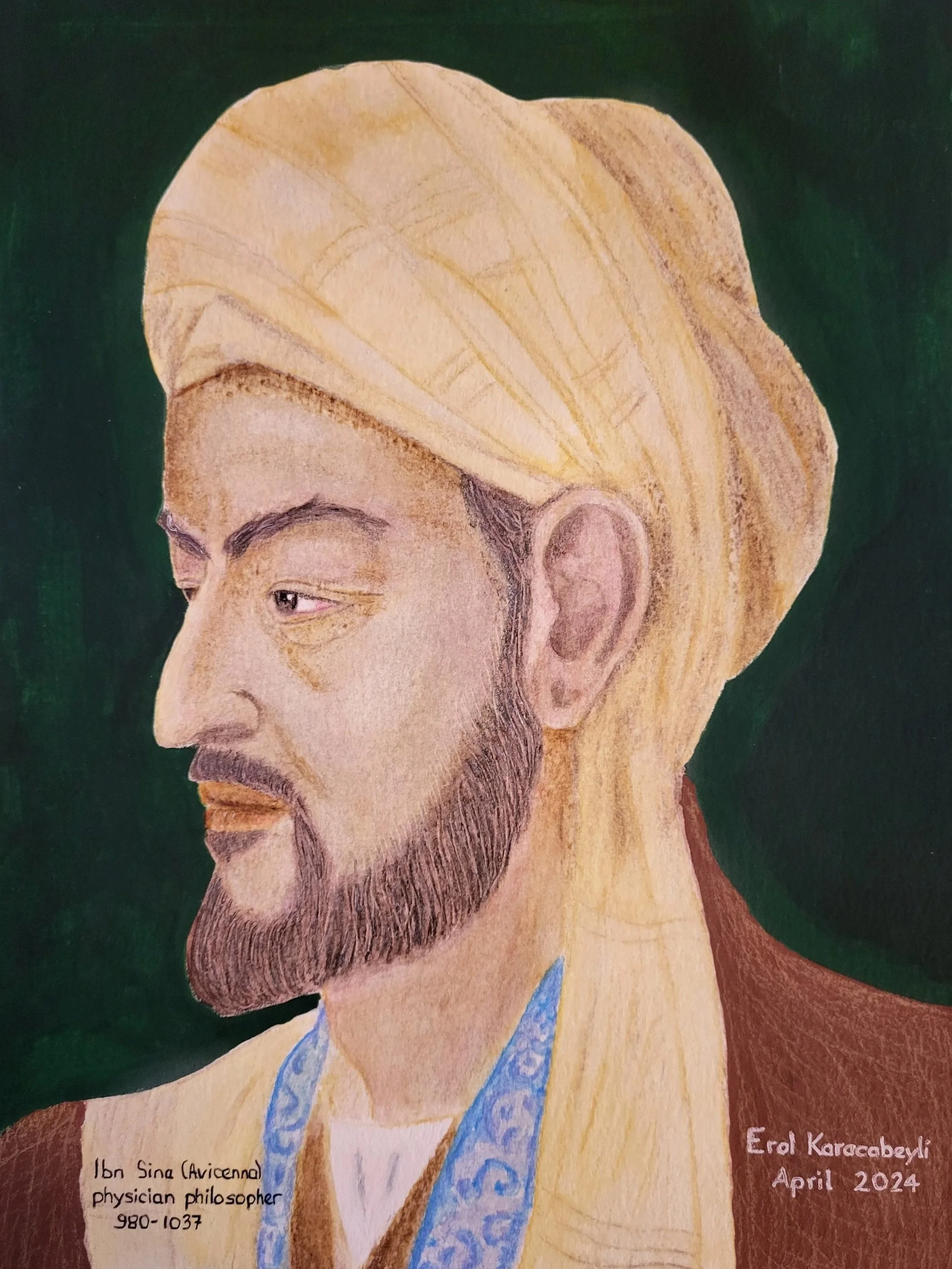
Portrait of Ibn Sina (Avicenna)
Essence: Avicenna’s philosophy became a major force in shaping medieval and Renaissance thought across Europe.
Ibn Sina, known in the West as Avicenna, was a 11th-century Persian polymath whose profound influence on philosophy, medicine, and science shaped both Islamic and European intellectual traditions. A pioneer of rational thought, he synthesized Greek, Islamic, and his original ideas into works that remained authoritative for centuries.
Türkçe - Öz: İbn Sina’nın felsefesi, Avrupa’daki Orta Çağ ve Rönesans düşüncesinin şekillenmesinde önemli bir güç haline geldi.
Batı'da Avicenna olarak bilinen İbn Sina, felsefe, tıp ve bilim üzerinde derin etkiler bırakan bir Fars bilginiydi. Akılcı düşüncenin öncülerinden biri olarak, Yunan, İslami ve kendi özgün fikirlerini sentezleyerek yüzyıllar boyunca otorite kabul edilen eserler ortaya koymuştur.
Profile
Ibn Sina (980–1037 CE) was born in Afshana near Bukhara, in present-day Uzbekistan. As a brilliant child, he had mastered the Quran and much of the classical sciences by the age of 16. His early education included intensive study of Aristotle, Hippocrates, and Galen—figures whose ideas he later analyzed, critiqued, and expanded upon in his own writings.
His most famous medical work, The Canon of Medicine (Al-Qanun fi al-Tibb), became a foundational text in both the Islamic world and Europe. It served as the standard reference in many medical schools for over six centuries, earning him the title “father of early modern medicine.”
Beyond medicine, Ibn Sina made lasting contributions to philosophy, especially through his integration of Aristotelian metaphysics with Islamic thought. His philosophical magnum opus, The Book of Healing (Kitab al-Shifa), is an encyclopedic work covering logic, natural sciences, psychology, and metaphysics. His concept of the “Necessary Existent” profoundly influenced Islamic theology and was later taken up by medieval Christian philosophers such as Thomas Aquinas.
Ibn Sina’s legacy endures not only for the breadth of his knowledge but also for his efforts to harmonize reason with faith, and science with philosophy. His life and works embody the intellectual vigor of the Islamic Golden Age and its enduring influence on global scholarship.
Portrait of Al Ghazali (Algazel or Algazelus)
Essence: Bridging reason and spirituality.
Al-Ghazali (also known as Algazel or Algazelus) was a renowned 11th-12th century Persian Islamic theologian, philosopher, jurist, and mystic. He revitalized Islamic thought by bridging reason and spirituality, famously critiquing philosophy while promoting Sufism. His works continue to influence Islamic theology, ethics, and spirituality to this day.
Türkçe - Öz: Akıl ile maneviyat arasında köprü kurmak.
Gazâlî (Algazel veya Algazelus olarak da bilinir), ünlü bir Fars kökenli İslam âlimi, filozof, hukukçu ve mutasavvıftı. Akıl ve maneviyat arasında köprü kurarak İslam düşüncesini yeniden canlandırdı; felsefeyi eleştirirken tasavvufu öne çıkarmasıyla tanındı. Eserleri, günümüzde hâlâ İslam teolojisi, ahlâkı ve maneviyatı üzerinde etkisini sürdürmektedir.
Profile:
Al-Ghazali (1058–1111) was one of the most influential scholars in Islamic intellectual and spiritual history. Born in Tus, in present-day Iran, he was a brilliant thinker who mastered law, theology, and philosophy at a young age.
In 1091, Al-Ghazali was invited to the court of Nizam al-Mulk, the powerful vizier of the Seljuq sultans, who appointed him chief professor at the prestigious Nizamiyya University in Baghdad. While lecturing to over 300 students, Al-Ghazali also engaged deeply with the Neoplatonic philosophies of Al-Farabi and Avicenna (Ibn Sina), both of whom he would later critique.
However, this period of outward success led to an inner spiritual crisis. Al-Ghazali came to feel that he had chosen a path of status and ego over one of sincere devotion to God. In 1095, he abruptly left his position under the pretense of going on pilgrimage to Mecca. He made arrangements for his family, gave away his wealth, and adopted the life of a poor Sufi, dedicating himself to spiritual reflection and inner purification.
During this time, he critically examined the limits of philosophy and reason, particularly in metaphysics and theology. His landmark work, The Incoherence of the Philosophers, directly challenged thinkers like Avicenna and marked a turning point in Islamic intellectual history. Al-Ghazali argued that while reason is valuable, it is ultimately limited—true knowledge must come from divine revelation and personal spiritual experience.
Eventually, Al-Ghazali returned to public life and resumed writing, producing works that integrated Islamic law, theology, and Sufism. His magnum opus, Ihya’ Ulum al-Din (“The Revival of the Religious Sciences”), remains a cornerstone of Islamic spirituality, blending outward religious practice with inner transformation.
One of his most prominent critics, Ibn Rushd (Averroes), directly responded to The Incoherence of the Philosophers in his own work, The Incoherence of the Incoherence. He argued that Ghazali's criticism undermined the intellectual tradition of using logic and reason in theology and science in parts of the Islamic world. Nevertheless, Al-Ghazali’s integration of faith and reason resonated beyond the Islamic world. While indirect, his ideas are seem to have influenced medieval Christian thinkers such as Thomas Aquinas.
Portrait of Ibn Rushd (Averroes)
Essence: His commentaries on Aristotle shaped debates on the relationship between faith and reason.
Ibn Rushd, also known in the West as Averroes, was a 12th-century Muslim Andalusian philosopher, physician, jurist, and polymath. With his groundbreaking commentaries on Aristotle, he championed reason and rational thought as complementary to faith, leaving a lasting legacy on both Islamic and Western intellectual traditions.
Türkçe - Öz: Aristoteles üzerine yaptığı yorumlar, inanç ile akıl arasındaki ilişki üzerine tartışmaları şekillendirmiştir.
İbn Rüşd, Batı'da Averroes olarak da bilinir, 12. yüzyılda yaşamış Endülüslü Müslüman bir filozof, hekim, hukukçu ve bilgindir. Aristoteles üzerine yaptığı çığır açıcı yorumlarla, aklı ve rasyonel düşünceyi inançla uyumlu olarak savunmuş; hem İslam hem de Batı entelektüel geleneği üzerinde kalıcı bir miras bırakmıştır.
Profile
Ibn Rushd (1126–1198) was born in Córdoba, Spain, during a time of rich cultural and intellectual flourishing in the Islamic world. Trained in Islamic jurisprudence, medicine, and philosophy, he became a judge, court physician, and scholar. His writings covered a vast range of subjects, from law and theology to astronomy and psychology.
Most notably, Ibn Rushd dedicated much of his life to interpreting and explaining the works of Aristotle. His commentaries aimed to harmonize Aristotelian philosophy with Islamic thought, arguing that both reason and revelation lead to truth. This position often placed him at odds with religious conservatives of his time, who viewed philosophy with suspicion.
Despite political setbacks—including exile and the burning of some of his works—Ibn Rushd’s ideas endured. His commentaries on Aristotle were translated into Latin in the 12th and 13th centuries. These translations reintroduced Aristotle to Europe with fresh philosophical insight—especially Aristotle’s metaphysics, ethics, and logic. European scholars like Thomas Aquinas in the Scholastic tradition engaged deeply with Ibn Rushd’s interpretations—so much so that he was often simply called “The Commentator” in the Latin West.
Ibn Rushd’s legacy lies in his unflinching belief that reason is a gift from God and must be used to explore the natural and moral order. His life serves as a powerful reminder of the value of critical thought, intellectual freedom, and cross-cultural dialogue.
Portrait of Thomas Aquinas
Essence: Reason and faith are not opposed but rather work together in the pursuit of truth.
Thomas Aquinas was a 13th-century medieval Christian philosopher and theologian who sought to bridge faith and reason. His efforts to reconcile Aristotle’s philosophy with Christian doctrine shaped the foundations of Western theology and earned him a lasting place as one of the greatest thinkers in the Christian tradition.
Türkçe - Öz: Akıl ve inanç birbirine zıt değil, bilakis hakikatin peşinde birlikte çalışırlar.
Thomas Aquinas, inanç ile aklı uzlaştırmaya çalışan Orta Çağ (13. yüzyıl) Hristiyan bir filozof ve ilahiyatçıydı. Aristoteles’in felsefesini Hristiyan doktriniyle bağdaştırma çabaları, Batı teolojisinin temellerini şekillendirmiş ve onu Hristiyan geleneğinin en büyük düşünürlerinden biri olarak kalıcı bir konuma getirmiştir.
Profile
Thomas Aquinas (1225–1274) was born in what is now Italy, into a noble family. From a young age, he pursued religious and intellectual life, eventually joining the Dominican Order—a decision his family opposed. He went on to study in Paris and Cologne, becoming one of the most influential scholars of the medieval period.
Aquinas is best known for his massive theological work, the Summa Theologiae, where he addressed nearly every aspect of Christian belief using a methodical, question-and-answer format. What set Aquinas apart was his deep engagement with the philosophy of Aristotle, whose works had recently been reintroduced to Europe, often through Arabic translations and Muslim philosophers like Ibn Rushd (Averroes). Aquinas argued that reason and faith are not opposed but rather work together in the pursuit of truth.
His ideas laid the foundation for what became known as Thomism, a dominant school of Catholic philosophy and theology. Combining the theological principles of faith with the philosophical principles of reason, Thomas Aquinas ranked among the most influential thinkers of medieval Scholasticism.
Aquinas’s legacy lives on not only in religious thought but also in the broader fields of ethics, law, and philosophy. His belief that faith can be illuminated—not threatened—by reason continues to inspire dialogue between religion and philosophy to this day.
Portrait of Ibn Khaldun
Essence : latent and inner principles of history which induce the rise and fall of civilizations across time.
Ibn Khaldun was a pioneering 14th-century Arab historian, philosopher, and sociologist, best known for his groundbreaking work Muqaddimah. He laid the foundations of modern historiography and social science by analyzing the rise and fall of civilizations through economic, political, and cultural lenses.
Türkçe - Öz: Tarih boyunca hanedanların yükselişine ve çöküşüne neden olan gizli ve içsel ilkeler.
İbn Haldun, özellikle çığır açan eseri Mukaddime ile tanınan, 14. yüzyılda yaşamış, öncü bir Arap tarihçi, filozof ve sosyologdur. Medeniyetlerin yükselişini ve çöküşünü ekonomik, siyasi ve kültürel açılardan analiz ederek modern tarih yazımı ve sosyal bilimlerin temellerini atmıştır.
Profile
Ibn Khaldun (1332–1406) was a North African scholar whose ideas were far ahead of his time. Born in Tunis, he lived during a period of great political turbulence in the Islamic world. He traveled widely across North Africa and the Middle East, serving as a diplomat, judge, and political advisor in various courts. These experiences gave him firsthand insight into the inner workings of societies and states.
His most influential contribution is The Muqaddimah (“The Introduction”), a profound and wide-ranging preface to his larger historical work. In it, he analyzed history not just as a sequence of events, but as a complex interplay of social, economic, and environmental factors. He introduced concepts like asabiyyah (social cohesion or group solidarity), cycles of political power, and the economic foundations of state stability — all of which resonate with modern social sciences.
Ibn Khaldun’s work was largely unrecognized in the West until centuries later, but today he is considered one of the earliest thinkers to explore sociology, economics, and historiography in a scientific manner. His legacy continues to influence modern thought, offering timeless insights into the dynamics of civilization.
Portrait of Giordano Bruno
Essence: The martyr of infinite worlds.
Giordano Bruno was a 16th-century Italian philosopher, visionary, and mystic who dared to think beyond the boundaries of his time. Long before telescopes confirmed the vastness of space, Bruno imagined an infinite universe filled with countless worlds—and paid with his life for challenging religious orthodoxy.
Türkçe - Öz: Sonsuz dünyaların şehidi.
Giordano Bruno, 16. yüzyılda yaşamış bir İtalyan filozof, vizyoner ve mistikti; çağının sınırlarının ötesinde düşünmeye cesaret etti. Teleskoplar henüz uzayın enginliğini doğrulamadan çok önce, Bruno sayısız dünyayla dolu sonsuz bir evren hayal etmişti — ve dinsel ortodoksluğa meydan okumanın bedelini hayatıyla ödedi.
Profile
Born in Nola, near Naples, Giordano Bruno (1548–1600) joined the Dominican order as a young man, immersing himself in theology, philosophy, and the works of ancient thinkers. However, his unorthodox views quickly put him at odds with Church authorities. He questioned established doctrine, rejected the geocentric model of the cosmos, and embraced radical ideas drawn from Hermeticism, Neoplatonism, and the emerging scientific thought of his era.
Bruno is best known for his cosmological vision: he proposed that the universe is infinite, with no center, and that stars are distant suns surrounded by their own planets—possibly inhabited. Unlike Copernicus, who cautiously placed the Sun at the center of the universe, Bruno went further. He saw the cosmos as teeming with life and denied the idea of a singular, Earth-centered creation. His bold assertion that God is present in all things led him toward a form of pantheism that was anathema to Catholic doctrine.
But Bruno wasn’t just a scientist or astronomer—he was a deeply philosophical thinker, more speculative than empirical. He believed the pursuit of knowledge was a spiritual journey and argued for intellectual freedom and the dignity of the human spirit. He traveled across Europe, teaching and debating in places like Geneva, Paris, and London, often making enemies with his sharp tongue and provocative ideas.
In 1592, after returning to Italy under the impression he would be safe, Bruno was arrested by the Roman Inquisition. He spent seven years imprisoned, enduring multiple interrogations. He refused to recant his beliefs. In 1600, he was burned at the stake in Rome’s Campo de' Fiori—a grim fate that turned him into a symbol of free thought.
Giordano Bruno is remembered not only as a martyr for science and reason but also as a pioneer who glimpsed a universe that modern astronomy has only begun to uncover. His life serves as a reminder of the cost of challenging dogma and the enduring power of bold, imaginative thinking. A bronze statue of Bruno now stands at the very site of his execution in Campo de' Fiori, erected in 1889 as a monument to freedom of thought.
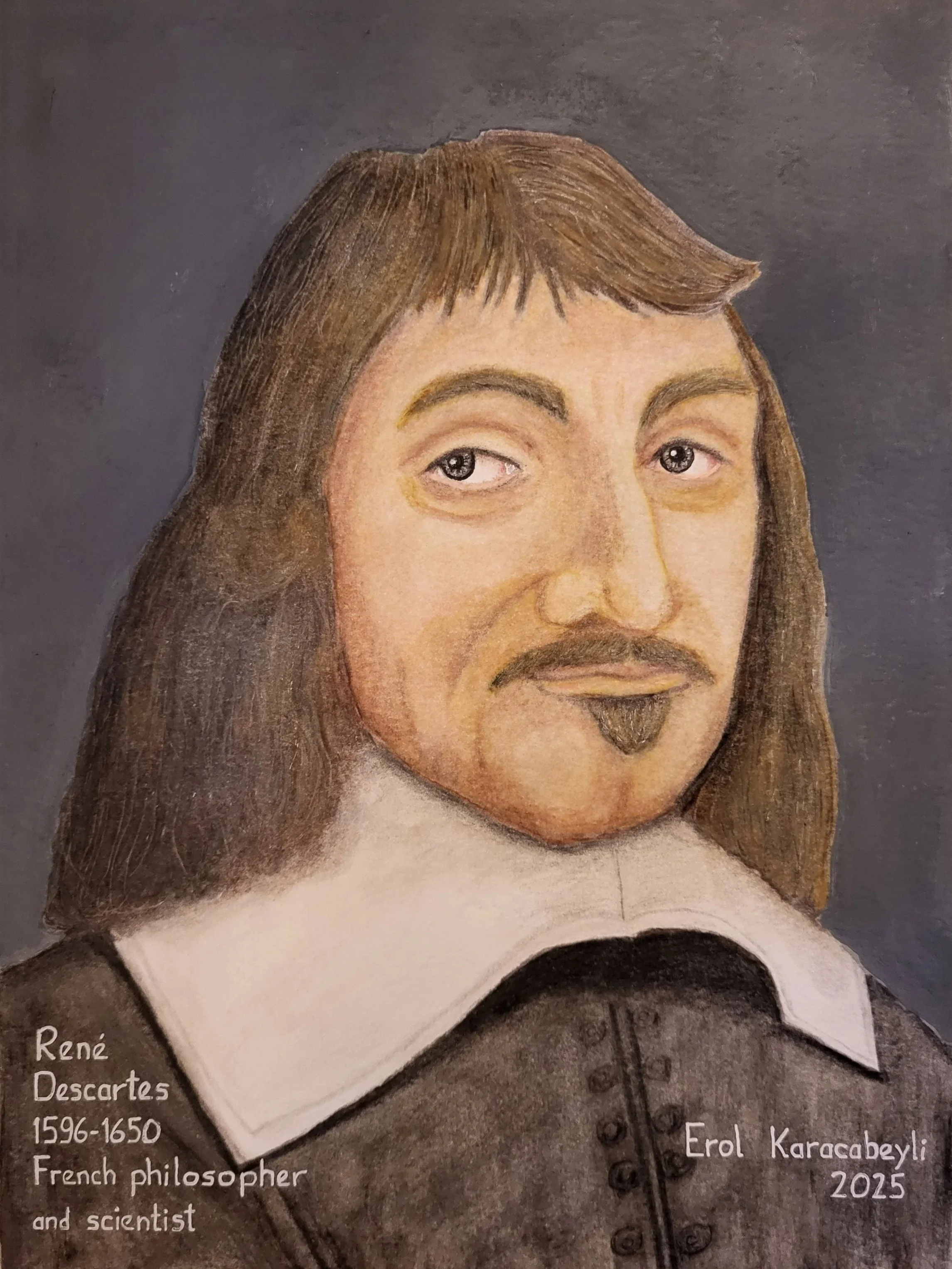
Portrait of René Descartes
Essence: The very act of thinking proves that one’s existing is real “I think, therefore I am”.
René Descartes was a 17th-century French philosopher, mathematician, and scientist, best known for the statement "I think, therefore I am" and for reshaping how we think about knowledge, reason, and the mind. His work laid the foundation for both modern science and Western philosophical thought.
Türkçe - Öz: Düşünme eyleminin kendisi, birinin varlığının gerçek olduğunu kanıtlar: “Düşünüyorum, öyleyse varım”.
René Descartes, 17. yüzyılda yaşamış Fransız bir filozof, matematikçi ve bilim insanıdır; en çok, "Düşünüyorum, öyleyse varım" sözüyle ve bilgi, akıl ve zihin üzerine düşünme biçimimizi yeniden şekillendirmesi ile tanınır. Çalışmaları, hem modern bilimin hem de Batı felsefi düşüncesinin temellerini atmıştır.
Profile
René Descartes (1596–1650) was a pivotal figure in the transition from medieval to modern thought. Born in France and educated in a Jesuit school, he initially trained in law but shifted his focus to philosophy and mathematics, disciplines where he would leave a lasting legacy. He lived much of his adult life in the Dutch Republic, a hub of intellectual freedom at the time.
Descartes is perhaps most famous for his philosophical method of doubt — questioning everything that could possibly be false in order to arrive at fundamental truths. This method led to his famous conclusion, "Cogito, ergo sum" — "I think, therefore I am" — which he considered the first principle of true knowledge. By starting from this self-evident truth, Descartes attempted to build a secure foundation for all human knowledge. Descartes has often been called the father of modern philosophy and is largely seen as responsible for the increased attention given to epistemology. He laid the foundation for 17th-century rationalism, later advocated by Spinoza and Leibniz in the era of “Age of Reason” and was later opposed by the empiricist school of thought consisting of Hobbes, Locke, Berkeley, and Hume.
In mathematics, Descartes developed Cartesian geometry, which links algebra and geometry and laid the groundwork for calculus. His approach to science emphasized rational analysis and deductive reasoning, helping to move scientific thought away from religious or purely observational explanations toward more systematic inquiry.
Descartes’ ideas were controversial in his time, challenging both religious authorities and prevailing academic traditions. Yet his influence persists today — not only in philosophy, where he is considered a central figure in rationalism, but also in science, logic, and mathematics. His legacy is one of bold intellectual independence and a deep belief in the power of human reason.
Portrait of Baruch Spinoza
Essence:A radical vision of the universe as a unified whole, where God and nature are one and the same.
Baruch Spinoza was a 17th-century Dutch philosopher known for his groundbreaking ideas about God, nature, and human freedom. His most influential work, Ethics, offered a radical vision of the universe as a unified whole, where God and nature are one and the same. Spinoza’s philosophy challenged religious dogma and helped shape modern thinking on rationalism, ethics, and the nature of the self.
Türkçe - Öz: Evreni Tanrı ile doğanın bir ve aynı olduğu, birleşik bir bütün olarak sunar.
Baruch Spinoza, 17. yüzyılda yaşamış bir Hollandalı filozof olup, Tanrı, doğa ve insan özgürlüğü üzerine çığır açan fikirleriyle tanınır. En etkili eseri Etik, evreni Tanrı ile doğanın bir ve aynı olduğu, birleşik bir bütün olarak radikal bir biçimde sunar. Spinoza’nın felsefesi, dini dogmalara meydan okumuş ve modern akılcılık, etik ve benlik anlayışlarının şekillenmesinde önemli bir rol oynamıştır.
Profile
Baruch Spinoza (1632–1677), was a Dutch philosopher of Jewish descent whose ideas revolutionized the way we think about God, the universe, and humanity’s place within it. Born in Amsterdam, Spinoza was raised in a Jewish community, but his views soon set him apart from mainstream religious thought. After publicly challenging traditional religious beliefs, he was excommunicated from the Jewish community at the age of 23.
Spinoza’s philosophy centered on the idea of “substance” — a single, infinite reality that is both God and nature. According to Spinoza, everything that exists is a part of this divine substance, and there is no personal, anthropomorphic God intervening in the world. Instead, God is nature itself: a self-sustaining, rational order that governs the universe. This pantheistic view of God radically contrasted with the religious perspectives of his time, earning Spinoza both admiration and criticism.
In his seminal work, Ethics, Spinoza argued that human beings are not separate from nature but are part of this larger, interconnected reality. He believed that true freedom is achieved through the understanding of the natural world and our place within it, not through divine intervention or external authority. He also proposed that emotions and desires arise from our limited understanding of natural causes, and that by grasping them through reason, we could live more harmonious and virtuous lives.
Spinoza’s ideas were deeply influential in the development of modern philosophy, especially in the areas of ethics, political theory, and metaphysics. Though controversial in his time, his work later had a profound impact on thinkers like Friedrich Nietzsche,and Albert Einstein. While Spinoza wasn’t directly part of the Enlightenment, his ideas — especially his rejection of religious dogma, his commitment to reason, and his vision of human freedom through understanding — were foundational in shaping the intellectual climate that would blossom into the Enlightenment in the 18th century. Today, Spinoza is recognized as one of the key figures in the rationalist tradition and a pioneer of modern secular thought.
Portrait ofJohn Locke
Essence: Social contract — an agreement among free individuals to form a society and choose leaders who will protect their natural rights: life, liberty, and property.
John Locke was a 17th-century English philosopher whose ideas about liberty, government, and knowledge helped shape the foundations of modern democracy and Enlightenment thought. Often called the "father of liberalism," Locke argued that all people have natural rights — life, liberty, and property — and that governments must protect these rights through the consent of the governed.
Türkçe - Öz: Toplum sözleşmesi — özgür bireyler arasında, bir toplum kurmak ve yaşam, özgürlük ve mülkiyet gibi doğal haklarını koruyacak liderleri seçmek üzere yapılan bir uzlaşmadır.
John Locke, 17. yüzyılda yaşamış bir İngiliz filozoftur. Özgürlük, yönetim ve bilgi üzerine ortaya koyduğu fikirler, modern demokrasinin ve Aydınlanma düşüncesinin temellerinin şekillenmesine katkı sağlamıştır. Sıklıkla "liberalizmin babası" olarak anılan Locke, tüm insanların doğal haklara — yaşam, özgürlük ve mülkiyet — sahip olduğunu ve bu hakların, halkın rızasına dayanan yönetimler tarafından korunması gerektiğini savunmuştur.
Profile
John Locke (1632–1704) was one of the most influential thinkers of the Enlightenment and a foundational figure in modern political philosophy. Born in England during a time of civil war and political upheaval, Locke studied at Oxford and later became deeply engaged with questions of human understanding, governance, and religious tolerance.
In political theory, his most famous work, Two Treatises of Government, argued against absolute monarchy and the divine right of kings. Instead, Locke proposed that legitimate government is based on a social contract — an agreement among free individuals to form a society and choose leaders who will protect their natural rights: life, liberty, and property. Crucially, if a government fails to safeguard these rights, Locke maintained that the people have a right to resist or even overthrow it.
Locke’s vision contrasted with that of fellow Enlightenment thinker Jean-Jacques Rousseau. While Rousseau emphasized collective will and social equality (proto-socialist), Locke championed individual rights and property (classical liberal). These ideas profoundly influenced later democratic revolutions, including the American and French Revolutions.
Locke also made major contributions to epistemology — the study of knowledge — particularly in his work An Essay Concerning Human Understanding. He rejected the idea of innate knowledge, arguing instead that the mind begins as a blank slate (tabula rasa) and acquires knowledge through experience and sensory perception. This view laid the foundation for empiricism — the belief that knowledge arises primarily from observation and evidence, rather than tradition or pure reason.
A strong advocate for religious tolerance, Locke argued that governments should not impose a specific religion on their citizens. While his views were not without contradictions, his defense of individual liberty and limited government has had a lasting impact on liberal thought, human rights, and constitutional systems around the world.
John Locke is remembered as a key architect of Enlightenment ideals — especially personal liberty, government accountability, and the conviction that reason and experience should guide human progress.
Portrait of David Hume
Essence: All knowledge originates from sensory experience.
David Hume was an 18th-century Scottish philosopher known for his deep skepticism, sharp reasoning, and influential work on human nature, knowledge, and morality. A central figure of the Enlightenment, Hume challenged traditional ideas about religion, causality, and reason, laying the foundation for modern empirical and scientific thinking.
Türkçe - Öz: Tüm bilgi duyusal deneyimden kaynaklanır.
David Hume, 18. yüzyılda yaşamış İskoç bir filozoftur. Derin şüpheciliği, keskin akıl yürütmesi ve insan doğası, bilgi ve ahlak üzerine yaptığı etkili çalışmalarıyla tanınır. Aydınlanma çağının merkezi figürlerinden biri olan Hume, din, nedensellik ve akıl üzerine geleneksel düşüncelere meydan okumuş; modern deneyci ve bilimsel düşüncenin temellerini atmıştır.
Profile
David Hume (1711–1776) was one of the most important philosophers of the Enlightenment and a pioneer of modern empirical philosophy. Born in Edinburgh, Scotland, Hume followed John Locke in rejecting the existence of innate ideas, and developed a bold and critical approach to understanding the world — one that emphasized observation, experience, and human psychology over abstract reasoning or religious doctrine.
His most famous philosophical work, A Treatise of Human Nature, argued that all human knowledge arises from sensory experience and that reason is often guided by habit and emotion, rather than pure logic. Hume famously questioned the concept of causality — asking how we can be certain that one event causes another — and concluded that what we call "cause and effect" is actually based on repeated associations in the mind, not logical necessity.
Hume was also a religious skeptic. He criticized traditional arguments for the existence of God and questioned the reliability of miracles, suggesting that our belief in such events often stems from emotion, not evidence. While his views were controversial at the time, they contributed greatly to the rise of secular philosophy and scientific inquiry.
In ethics, Hume believed that morality is rooted in human feelings, particularly sympathy and compassion, rather than in reason or divine command. This idea had a major influence on later moral philosophy and psychology, shaping how we understand human motivation and moral judgment.
Though not always appreciated in his own lifetime, David Hume’s work has since become central to Western philosophy. His influence is evident in the moral philosophy and economic writings of his close friend Adam Smith. Immanuel Kant indicated that Hume’s work woke him from his “dogmatic slumbers”. His writings continue to influence thinkers in philosophy, science, politics, and psychology. Today, he is remembered as a brilliant skeptic, a champion of reason and evidence, and a key figure in the development of modern thought.
Portrait of Montesquieu
Essence
His concept of separation of powers became a cornerstone of modern democratic constitutions.
Montesquieu was an 18th-century French philosopher best known for developing the theory of the separation of powers, which became a foundational principle in modern democracies. He used reason and satire to challenge absolutism and promoted liberty, moderation, and institutional checks on power. By dividing government into legislative, executive, and judicial branches, he aimed to prevent the concentration of authority and protect individual freedoms. However, this system—while essential for safeguarding democracy—can also slow decision-making, particularly in times of crisis or when urgent reforms are needed.
Türkçe - Öz: Kuvvetler ayrılığı kavramı, modern demokratik anayasaların temel taşlarından biri haline geldi.
Montesquieu, modern demokrasilerin temel ilkelerinden biri haline gelen kuvvetler ayrılığı teorisini geliştirmesiyle tanınan 18. yüzyıl Fransız filozofudur. Akıl ve hiciv yoluyla mutlak monarşiyi eleştirmiş, özgürlük, ölçülülük ve kurumsal güç denetimlerini savunmuştur. Devleti yasama, yürütme ve yargı olmak üzere üç ayrı erk arasında bölerek, yetkinin tek elde toplanmasını önlemeyi ve bireysel özgürlükleri korumayı amaçlamıştır. Ancak bu sistem—demokrasiyi korumak açısından hayati öneme sahip olsa da—özellikle kriz dönemlerinde veya acil reformlara ihtiyaç duyulduğunda, karar alma süreçlerini yavaşlatabilir.
Profile
Born Charles-Louis de Secondat, Montesquieu (1689 – 1755) was a French lawyer, judge, and one of the most influential Enlightenment thinkers. His most significant work, The Spirit of the Laws (1748), offered a comparative analysis of political systems, including lessons from the Roman Republic. Montesquieu argued that liberty depends on a balanced system of government in which power is distributed among separate branches, each able to limit the others. This principle greatly shaped the structure of modern constitutional democracies, most notably influencing the United States Constitution.
Unlike more radical Enlightenment figures, Montesquieu favored moderation and gradual reform, grounded in historical tradition and rational governance. He also opposed slavery and defended fundamental rights such as freedom of speech, thought, and assembly.
Although Montesquieu and Ibn Khaldun developed similar ideas about power and society, there is no evidence of direct influence. Instead, their shared insights reflect parallel developments in different cultural and intellectual traditions.
Portrait of Voltaire
Essence: A champion of free speech and religious tolerance.
Voltaire was an 18th-century French philosopher of the Enlightenment, best known for his sharp wit, defense of civil liberties, and criticism of religious and political oppression. He championed freedom of speech, reason, and tolerance—ideas that helped shape modern democratic thought.
Türkçe - Öz: İfade özgürlüğü ile dini hoşgörünün yılmaz savunucusu.
Voltaire, 18. yüzyılda yaşamış Fransız bir Aydınlanma filozofudur. Keskin zekâsı, sivil özgürlükleri savunması ve dini ve siyasi baskılara getirdiği eleştirilerle tanınır. İfade özgürlüğü, akıl ve hoşgörü gibi değerleri savunmuş; bu fikirler modern demokratik düşüncenin şekillenmesinde önemli rol oynamıştır.
Profile
Born François-Marie Arouet in Paris, Voltaire (1694 – 1778) was a prolific writer, philosopher, and outspoken critic of injustice. His sharp tongue and bold opinions often got him into trouble with the authorities—he was imprisoned in the Bastille and later exiled from France. Yet these experiences only fueled his commitment to speaking out against tyranny, intolerance, and censorship.
Voltaire wrote in nearly every literary form: plays, poems, novels, essays, and historical works. His most famous work, Candide (1759), is a satirical novel that ridicules blind optimism and exposes the suffering caused by war, religion, and corruption. Beneath its humor lies a powerful call for rational thinking and human dignity.
Though not an advocate of revolution, Voltaire strongly believed in reforming society through reason, education, and individual liberty. As a deist, he believed in a rational creator but rejected the authority and dogma of organized religion. He criticized organized religion—not faith itself, but the institutions that used it to control people—and promoted the idea of a secular state through separation of church and state.
Voltaire’s influence reached far beyond France. His defense of freedom of expression and religious tolerance inspired thinkers across Europe and the Americas. Today, he remains a symbol of intellectual courage and the enduring power of the written word in the fight against oppression.
Portrait of Immanuel Kant
Essence: He synthesized rationalism and empiricism to explain how knowledge arises from both experience and the mind’s inherent structures.
Immanuel Kant was an 18th-century German Enlightenment philosopher whose ideas transformed how we understand knowledge, ethics, and human freedom. He argued that reason is the foundation of morality and believed that all individuals possess inherent dignity and must be treated not as means to an end, but as ends in themselves.
Türkçe - ÖzBilginin nasıl oluştuğunu açıklamak için rasyonalizm (akılcılık) ile empirizmi (deneycilik) bir sentezde birleştirdi.
İmmanuel Kant, bilgi, etik ve insan özgürlüğü anlayışımızı dönüştüren fikirleriyle tanınan, 18. yüzyılda yaşamış Alman Aydınlanma filozofudur. Ahlakın temelinin akıl olduğunu savunmuş ve tüm bireylerin doğuştan gelen bir onura sahip olduğunu, araç olarak değil, bizzat amaç olarak muamele görmeleri gerektiğine inanmıştır.
Profile
Immanuel Kant (1724–1804) was one of the most influential thinkers of the Enlightenment and a central figure in the history of Western philosophy. Born in Königsberg, Prussia (now Kaliningrad, Russia), he spent his entire life in the city, where he served as a professor of philosophy. Despite leading a modest and highly disciplined life, Kant’s ideas reshaped key areas of thought, including metaphysics, ethics, epistemology, aesthetics, and political theory.
Kant’s comprehensive and systematic works made him both a towering and controversial figure in modern philosophy. He synthesized the rationalist and empiricist traditions, arguing that although knowledge begins with experience, it is structured by the mind’s innate faculties. This became the foundation of transcendental idealism, his theory that we do not perceive things as they are in themselves (noumena), but as they appear to us (phenomena) through our cognitive framework.
In ethics, Kant is best known for his theory of the categorical imperative, which holds that moral actions must be guided by universal principles and a sense of duty—not by consequences or self-interest. This deontological approach remains one of the most influential and debated moral theories in philosophy.
Kant’s legacy, however, is not without controversy. While he advocated for universal human dignity and cosmopolitan ideals, his early writings included elements of scientific racism. Although he revised many of these views in the final decade of his life, the tension between his moral philosophy and his early racial theories continues to spark important scholarly and ethical debates.
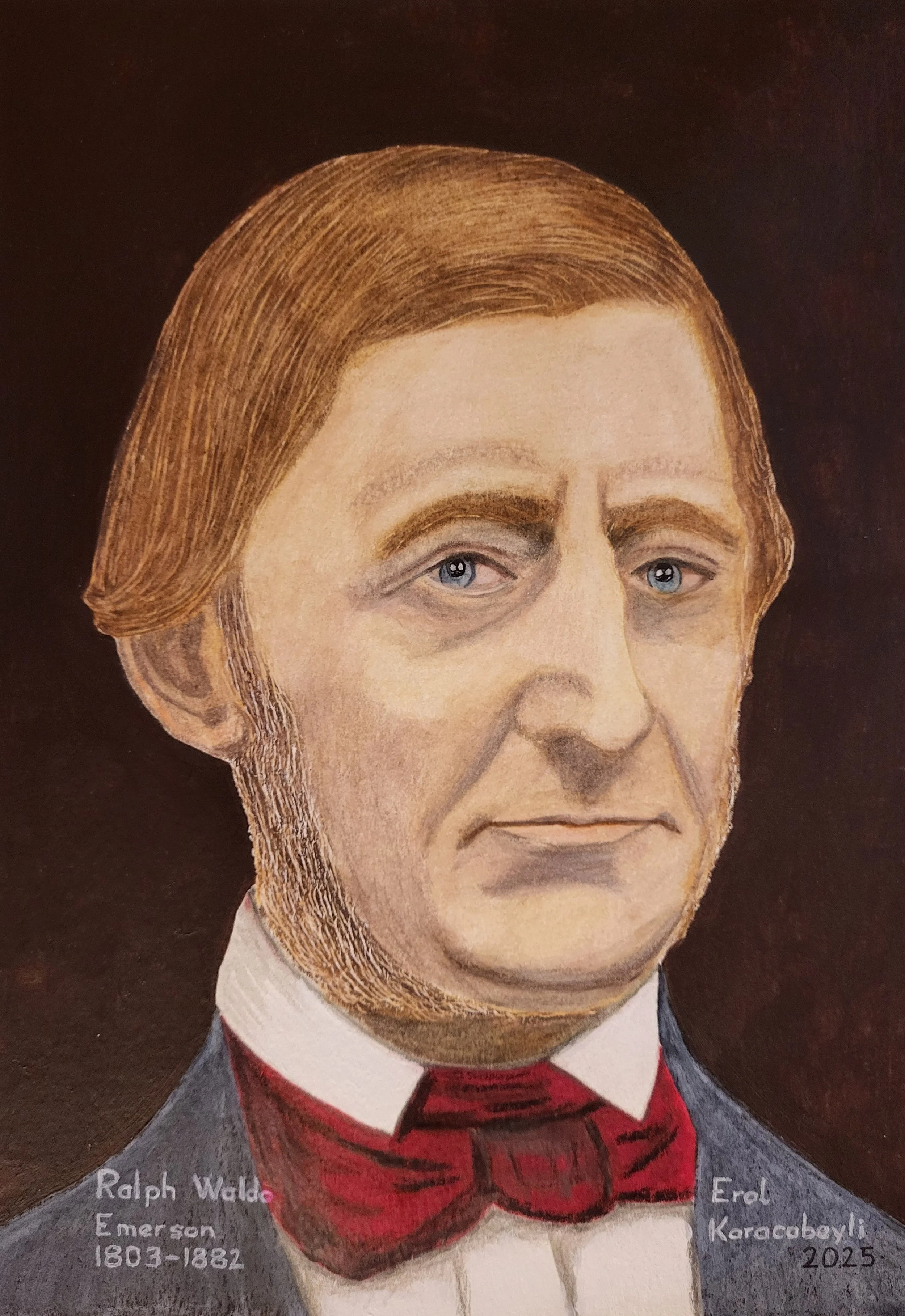
Portrait of Ralph Waldo Emerson
Essence: Trust yourself, connect deeply with nature, and live with purpose when seeking clarity in a noisy and fast-changing world.
Ralph Waldo Emerson was a philosopher, poet, and essayist who helped shape 19th-century American thought. As the leading voice of Transcendentalism, he urged people to trust their inner voice, reject conformity, and seek truth in nature and the self. His work drew from a wide range of influences, including the rational mysticism of Baruch Spinoza and the flowing, nature-centered wisdom of Laozi and Taoist philosophy.
Türkçe - Öz:Gürültülü ve hızla değişen bir dünyada netlik ararken, kendine güven, doğayla derin bir bağ kur ve amaçlı yaşa.
Ralph Waldo Emerson, 19. yüzyıl Amerikan düşüncesinin şekillenmesinde önemli rol oynamış bir filozof, şair ve deneme yazarıydı. Transandantalizmin önde gelen sesi olarak, insanlara iç seslerine güvenmelerini, toplumsal kalıpları reddetmelerini ve gerçeği doğada ve kendi içlerinde aramalarını öğütledi. Emerson’ın düşünceleri, Baruch Spinoza’nın akılcı mistisizminden ve Laozi ile Taoist felsefenin doğa merkezli, akışkan bilgeliğinden ilham almıştır.
Profile
Ralph Waldo Emerson (1803–1882) began his career as a Unitarian minister but soon left the pulpit, believing that organized religion could not fully express his spiritual vision. He turned instead to writing and public speaking, where he found his true calling. In 1836, he published Nature, a foundational text of Transcendentalist thought. In it, he argued that the divine is not distant or abstract, but present in the natural world—and that individuals can access truth directly through personal intuition, rather than through tradition or institutions.
Emerson’s view of divinity as immanent in nature closely reflects Spinoza’s pantheism, which saw God not as a separate creator but as identical with the universe itself. He was also influenced by Taoist philosophy, which he encountered through early translations of Eastern texts. Taoist ideas—such as harmony with nature, effortless action (wu wei), and the value of simplicity— resonated with Emerson’s belief in following life’s natural rhythms and trusting the quiet wisdom within. He urged his readers to move with, rather than against, the deeper flow of the universe.
His most famous essay, Self-Reliance, champions the power and responsibility of the individual. Emerson encouraged people not to blindly follow society or past authorities, but to listen to their own inner voice. For him, nonconformity was not rebellion for its own sake, but a path to authentic living and spiritual growth.
A gifted orator, Emerson delivered hundreds of lectures across the United States, speaking on themes such as freedom, character, and the promise of democracy. He was also an advocate for social reform, including the abolition of slavery.
Portrait of John Stuart Mill
Essence: A key figure in the development of utilitarianism—an ethical theory that promotes actions that maximize happiness.
John Stuart Mill was one of the most influential philosophers and economists of the 19th century. A leading voice in liberal political thought, he advanced ideas on individual freedom, utilitarian ethics, women's rights, and democratic reform. His work helped shape modern debates about liberty, justice, and the role of government.
Türkçe - Öz: Faydacılığın—mutluluğu en üst düzeye çıkarmayı amaçlayan bir etik kuramın—gelişiminde kilit bir figürdür.
John Stuart Mill, 19. yüzyılın en etkili filozof ve ekonomistlerinden biriydi. Liberal siyasi düşüncenin önde gelen seslerinden biri olarak bireysel özgürlük, faydacı etik, kadın hakları ve demokratik reformlar üzerine önemli fikirler ortaya koydu. Çalışmaları, özgürlük, adalet ve devletin rolü üzerine yapılan modern tartışmaların şekillenmesine katkıda bulundu.
Profile
John Stuart Mill (1806–1873) was born in London, the son of the Scottish philosopher and historian James Mill. From an early age, he was rigorously educated in classical languages, history, logic, and economics—making him a child prodigy groomed for intellectual greatness. This intense upbringing laid the foundation for a lifelong commitment to rational inquiry, social reform, and individual rights.
Mill is best known for his seminal work On Liberty (1859), in which he argues passionately for the protection of individual freedom against the tyranny of both government and public opinion. He believed that people should be free to think, speak, and live as they choose—so long as their actions do not harm others. This principle remains a cornerstone of modern civil liberties.
Beyond political philosophy, Mill played a major role in developing utilitarianism, an ethical theory that holds that actions are right if they promote the greatest happiness for the greatest number. While building on the ideas of his predecessor Jeremy Bentham, Mill refined the theory by emphasizing the quality as well as the quantity of happiness. He argued that moral decisions should consider not just pleasure, but the overall well-being and dignity of individuals.
Mill was also a groundbreaking advocate for gender equality. In The Subjection of Women (1869), he argued that social and legal inequalities between men and women were not only unjust, but harmful to society as a whole. At a time when such views were rare and radical, Mill introduced liberal, rights-based arguments for gender equality that helped lay the groundwork for modern feminist philosophy. His ideas influenced generations of feminist thinkers, including Simone de Beauvoir, across multiple waves of feminism.
In addition to his writings, Mill served as a Member of Parliament, where he championed progressive causes such as women's suffrage, proportional representation, and access to education. Though he lived in the Victorian era, Mill's vision of a more just, open, and thoughtful society continues to resonate with contemporary challenges. His legacy endures as that of a philosopher who never stopped questioning how best to balance personal freedom with the common good.
Portrait of Karl Marx
Essence: His critique of capitalism and vision for a classless society reshaped political theory and inspired generations of revolutionaries and scholars.
Karl Marx was a 19th-century German philosopher who believed that society develops through economic forces and class struggle. He argued that capitalism exploits workers for the profit of a wealthy few and predicted that the working class would eventually rise to build a more equal, classless society. Influenced by ancient thinkers like Epicurus, Marx explored the role of material conditions in human life. His ideas later shaped not only political movements but also modern critical theory through the Frankfurt School.
Türkçe - Öz: Kapitalizm eleştirisi ve sınıfsız bir toplum vizyonu, siyasi teoriyi kökten değiştirmiş ve nesiller boyunca devrimcilere ve akademisyenlere ilham vermiştir.
Karl Marx, toplumun ekonomik güçler ve sınıf mücadelesi yoluyla geliştiğine inanan 19. yüzyılda yaşamış bir Alman filozofudur. Kapitalizmin, zengin bir azınlığın çıkarı için işçileri sömürdüğünü savundu ve işçi sınıfının sonunda daha eşitlikçi, sınıfsız bir toplum inşa etmek üzere ayaklanacağını öngördü. Epiküros gibi antik düşünürlerden etkilenen Marx, maddi koşulların insan yaşamındaki rolünü inceledi. Onun fikirleri, yalnızca siyasi hareketleri değil, aynı zamanda Frankfurt Okulu aracılığıyla modern eleştirel teoriyi de şekillendirmiştir.
Profile
Karl Marx (1818–1883) was a German philosopher, economist, and political theorist best known for his critique of capitalism and the development of communist theory. Born in Trier, Germany, Marx was deeply influenced by classical philosophy, particularly the ideas of Epicurus, whose materialist philosophy emphasized the natural causes of human behavior and the pursuit of freedom from suffering. This early exposure helped shape Marx’s lifelong interest in how material conditions affect human life and society.
Along with Friedrich Engels, Marx co-authored The Communist Manifesto (1848), a call for workers of the world to unite and challenge the structures of capitalism. In his later work, especially Das Kapital, Marx analyzed how capitalist economies function — focusing on exploitation, inequality, and the concentration of wealth. He argued that capitalism creates alienation among workers and would eventually be replaced by a system based on collective ownership and equality.
Marx’s ideas had a profound influence on political movements throughout the 19th and 20th centuries, including revolutions in Russia, China, and parts of Latin America. But his influence also extended beyond politics. In the 20th century, a group of intellectuals known as the Frankfurt School reinterpreted Marx’s ideas in the context of modern culture, mass media, and authoritarianism. Known for developing critical theory, the Frankfurt School sought to understand how power operates not just in economics, but in culture, ideology, and everyday life.
While many attempts to apply Marx’s theories in practice have led to controversial outcomes, his work remains a cornerstone of debates on capitalism, class, inequality, and the struggle for a more just society.
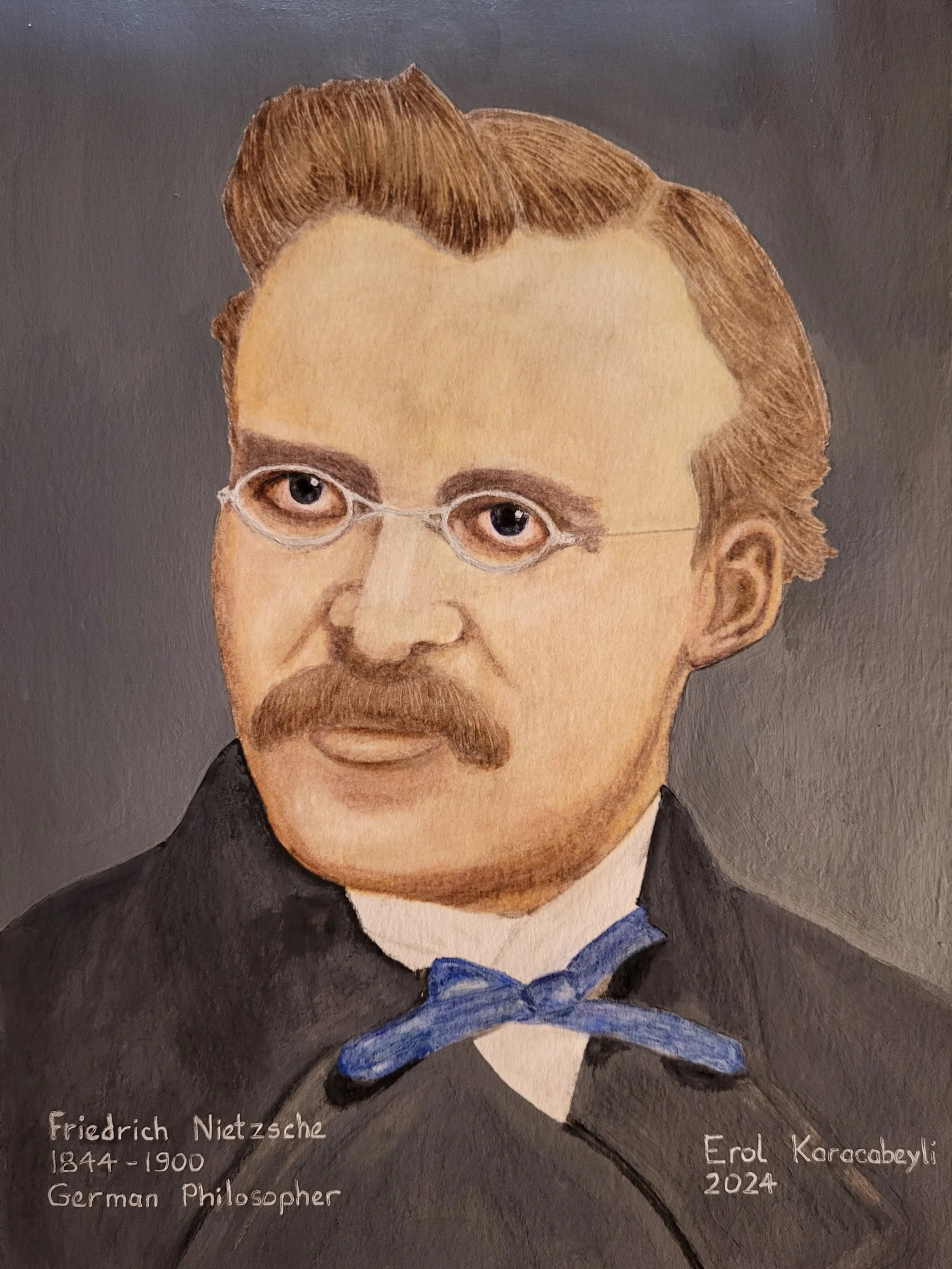
Portrait of Friedrich Nietzsche
Essence: The rebel philosopher who challenged morality, truth, and the meaning of life.
Friedrich Nietzsche was a 19th-century German philosopher known for his radical ideas on morality, religion, and individuality. He questioned conventional values, introduced powerful concepts like the "will to power" and the "Übermensch," and famously declared "God is dead." Nietzsche’s work laid the groundwork for existentialism and had a lasting influence on modern thought, despite being misunderstood and misused in various historical contexts.
Türkçe - Öz: Ahlakı, gerçeği ve hayatın anlamını sorgulayan isyankar filozof.
Friedrich Nietzsche, ahlak, din ve bireysellik konusundaki radikal fikirleriyle tanınan 19. yüzyılda yaşamış bir Alman filozoftu. Geleneksel değerleri sorguladı, “güce istem” (will to power) ve “üstinsan” (Übermensch) gibi güçlü kavramlar ortaya koydu ve ünlü bir şekilde “Tanrı öldü” ilanında bulundu. Nietzsche’nin çalışmaları, varoluşçuluğun (egzistansiyalizm) temelini attı ve çeşitli tarihsel bağlamlarda yanlış anlaşılmasına ve kötüye kullanılmasına rağmen modern düşünce üzerinde kalıcı bir etki bıraktı.
Profile
Friedrich Nietzsche (1844–1900) was one of the most provocative and influential thinkers of all time. His writing is rich with emotion, metaphor, and aphorism—often poetic, often combative. He didn’t write for the academic elite; he wrote to shake the foundations of European culture and make people think deeply about their values and assumptions.
At the heart of Nietzsche’s philosophy is a deep critique of traditional morality—especially Christian morality—which he saw as life-denying and rooted in guilt and weakness. He proposed instead a morality that celebrates strength, creativity, and the individual's power to shape their own destiny. This led to his idea of the “Übermensch” or “Overman,” an ideal being who creates their own values and lives with authenticity and courage.
A key part of this transformation is Nietzsche’s concept of amor fati, which means “love of one’s fate.” It’s not just accepting life’s hardships but embracing them—seeing every joy and every suffering as necessary parts of one’s story. For Nietzsche, this attitude is essential for self-overcoming. Only someone who can say “yes” to life in its entirety, without resentment or regret, can move toward the freedom and creativity embodied in the Übermensch. In this way, amor fati is both a discipline and a doorway: a way of meeting reality that makes higher forms of existence possible.
Nietzsche is also well-known for his statement “God is dead,” which wasn’t a triumphant proclamation but a profound observation about the decline of faith and the crisis of meaning in the modern world. He believed that, in the absence of divine authority, humanity must find new ways to understand purpose and morality.
Though Nietzsche suffered a mental collapse in 1889 and spent his final years in silence, his writings exploded in influence in the 20th century—impacting existentialists like Sartre and Camus, psychoanalysts like Freud, and even artists and revolutionaries. Sadly, his work was also misappropriated by the Nazis, though Nietzsche himself opposed anti-Semitism and nationalism.
Nietzsche is remembered not for providing easy answers but for asking the hardest questions: What does it mean to live fully? Can we create meaning in a godless world? And how do we become who we truly are—perhaps beginning, as he urged, by learning to love our fate?
Portrait of Jean-Paul Sartre
Essence: We are alone in the universe, and it is up to us to create meaning in our lives.
Jean-Paul Sartre was a French philosopher and a leading figure in existentialist thought—the idea that humans are free to create their own meaning in a world without inherent purpose. As a committed atheist, Sartre believed that in the absence of God or divine design, we are not only radically free—but also radically responsible. His ideas influenced not only philosophy but also literature and politics in the 20th century.
Türkçe – Öz: Evrenin içinde yalnızız ve hayatımıza anlam katmak bizim sorumluluğumuzda.
Jean-Paul Sartre, varoluşçu düşüncenin önde gelen isimlerinden biri olan Fransız bir filozoftu. Varoluşçuluk, insanların doğuştan gelen bir amacı olmadan, kendi anlamlarını yaratmakta özgür oldukları düşüncesine dayanır. Katı bir ateist olan Sartre, Tanrı’nın ya da ilahi bir tasarımın yokluğunda insanın yalnızca kökten özgür değil, aynı zamanda kökten sorumlu olduğuna inanıyordu. Onun fikirleri yalnızca felsefeyi değil, aynı zamanda 20. yüzyılın edebiyatını ve siyasetini de derinden etkilemiştir.
Profile
Jean-Paul Sartre (1905–1980) was a French philosopher, novelist, playwright, and public intellectual who brought existentialism into the cultural mainstream of the 20th century. Born in Paris, Sartre lived through two world wars—events that deeply shaped his thinking about freedom, responsibility, and human nature.
More than an academic philosopher, Sartre insisted that philosophy must be lived, not merely theorized. His works spanned literature, theatre, and political commentary, always returning to a central existential idea: existence precedes essence. This means that we are not born with a fixed nature, purpose, or destiny; rather, we define ourselves through our choices and actions. For Sartre, freedom is inescapable and absolute—but so is the burden of responsibility that comes with it. As he famously said, “We are condemned to be free.”
As a committed atheist, Sartre argued that in a godless universe, there is no pre-given moral framework or ultimate meaning. For Sartre, this was not a reason for despair, but a call to action. Meaning is not something we discover—it is something we create. We are responsible not only for our own lives but, through our actions, we shape what it means to be human.
Though Sartre charted his own philosophical path, his existentialism was shaped by earlier thinkers like:
Søren Kierkegaard, who emphasized personal responsibility and the anguish of choice;
Friedrich Nietzsche, who declared the death of God and called for the creation of new values;
Martin Heidegger, whose exploration of being and authenticity influenced Sartre’s own major work, Being and Nothingness (1943).
Sartre's novels and plays vividly illustrated existentialist themes. In Nausea, he explores the unsettling realization of life's absurdity through a protagonist overwhelmed by the sheer existence of things. In No Exit, the famous line "Hell is other people" captures the tension of defining ourselves in relation to others’ judgments. These works helped popularize existentialist ideas by dramatizing them in powerful, relatable ways.
Politically, Sartre was an engaged intellectual. He supported Marxist and anti-colonial movements but remained critical of rigid ideologies. His activism was guided by existentialist ethics: individuals must take responsibility for their actions and the society they live in. Freedom, for Sartre, was both a personal and political project.
Sartre’s lifelong partnership with fellow philosopher Simone de Beauvoir was as unconventional as his philosophy. Together, they rejected traditional romantic norms and challenged societal expectations around love, gender, and freedom. De Beauvoir’s existential feminism both complemented and expanded upon Sartre’s thought.
In 1964, Sartre declined the Nobel Prize in Literature, stating that he did not want to be turned into an institution. True to his beliefs, he lived—and died—as a man who refused to be boxed in.
Portrait of Simone de Beauvoir
Essence: She revolutionized the way we think about gender and women’s roles in society.
Simone de Beauvoir was a 20th-century French existentialist philosopher, novelist, and political activist. A close associate of Jean-Paul Sartre, she is widely recognized for her pioneering work which challenged traditional roles assigned to women and helped shape modern feminism. Her writings explored themes of freedom, responsibility, and the construction of gender.
Türkçe – Öz: Kadının toplumdaki yeri üzerine düşünme biçimimizi kökten değiştirdi.
Simone de Beauvoir, 20. yüzyılın Fransız varoluşçu filozofu, romancısı ve politik aktivistiydi. Jean-Paul Sartre’la yakın bir entelektüel ortaklık kuran Beauvoir, kadınlara atfedilen geleneksel rolleri sorgulayan öncü çalışmalarıyla ve modern feminizmin şekillenmesine katkılarıyla geniş çapta tanınmaktadır. Yazıları, özgürlük, sorumluluk ve cinsiyetin sosyal olarak inşa edilmesi gibi temaları derinlemesine ele almıştır.
Profile
Simone de Beauvoir (1908–1986) was one of the most influential thinkers of the 20th century, known for her deep philosophical insight, fierce intellect, and commitment to social justice. Born in Paris, she studied philosophy at the Sorbonne, where she formed a lifelong partnership—both intellectual and personal—with fellow philosopher Jean-Paul Sartre. Though widely associated with feminism, de Beauvoir drew on a broad range of thinkers, including Friedrich Nietzsche, Søren Kierkegaard, and Hegel, blending their ideas into a distinctive ethical vision rooted in human freedom and lived experience.
Her most famous work, The Second Sex (1949), is a landmark analysis of women’s historical oppression and a foundational text of feminist theory. She argued that women have long been treated not as autonomous individuals but as "the Other"—defined in relation to men rather than in their own right. She famously declared, “One is not born, but rather becomes, a woman,” capturing how gender is shaped by culture rather than biology. The book was controversial upon release but has since become a cornerstone of feminist philosophy, influencing generations of scholars, writers, and activists.
While de Beauvoir’s work stands firmly on the shoulders of early feminists like Mary Wollstonecraft, who first argued for women’s rationality and equality, de Beauvoir expanded feminist philosophy by bringing existentialist and social theory perspectives to bear on the problem of women’s oppression.
Beyond feminism, de Beauvoir’s writings ranged from novels and memoirs to philosophical essays and political commentary. She tackled themes such as aging, freedom, ethics, and the human condition, always grounded in personal experience and historical context. As a public intellectual, she spoke out boldly on issues such as colonialism, class inequality, and women's rights. Simone de Beauvoir remains a towering figure in modern thought—celebrated not only for her intellectual legacy but also for her fearless engagement with the world around her.
Slideshow: Philosophers
Laozi (6th-century BCE): follow natural order, understand that opposites make the whole
Confucius (551-479 BCE): do not do to others what you do not want done to yourself
Buddha (5th-6th century BCE): path to true happiness lies in living with compassion, mindfulness, and balance
Zeno of Elea (c. 490 – c. 430 BCE): what we perceive isn’t always what is real
Plato (c. 427 – c. 347 BCE): Ideal society should be run by a philosopher-king
Aristotle (384–322 BCE): knowledge grounded in observation, reason, and experience
Epicurus (341–270 BCE): moderation and inner tranquility lead to better life
Al-Farabi (c. 870–950 CE): philosophy and religion—both seek truth, but through different means
Ibn Sina (Avicenna, 980–1037 CE): profound influence on philosophy, medicine, and science
Al Ghazali (1058–1111 CE): bridging reason and spirituality (Islamic)
Ibn Rushd (Averroes, 1126–1198): championed reason and rational thought as complementary to faith (Islam)
Thomas Aquinas (1225–1274): sought to bridge faith (Christianity) and reason
Ibn Khaldun (1332–1406): principles of history which induce the rise and decline of dynasties across time
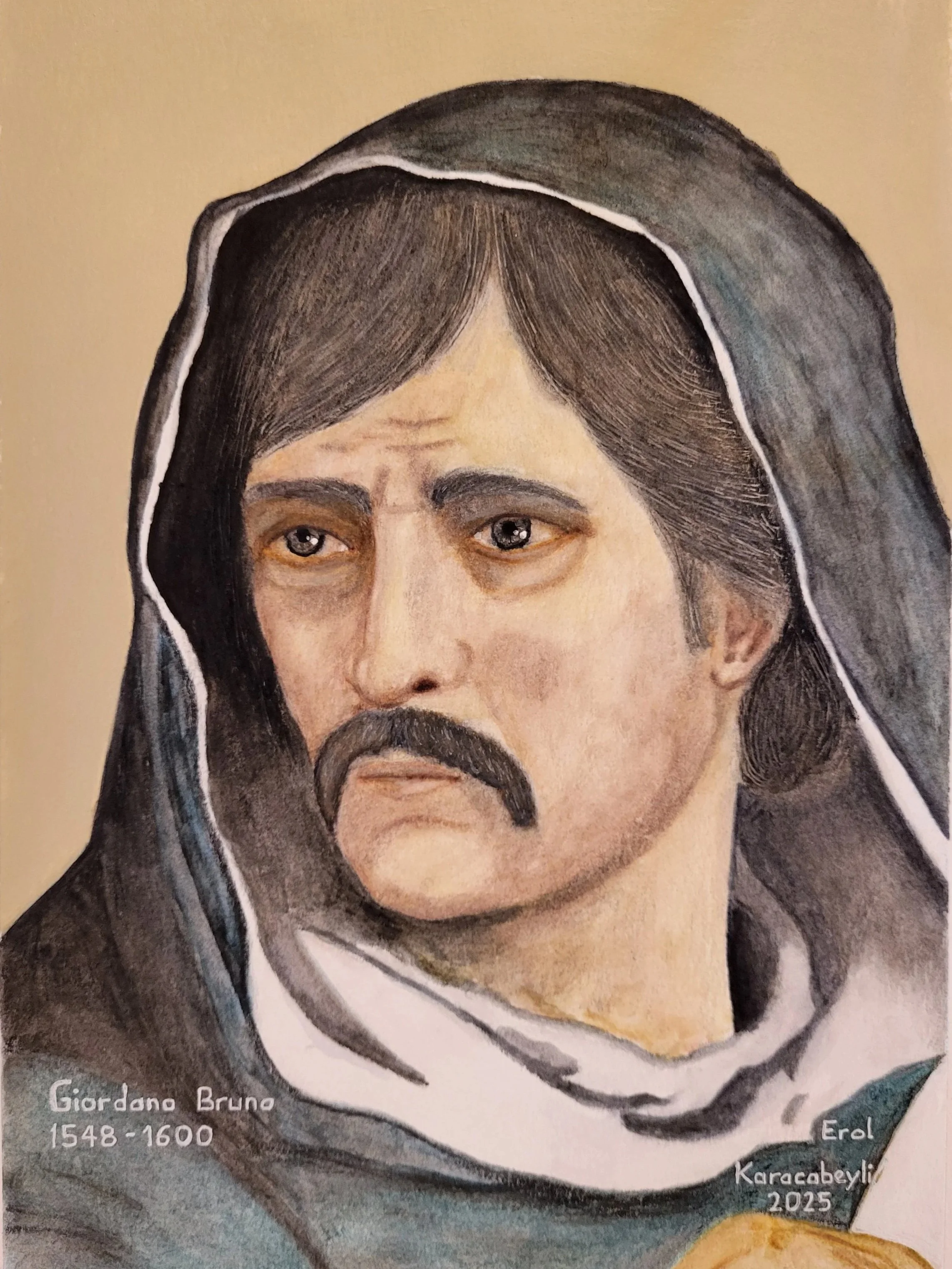
Giordano Bruno (1548-1600): he was burned at the stake - a grim fate that turned him into a symbol of free thought
René Descartes (1596–1650): laid the foundation for both modern science and Western philosophical thought
Spinoza (1632–1677): God and nature are one and the same
John Locke (1632–1704): Social contract — an agreement among free individuals to form a society
David Hume (1711–1776): challenged traditional ideas, and laid the foundation for modern scientific thinking
Montesquieu (1689-1755): The principle of separation of powers, a foundational element of modern constitutions
Voltaire (1694 – 1778): championed freedom of speech, reason, and tolerance—ideas that shaped modern democracies
Immanuel Kant (1724–1804): connected rationalism and empiricism to explain how we gain knowledge
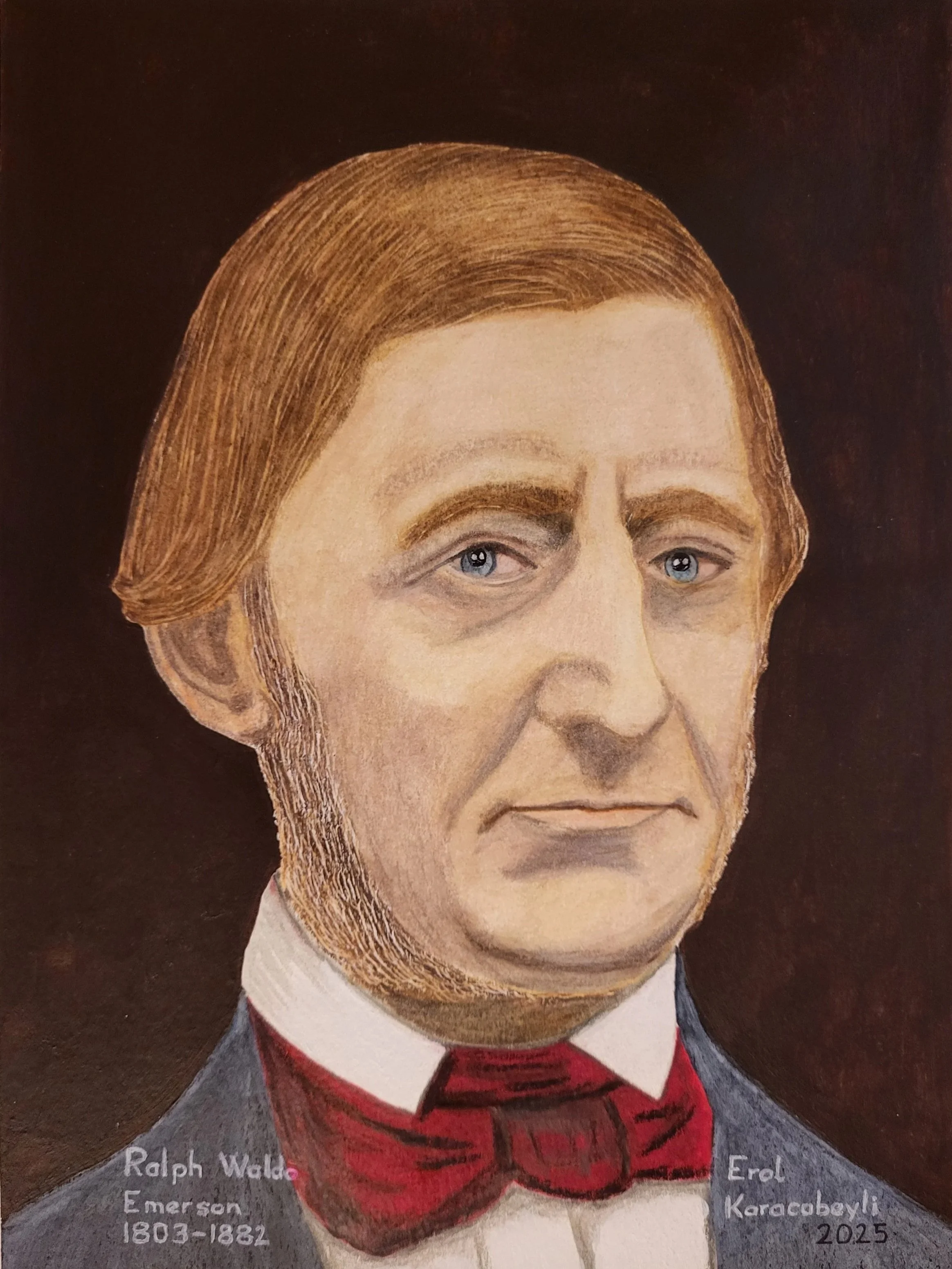
Ralf Waldo Emerson (1803–1882): urged people to trust their inner voice, reject conformity, and seek truth in nature
John Stuart Mill (1806–1873): utilitarianism, an ethical theory that promotes actions that maximize happiness
Karl Marx (1818–1883): His critique of capitalism and vision for a classless society inspired revolutionaries
Friedrich Nietzsche (1844–1900): The rebel philosopher who challenged morality, truth, and the meaning of life
Jean-Paul Sartre (1905–1980): We are alone in the universe, and it is up to us to create meaning in our lives
Simone de Beauvoir 1908–1986): revolutionized the way we think about gender and women’s roles in society